

Most businesses believe they can reach their customers because they hold a phone number.
But phone numbers change. They get mistyped. They become inactive. They move between users, markets, networks, systems and records. Some are landlines when a mobile number is needed. Some are duplicated across the CRM. Some are unsuitable for the communication journey being triggered.
The result is a hidden gap between the customers you think you can reach and the customers you can actually reach with confidence.
That is, what we call, the Contactability Gap.
Acudo helps businesses identify and close that gap by validating, verifying and improving customer phone number data before they communicate.
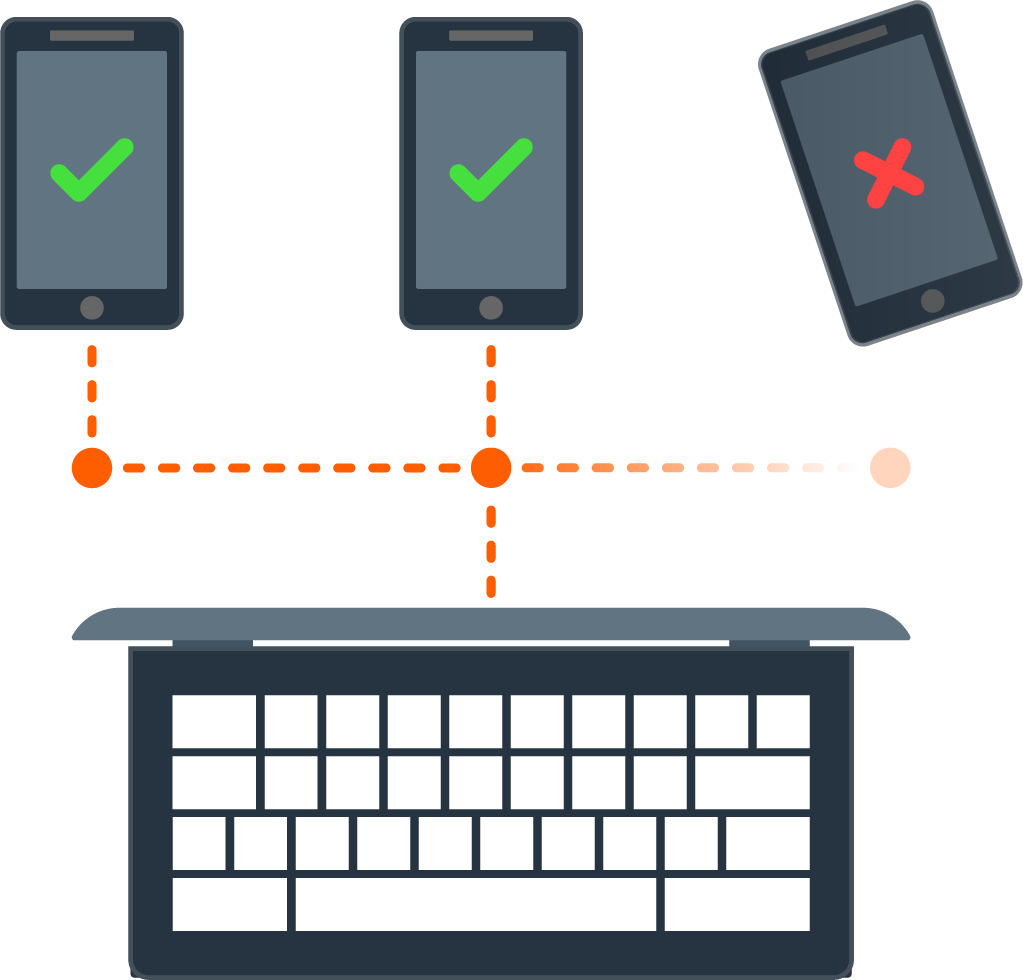
What is the Contactability Gap?
The Contactability Gap is the difference between the phone number data inside your business and the customers you can reliably reach in the real world.
It affects SMS campaigns, OTPs, delivery updates, appointment reminders, claims messages, tenant communication, collections activity, customer support and service notifications.
When contact data is inaccurate, every journey that depends on that data becomes less reliable.
A customer may never receive their delivery update. A claims message may fail to reach the policyholder. A tenant may miss a maintenance appointment. A retail campaign may be sent to thousands of numbers that are invalid, inactive or no longer useful.
The message may be perfectly written. The platform may be technically capable. The campaign may be well planned.
But if the number is wrong, unreachable or unsuitable, the journey has already started to fail.
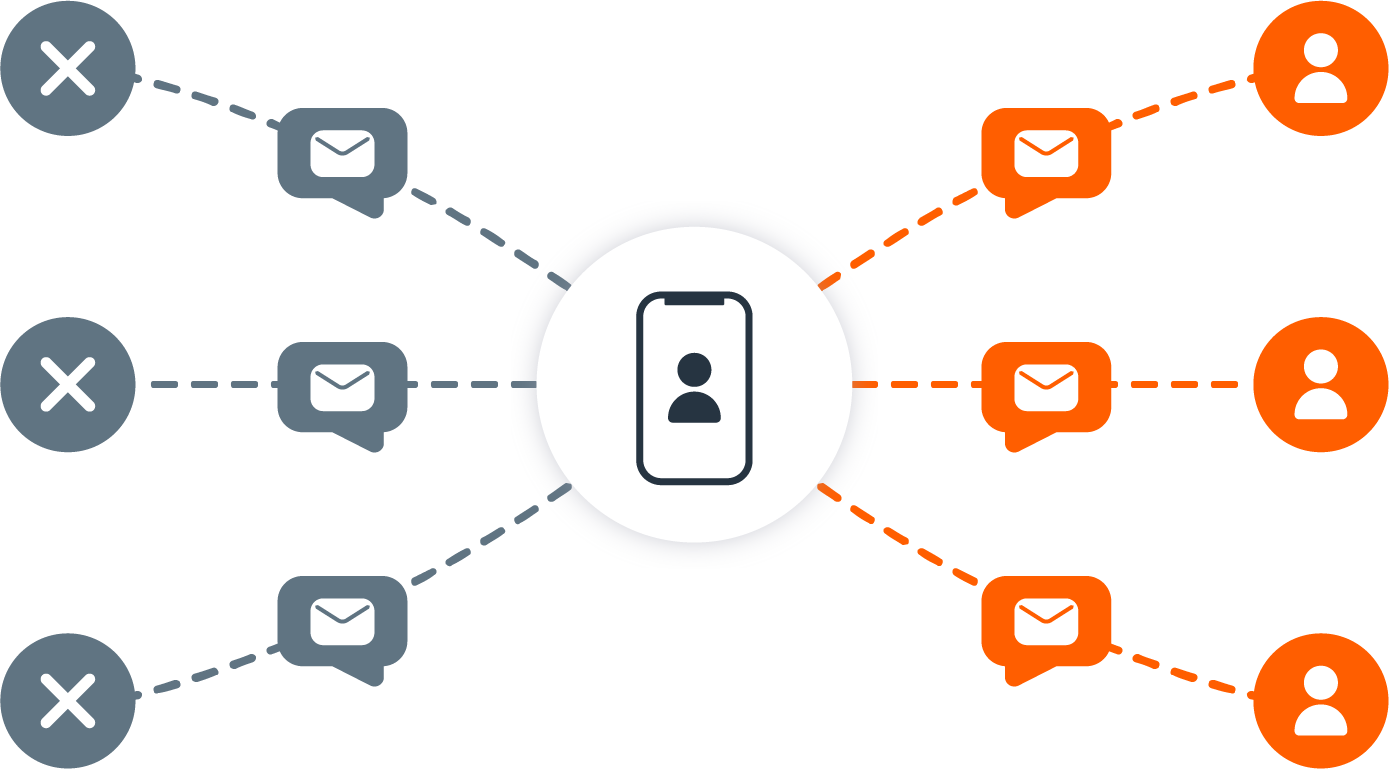
The problem is bigger than failed SMS
Many businesses treat failed customer communication as a channel issue.
They look at SMS delivery rates, email open rates, campaign performance, customer support volumes or platform costs.
Those things matter, but they often appear after the real issue has already happened.
The Contactability Gap usually starts in the data layer.
It sits inside CRMs, checkout flows, customer portals, claims systems, booking systems, delivery platforms, property management tools and legacy databases. It grows quietly as customers change numbers, records age, data is copied between systems, and communication journeys become more dependent on mobile contact.
By the time a message fails, the cost is already being felt.

Where the Contactability Gap comes from
The Contactability Gap is rarely caused by one major failure. It usually builds up through everyday data decay and operational complexity.
Common causes include:
- customer numbers entered incorrectly at sign-up, checkout or onboarding
- outdated numbers sitting inside CRM or customer records
- inactive or disconnected mobile numbers
- landlines stored where mobile numbers are needed
- duplicated customer records across multiple systems
- international numbers stored in inconsistent formats
- customer numbers changing without the business knowing
- numbers reassigned or no longer associated with the original customer
- communication journeys being triggered before the number is validated
- limited visibility over whether a number is suitable for SMS, OTP or service alerts
- fraud-sensitive journeys relying on unverified contact data
Each issue may look small in isolation, but at enterprise scale, the impact becomes significant.
A small percentage of unreliable phone data across millions of customer records can mean wasted message spend, failed journeys, avoidable support demand and lost customer trust.

Why contactability matters
Contactability is not just about whether a message can be sent.
It is about whether the right customer can be reached through the right number, at the right time, with enough confidence to support the journey that depends on it.
For businesses handling high-volume customer communication, poor contactability can create four types of cost.
01
Wasted communication spend
Messages sent to invalid, inactive, duplicated or unsuitable numbers still create cost. Even when individual message costs look small, the waste compounds quickly across large customer databases and repeated communication journeys.
02
Failed customer journeys
Delivery updates, OTPs, appointment reminders, claims messages and service alerts only work if they reach the customer. If they fail, the experience breaks, and the business has to recover manually.
03
Operational pressure
When customers do not receive critical updates, teams spend more time chasing, re-sending, resolving support tickets, handling complaints or manually confirming details.
04
Risk and trust issues
Poor phone number intelligence can create exposure in fraud-sensitive, compliance-sensitive or customer-critical workflows. If a business cannot trust the number, it becomes harder to trust the communication journey built around it.
The Contactability Gap in Credit Services
Credit services teams rely on accurate customer contact data for payment reminders, arrears communication, customer support, affordability journeys, vulnerable customer communication and operational follow-up. But when numbers are invalid, unreachable, duplicated or unsuitable for the intended channel, outreach becomes harder, teams waste time, and customer communication becomes less reliable.
Acudo helps credit services teams validate customer numbers before SMS, dialler or reminder activity begins, giving teams more confidence in the data behind every customer journey.

The Contactability Gap by sector
The same problem appears differently depending on the business.
Retailers rely on customer phone numbers for delivery updates, click-and-collect alerts, loyalty campaigns, abandoned basket messages, OTPs and customer service notifications.
When phone data is poor, customer experience suffers before the message has even been sent.
- delivery alerts sent to inactive numbers
- loyalty SMS campaigns reaching poor-quality data
- OTPs failing during account access or checkout
- customer support teams dealing with “I never received the message” queries
- wasted spend across large CRM and loyalty databases
Delivery businesses depend on accurate contact data to keep customers, drivers, riders and support teams aligned.
When the number is wrong, ETA updates fail, delivery attempts become harder to complete, customer support demand rises, and operational teams lose visibility.
- failed delivery updates
- missed driver or customer communication
- incorrect numbers affecting delivery completion
- marketplace accounts created with poor or suspicious contact data
- support teams handling avoidable “where is my order?” queries
Insurance communication is often time-sensitive, regulated and emotionally important.
Claims updates, renewal reminders, fraud checks and vulnerable customer communication all depend on accurate customer contact data.
When phone data is unreliable, insurers face more manual chasing, weaker customer experience and higher operational risk.
- claims updates not reaching policyholders
- renewal reminders failing
- fraud-sensitive journeys relying on unverified numbers
- customer records becoming outdated across legacy systems
- manual effort increasing across claims and customer operations
Property communication depends on speed, accuracy and coordination.
Viewing reminders, tenant updates, landlord communication, maintenance appointments, referencing and arrears activity all become harder when phone data is poor.
- viewing no-shows
- tenants missing maintenance updates
- landlords not receiving important messages
- applicants being chased through old or duplicated records
- teams spending time manually confirming contact details
Sending more messages does not fix unreliable phone data
Many communication platforms focus on the send.
That is important, but it is not the full picture.
If a number is invalid, inactive, duplicated, risky or unsuitable for the journey, optimising the send will only take you so far.
Acudo starts earlier.
We help businesses understand the quality, reachability and suitability of the phone number data they already hold, so they can make better decisions before communication happens.
Validate the number
Understand the risk
Improve the route
Communicate with confidence
What Acudo helps you understand
Acudo brings together number intelligence, validation and communication capability to help businesses improve the customer contact journeys that depend on phone data.
A Contactability Health Check can help identify:
Number validity
Whether customer numbers are correctly formatted and structurally valid.
Reachability
Whether numbers are likely to be active and contactable.
Mobile suitability
Whether a number is suitable for mobile-first journeys such as SMS, OTPs, alerts and service notifications.
Network intelligence
Which network or carrier is associated with the number, where available.
Data quality issues
Where duplicated, inconsistent or poorly formatted numbers may be affecting communication.
Risk indicators
Where additional caution may be needed before account action, customer communication or fraud-sensitive activity.
Messaging readiness
Which customer journeys may be exposed to failed contact, wasted spend or operational friction.
The commercial impact of closing the Contactability Gap
Improving contactability does not just improve delivery performance.
It can improve how your business communicates, operates, and serves customers.
By closing the Contactability Gap, businesses can:
- reduce wasted messaging spend
- improve customer journey completion
- lower support and manual chasing demand
- improve CRM and customer data quality
- strengthen fraud-aware communication processes
- improve the reliability of OTPs, alerts and service updates
- support cleaner, more confident customer engagement
- make better decisions before messages are sent
For enterprise teams, the opportunity is not simply to send more messages.
It is to make every customer contact attempt more dependable.
Why Acudo?
Acudo brings telecoms expertise, number intelligence and messaging capability together in one platform. We help businesses validate and verify customer phone numbers before they communicate, so they can reduce failed contact, improve data quality and support more reliable customer journeys. For teams that have outgrown complex communications platforms, Acudo provides a more focused way to improve customer contact from the data layer up. Because the real question is not just whether you can send the message. It is whether you can trust the number before you do.
Book a Contactability Health Check
If your business depends on customer phone numbers, the first step is understanding how contactable your customer base really is. A Contactability Health Check gives you a clearer view of where phone number data may be creating failed communication, wasted spend, operational pressure or avoidable risk. Acudo can help you identify the gap, understand the commercial impact and prioritise the next best action.