Customer Phone Number Cleansing for Better SMS Campaign Readiness

Content authorBy Claire ConnorPublished onReading time11 min read
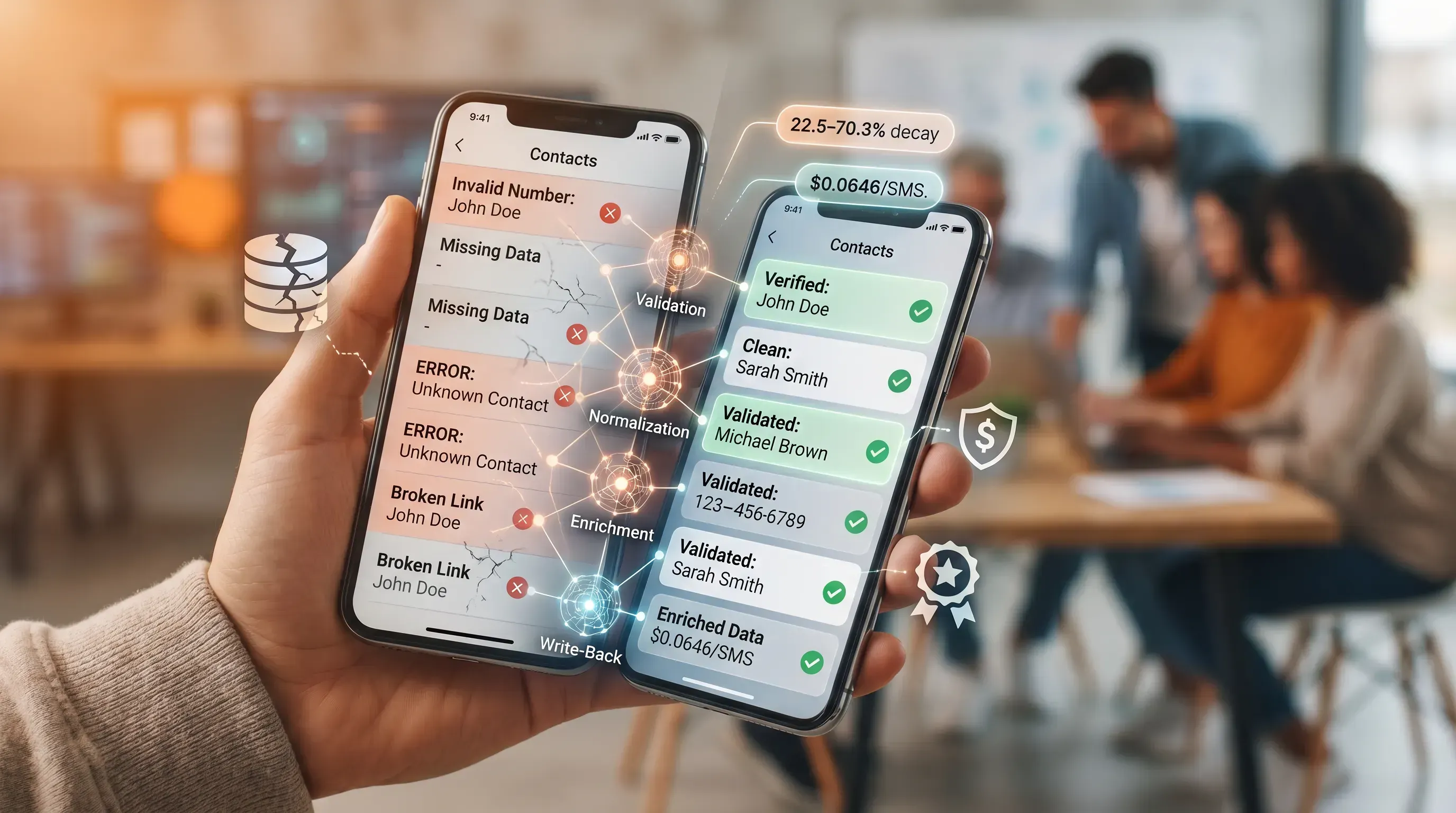
A human hand holds a glossy smartphone, showcasing a contact list transforming from messy to clean entries against a warm bokeh background.

This article explains customer database cleansing and shows how a practical pre-send cleanse protects SMS delivery and budget before a large campaign or seasonal peak.

Why bad data breaks campaigns

You schedule the send, and the platform reports sends it as complete before the numbers fail to add up. Customer phone number database cleansing comes up right at this moment, when responses or order confirmations fall well short of what your list size promised. The list said 80,000 reachable customers. The results say something else.

Here's the part that trips up most teams. A "sent" status rarely means the message reached a handset. It means the message reached a carrier. "Sent" means the carrier has received your message at its servers, while "Delivered" means the carrier has passed it to the recipient's phone, and not every carrier even returns that second confirmation. So a clean-looking delivery report can hide a pile of messages that went nowhere.

When that gap shows up, the instinct is to blame the platform. Sometimes that's fair. But the more common culprit is the contact data sitting in your own records, and that's a problem you can fix before your next send. For a retail or ecommerce team about to spend real budget on a large push, the difference between a validated list and a stale one is the difference between reaching customers and paying to text inactive numbers.

How customer databases decay

Customer contact data becomes stale over time as people change numbers, switch providers, move roles, abandon old accounts or enter details incorrectly. The rate varies by sector and customer type, which is why pre-send validation is more reliable than assuming a list is still clean because it was checked months ago.

Mobile numbers are the fastest-moving field you hold. In the US alone, the FCC estimates that around 35 million numbers are recycled each year, close to 10% of all numbers, and high-turnover area codes can hit 20%. When a customer cancels a plan, their old number sits idle for a short cooling-off period and then gets handed to someone new. Your CRM still shows the original owner. The SMS now lands on a stranger's phone.

The faults a data team finds in their own tables look like this:

  • Deactivated and reassigned mobiles that still sit in the record as active

  • Landlines and Voice over Internet Protocol (VoIP) lines dumped into a field labelled "mobile," which can never receive an SMS

  • Formatting chaos, where the same country's numbers appear with local prefixes and inconsistent country-code treatment

  • Duplicates, where one customer exists three times because they checked out as a guest twice and created an account once

Then there's the mess made at signup. A customer fat-fingers a digit, and a call-centre or web-form process lets the wrong value into the phone field. Research has found that human error influences over 60% of bad data. Because decay is continuous, a single big scrub buys you a few clean months at best. Then the need for customer database cleansing resumes, which is why a one-off cleanse and a repeatable process are two different things.

What customer database cleansing involves

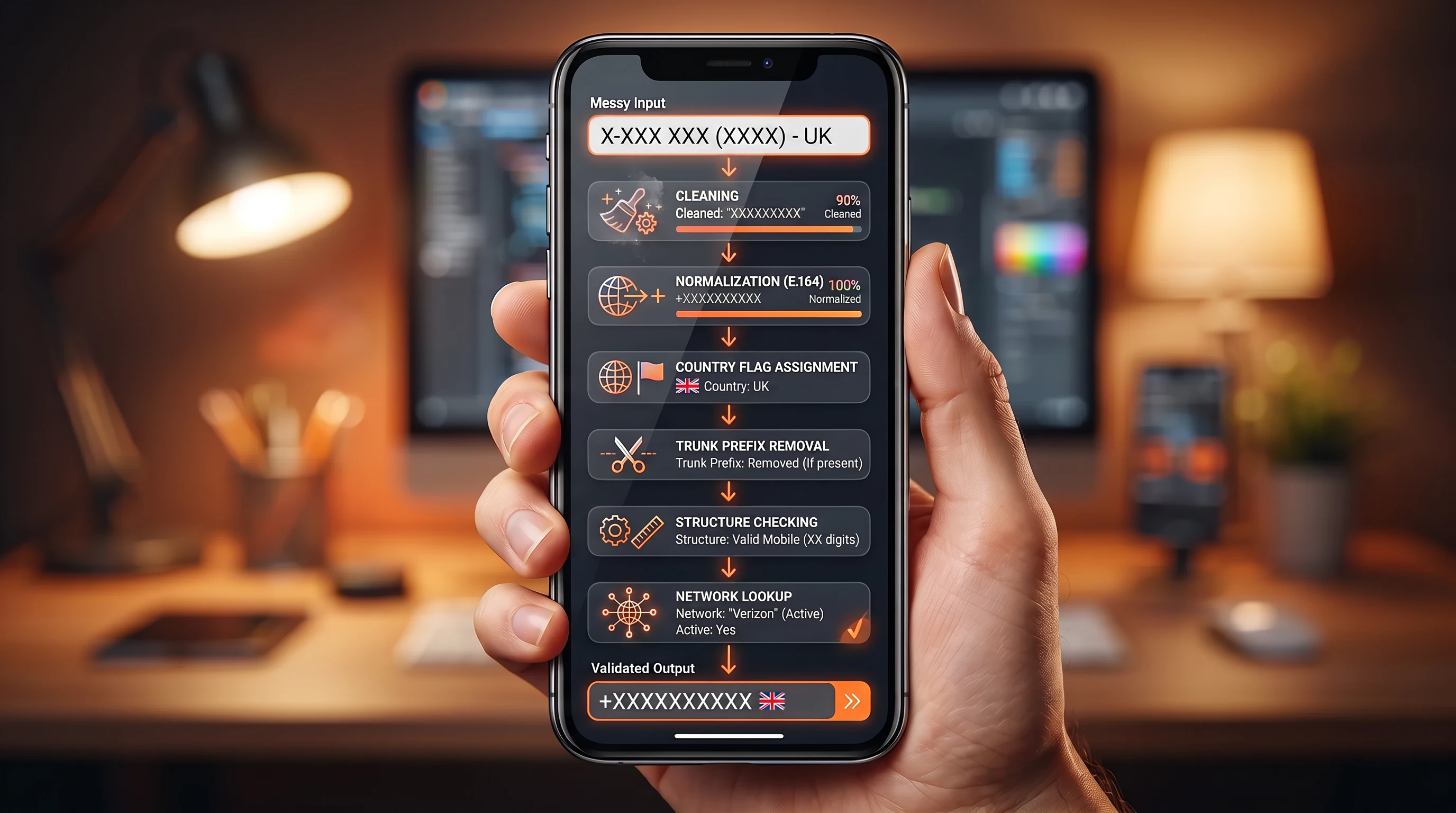
Infographic illustrating a customer database cleansing workflow with bold icons for each step, showing quality improvement in a bar chart.

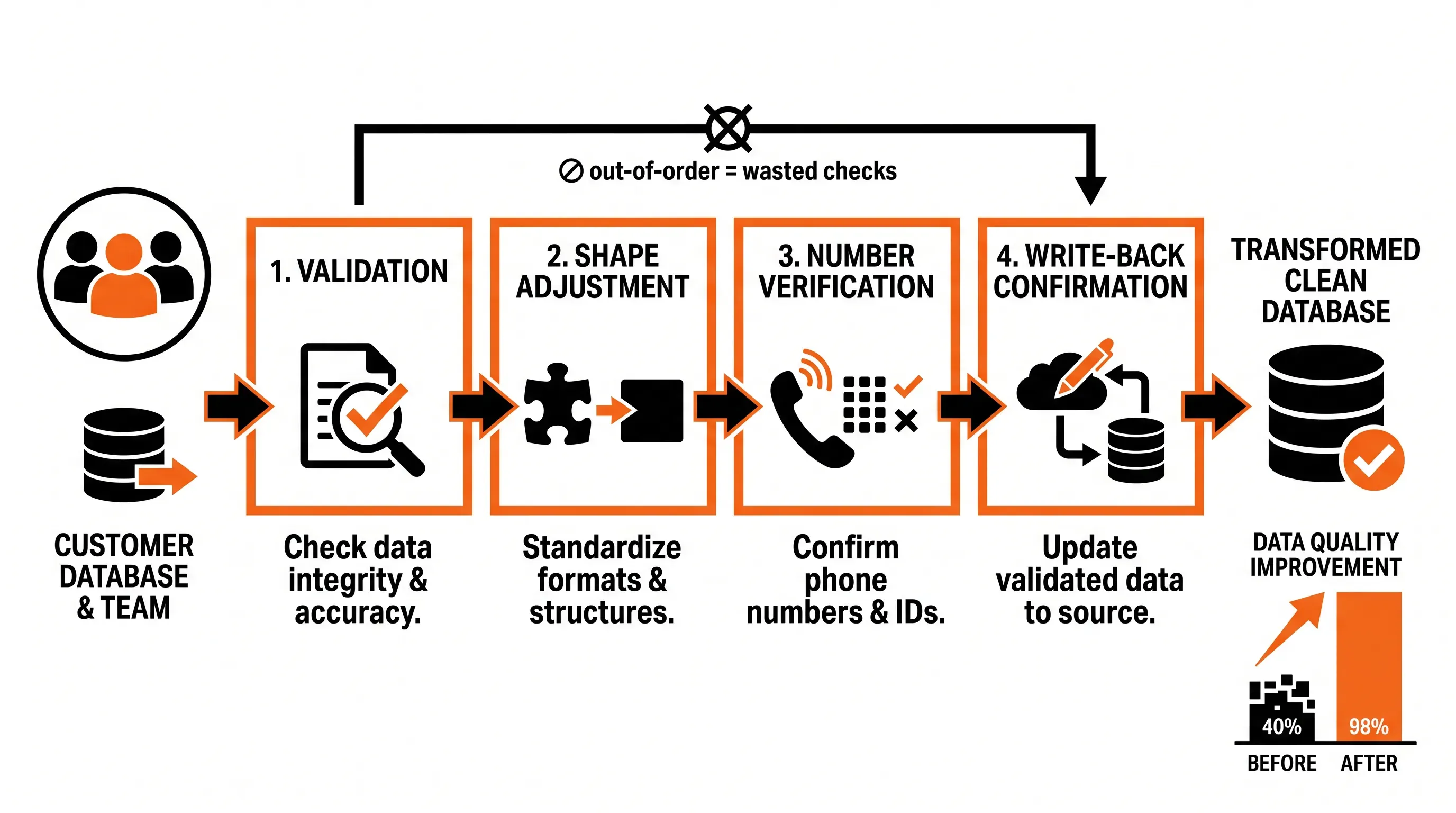
Customer database cleansing is a repeatable, ordered process with defined checks before a deadline. If your team manages data but has never formalised customer database cleansing as a cleaning workflow, the useful mental model is a sequence of checks that each produce a specific result and feed the next one.

The order matters more than it looks. A number can pass an early check and still fail a later one. A record can be perfectly formatted and still point to a landline. A number can be a genuine mobile and still be deactivated. Run the steps out of order and you validate against data that isn't ready yet, which means you pay for checks that tell you nothing.

The three stages below run in sequence. The first cleans the shape of the data. The second confirms whether each number is real and reachable. The third writes the answers back so you don't repeat the whole exercise next quarter.

Validate every number. Deliver every message.

Talk to our team about real-time phone number validation, fraud prevention, and high-deliverability SMS for your business.

Format and normalise records

The first step puts every number into one consistent structure with the correct country code and strips the obvious entry errors. The target is the international standard E.164 format defined by the ITU, which limits a number to a maximum of fifteen digits with a leading plus sign and an unambiguous country code. A UK mobile stored as "079XXXXXXXX" becomes "+4479XXXXXXXX." An ambiguous number becomes one that belongs to exactly one line on the global network.

Why start here? Because inconsistent formatting alone causes messages to fail, and it wrecks your ability to spot duplicates. Two records for the same customer, one written "(XXX) XXX-XXXX" and the other "+1XXXXXXXXXX," look like different people until you normalise them. Across a messy retail database, a normalisation pass removes spaces and brackets, then rejects anything that can't resolve to a valid structure after a country code replaces any leading zero. A data analyst can replicate this step in a single pass, and every downstream check depends on it.

Phone number validation and line type

Phone number validation confirms that a number is an active mobile line that can actually receive an SMS and identifies records that point to landlines, including VoIP lines, or disconnected lines still sitting in your table. This is where formatting stops being enough. A number can be shaped perfectly and still be dead.

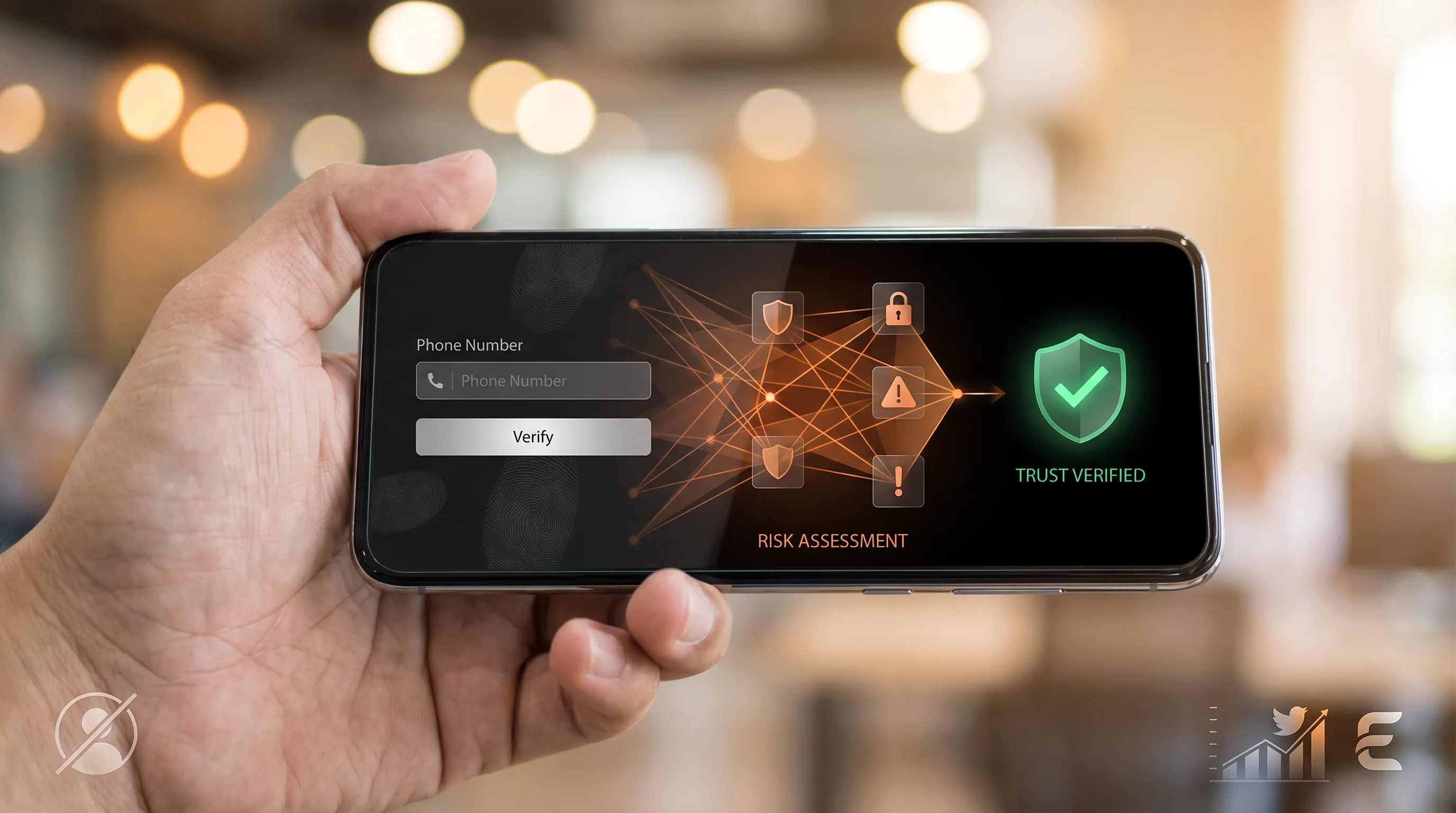
Validation checks the number against carrier data to answer three questions your CRM can't answer on its own. Is this line still in service? Is it a mobile capable of receiving a text? Has it been recently ported or reassigned to a new subscriber? That last one matters because a Princeton study of recycled numbers found that of 200 numbers obtained for a single week, 19 were still receiving sensitive messages meant for the previous owner. A number that changed hands is worse than a dead one, because your message reaches a real phone belonging to the wrong person.

The rule to adopt is simple. Treat unknown or flagged numbers as suspect and hold them back from the send. This is the commercial heart of customer database cleansing, because every number you validate out becomes one less message charge and one fewer delivery failure against your sender reputation. The alternative is paying to text lines that no customer will ever see.

Contactability and record cleanup

The final loop is the one teams skip, and it's the one that decides whether cleansing lasts. Validation produces results. Those results have to be written back into the database, or you gain nothing beyond this single campaign.

Writing back means three concrete actions on your records. Retire the numbers confirmed dead so they never enter another send. Update the ones that have changed where you have a better value. Flag the suspect and reassigned records so a rule keeps them out of future campaigns until someone reconfirms them. Do this and contactability improves permanently across future pushes.

Skip it and you re-clean the same faults every campaign, so the same validation work costs you again and again. As one CRM audit described it, a database cleaned thoroughly today degrades meaningfully within three months if no maintenance follows. The write-back step is the whole difference between a one-time scrub and lasting data quality.

Validate every number. Deliver every message.

Talk to our team about real-time phone number validation, fraud prevention, and high-deliverability SMS for your business.

Cutting wasted SMS spend

Now the money. Every invalid number or landline in your list is a charge waiting to happen for a message no customer ever reads. You pay to route it. The carrier accepts it. The delivery report looks fine. And the spend is gone.

That waste hurts more than it used to because the price of a message has climbed. The average cost to send an A2P SMS internationally nearly doubled from $0.033 to $0.0646. In the same period, 90% of mobile operators raised their international fees, and some markets pushed the cost of a single message past $0.25. When each message costs more, every undeliverable record on your list carries a bigger penalty.

There's a second cost that's harder to see on an invoice. Repeated failures damage your sender reputation, and carriers respond by filtering traffic for your whole list. Some platforms lock a sending account outright once failures cross a threshold. A good error rate sits between 0 and 6%, and once the error rate hits 10%, the account is locked from sending for 24 hours. So a batch of dead numbers wastes spend and can drag deliverability down for the customers you could have reached, which is the more expensive loss.

Cleansing for SMS campaign readiness and peak trading preparation

Timing decides how much cleansing is worth. Because mobile data decays continuously, campaign readiness means validating and deduplicating your list close to the send. A cleanse you ran in July does little for a send in November. The clean list you're picturing has already lost a slice of its accuracy by the time you press send.

The practical guidance is to run customer database cleansing in the window right before the campaign goes out. That's what campaign readiness comes down to: a deduplicated list that's validated and written back within days of the send. The closer the check sits to the send, the fewer recycled and deactivated numbers slip through.

Peak trading preparation raises the stakes on every one of these points at once. During the holiday season, SMS databases grow by an average of 41% as brands push signup, which means a flood of freshly captured numbers arriving exactly when accuracy matters most. Braze reported +90% growth in WhatsApp and SMS volume across the retailers it powered during Black Friday and Cyber Monday 2025. Message volume and spend spike in that window, while each failed message costs more.

Validating phone data before peak trading also covers the service traffic that keeps orders moving. The same list carries order confirmations and delivery updates, including one-time passcodes. A bad number breaks a service update as easily as it breaks a discount blast, and during a seasonal peak a missed delivery notification generates support calls you don't have staff for. Good peak trading preparation protects both sides of that traffic. For peak trading preparation, the sensible rhythm is to validate the standing list ahead of the peak, then run a final pass over anything captured during the surge, so SMS campaign readiness holds through the busiest days.

In house or managed cleaning

So how do you actually get customer database cleansing done? The answer depends on your list size and on the runway your tooling leaves before the send.

Handling it in-house works when a few conditions hold at once:

  1. Your list is small enough that a manual or lightly scripted pass is realistic.

  2. You already have access to real-time carrier and line-type lookups.

  3. Your data team has the hours to spare before the deadline.

Formatting and deduplication you can do yourself with a competent analyst and a weekend. The harder part is validation, because reachability depends on live carrier data for line type and reassignment, which most CRMs don't expose. Without that access, an in-house effort cleans the shape of the data but can't tell you which numbers are actually reachable, which is the check that protects your spend.

Managed support makes more sense when validation runs at scale or across borders where line-type rules differ by country, especially under a peak-season deadline you can't afford to miss. A specialist runs the carrier lookups and returns status fields per record for your team to import. You keep control of your CRM rules and customer follow-up while the validation step runs on infrastructure built for it. When the cost of a failed send is high and the runway is short, that trade is worth making.

Prepare your list before you send

Before your next campaign or peak trading period, make sure your SMS list is ready to reach real customers. Acudo validates, standardises and checks customer phone numbers before messages go out, helping teams separate reachable mobiles from landlines, inactive numbers and records that need attention.
Speak to Acudo about customer phone-data cleansing before your next high-volume send.

Validate every number. Deliver every message.

Talk to our team about real-time phone number validation, fraud prevention, and high-deliverability SMS for your business.

You should cleanse active SMS contact data before each major send and set a regular maintenance cycle between campaigns. For busy retail lists, monthly validation is a practical baseline, with an extra check in the days before peak sends. The right cadence depends on signup volume, country mix, and how often customers update details.

Store the validation status, line type, country code, last checked date, and suppression reason for each number. These fields let your CRM exclude landlines, disconnected lines, and reassigned numbers without deleting the full customer profile. They also show when a record needs reconfirmation instead of another blind send.

Yes, you can suppress bad numbers without deleting the customer record. Keep the profile for order history, consent evidence, and support context, but block the phone number from SMS campaigns until the customer provides a confirmed replacement. This protects reporting while preserving useful account data.

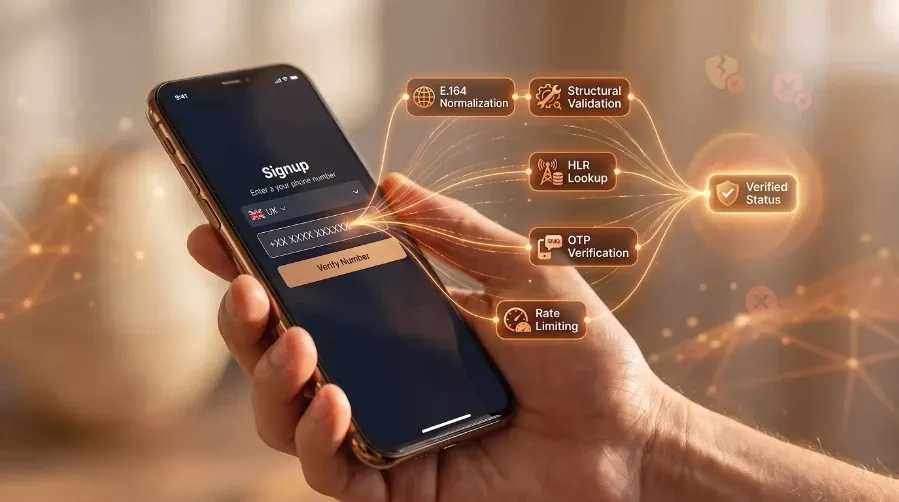
Do both if SMS is a high-value channel for your business. Signup validation catches typos before they enter the CRM, while pre-send validation catches later changes such as deactivation or reassignment. Acudo can support the pre-send step by validating mobile reachability before critical campaign or service messages go out.

Measure the change in failed-message rate, suppression count, cost avoided, and reply or conversion rate after customer database cleansing. Compare a cleaned campaign with the nearest similar campaign that used the same audience type and message purpose. Use the same reporting window, or the comparison will be distorted.

Get in touch

Talk to our team about phone number validation, fraud prevention, and reliable SMS communications.

You Might Also Like

Discover more insights and articles

A hand holds a glossy smartphone displaying a dynamic CRM interface, surrounded by organized contact nodes and metrics in a warm office setting.

Customer Data Cleansing: Keep Contact Records Accurate Before You Message

This article treats customer data cleansing as an ongoing maintenance cycle that explains contact record decay and builds a repeatable routine around its costs so your messages keep reaching real people.

A realistic tech scene featuring a smartphone displaying an SMS campaign dashboard, with glowing validation nodes and a CRM contact list overlay.

CRM Phone Data Quality: Why Customer Phone Numbers Matter Before You Send

This article explains why CRM data quality shows up first in the phone number field and how that quiet decay drags down your SMS results. It also explains what to do about it. You will finish able to diagnose whether your own contact data is costing you reach and money through weaker delivery, and to make the case for fixing it.

A realistic hand holds a smartphone, surrounded by warm bokeh, with data icons streaming in and glowing contact nodes on the side.

Customer Phone Data Cleaning for More Reliable SMS Communication

This article explains why customer data cleaning is the real fix behind reliable SMS for order alerts and delivery updates. It walks through the data faults that make contact records go stale and break message delivery, then shows what a practical pre-send validation process looks like for ecommerce and operations teams.

A glossy smartphone in a human hand displays a dynamic interface filtering contact icons, surrounded by a warm, blurred bokeh background.

CRM Data Cleansing: How Clean Contact Data Improves Customer Reachability

This article explains why mobile contact data quietly erodes inside a healthy-looking CRM and how CRM data cleansing keeps your messages landing. It focuses on mobile number quality as the most direct lever on whether a campaign or an OTP actually reaches the customer.

Get in touch

Talk to our experts about validating phone numbers and delivering business-critical SMS with reliability and speed.

Close