Build a risk-based signup decision
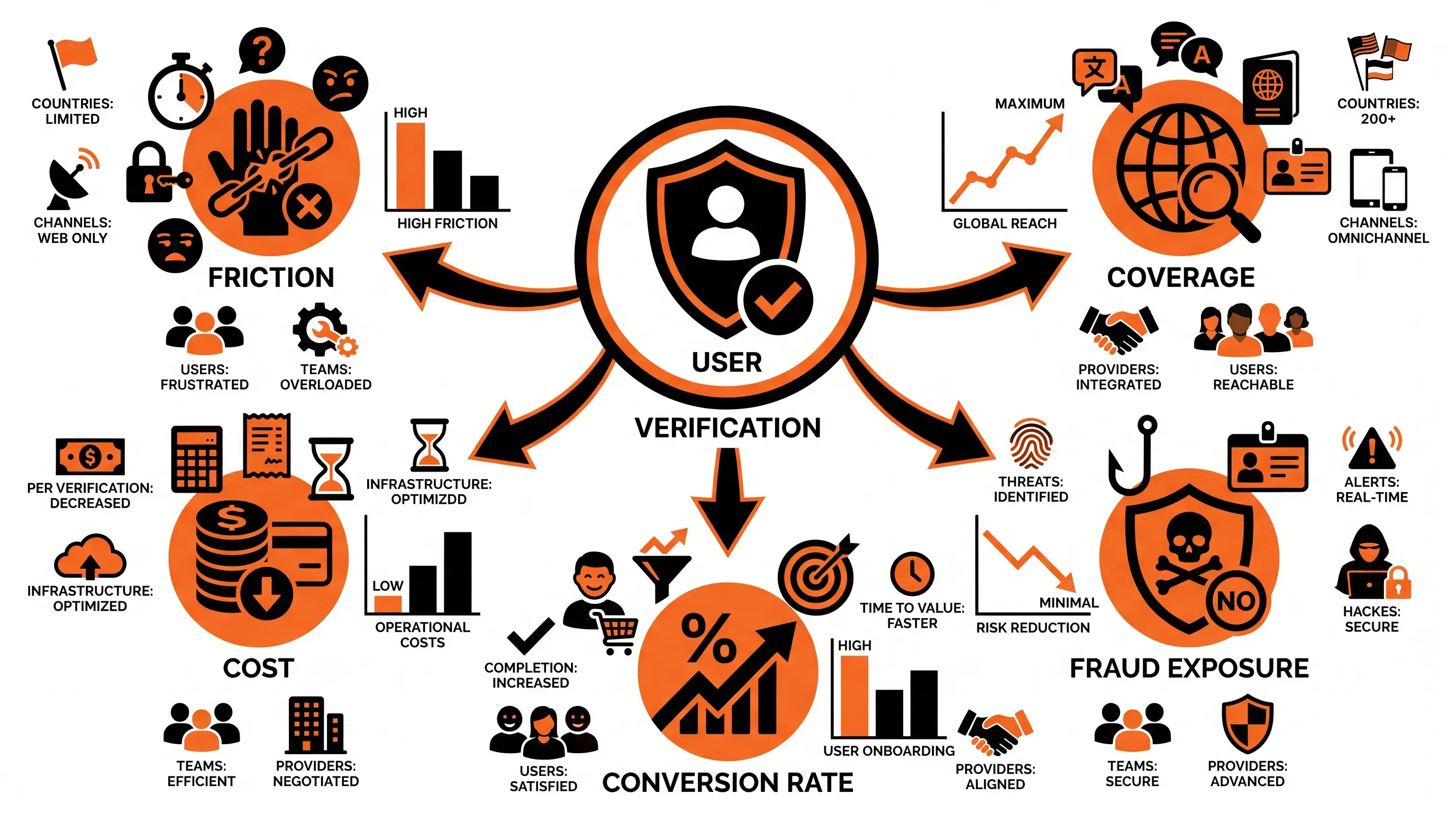
The most effective way to reduce fake accounts without damaging conversion is to stop treating every signup as equally risky.
A marketplace, for example, might accept a low-risk buyer after basic number validation while requiring stronger checks from a new seller who wants immediate access to payouts. A social platform might allow a clean signup to proceed after number validation but challenge accounts showing unusual device, IP, or signup-velocity patterns.
The exact signals will differ by platform, but the principle is consistent: validate, then assess, and then challenge only when necessary.
Phone intelligence belongs at the beginning of that sequence because it can provide useful information before an OTP or other paid verification step takes place.
For higher-risk accounts, the platform can then layer additional controls such as OTP verification, identity verification, device intelligence, behavioural analysis, or manual review.
The objective is to make abuse progressively more expensive while keeping the path for legitimate users as short as possible.
Signup controls that matter
Once a signup reaches the verification stage, the goal is to prevent attackers from repeatedly triggering the same control while keeping the experience predictable for legitimate users.
The OTP itself is only one part of the defence. Rate limits, geographic restrictions, delivery monitoring, and number validation determine whether the verification layer actually reduces abuse or simply adds cost and friction.
The OWASP Multifactor Authentication Cheat Sheet sets the baseline for code handling: enforce a short time-to-live and make codes single-use. Apply strict attempt limits and invalidate on successful verification. On resend, generate a new code and overwrite the old record.
Around that core, the operational layer decides whether your flow survives contact with real traffic and real attackers:
-
Rate limits on both requests per number and account/device activity, so a bot cannot simply rotate numbers to bypass per-number limits and farm accounts.
-
Resend intervals long enough to discourage retries that cost you money and short enough that a genuine customer doesn't give up waiting.
-
Geographic permissions that disable messaging to countries where you have no users, sellers, or drivers, since geo-permissions are a primary pumping defence.
-
Consent capture stored with a timestamp and the exact wording shown, because reconstructing it later during a dispute, including a chargeback or regulatory inquiry, is not possible.
-
Delivery monitoring broken out by country and carrier, which prevents one global number from hiding regional failures.
-
Multi-provider failover keyed to region or carrier, so a single route outage doesn't stop signups.
Where Acudo fits the flow
Number validation sits before the OTP and other verification channels.
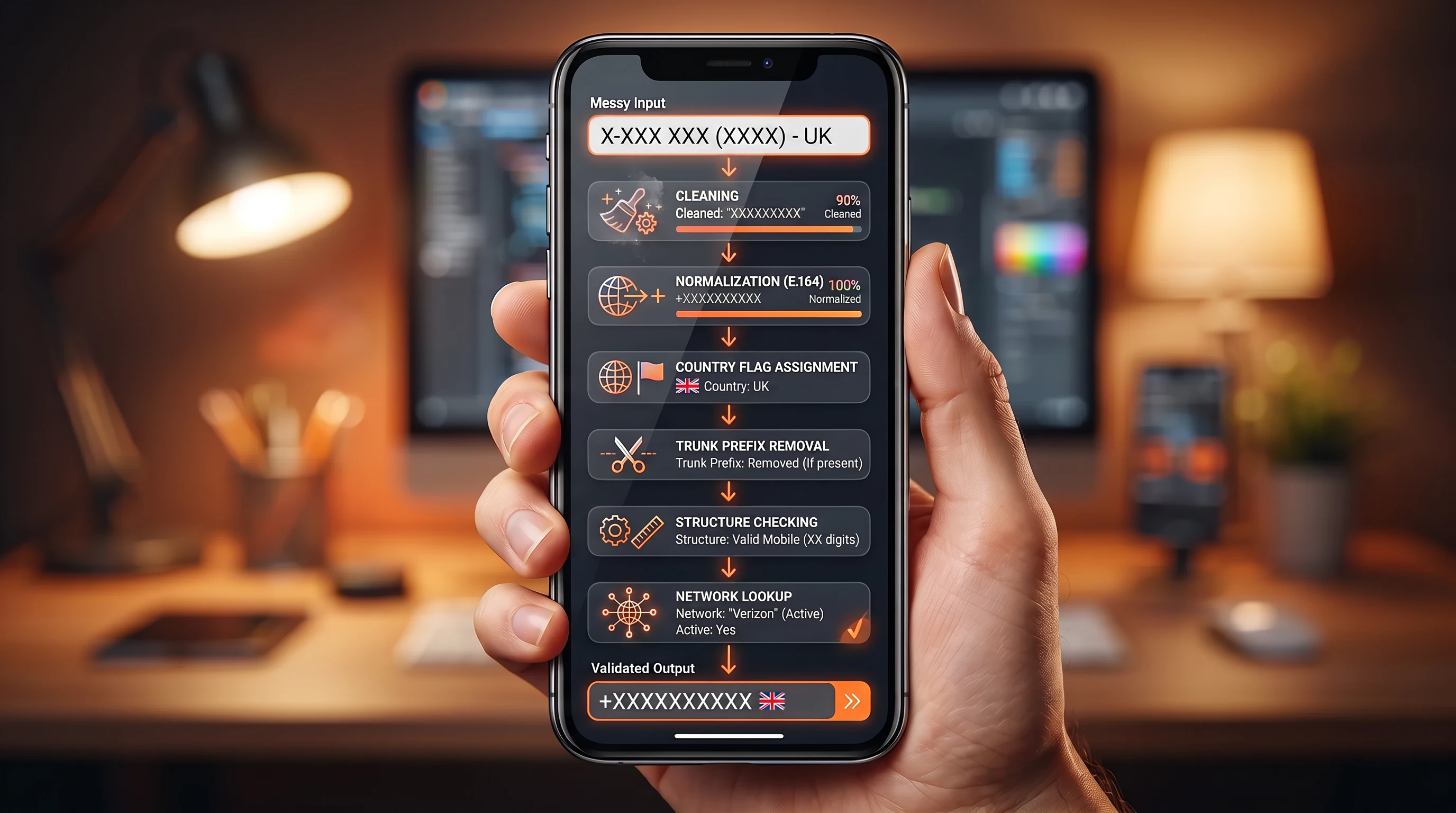
This is where Acudo fits into the signup workflow. Instead of sending a verification message to every number a user submits, a platform can first query number intelligence and use the result as an input to its risk decision.
An HLR lookup can confirm whether a number is active and identify the network currently associated with it. It can also return information such as line type and porting status. Combined with other available risk signals, this helps the platform distinguish a number that looks usable from one that warrants further scrutiny.
A low-risk number can move forward without an unnecessary verification step. An invalid or inactive number can be rejected before an OTP is sent. A number that raises concerns can trigger stronger verification or additional review.
That is the key difference between using phone data for trust & safety and simply adding another verification step: the data helps decide when friction is necessary in the first place.
Acudo provides this number intelligence through its HLR Lookup and related validation capabilities, giving trust & safety teams a way to put number-level signals upstream of their verification and onboarding workflows.
Stop fake accounts without making signup harder
The goal of phone verification for trust & safety teams should not be to verify every user as aggressively as possible. It should be to apply the right amount of friction to the right signup.
Start by validating the number before sending an OTP. Combine number intelligence with the other signals your platform already collects, such as device, IP, account history, signup velocity, and transaction risk. Let low-risk users move through signup quickly, challenge suspicious users with additional verification, and reserve blocking or manual review for cases where multiple signals indicate abuse.
The verification channel then becomes a tactical choice rather than the entire fraud strategy. SMS may be the most practical option in one market, silent authentication may reduce friction in another, and voice or WhatsApp can provide fallback coverage where needed.
Acudo fits upstream in that process, providing number intelligence that can help your team make the decision before verification costs and signup friction are incurred. Rather than treating phone verification as a binary pass/fail gate, platforms can use number data as one part of a broader risk-based onboarding system.
Speak to Acudo to explore how number validation can fit into your signup and trust & safety workflows.