Add retry logic and delivery monitoring
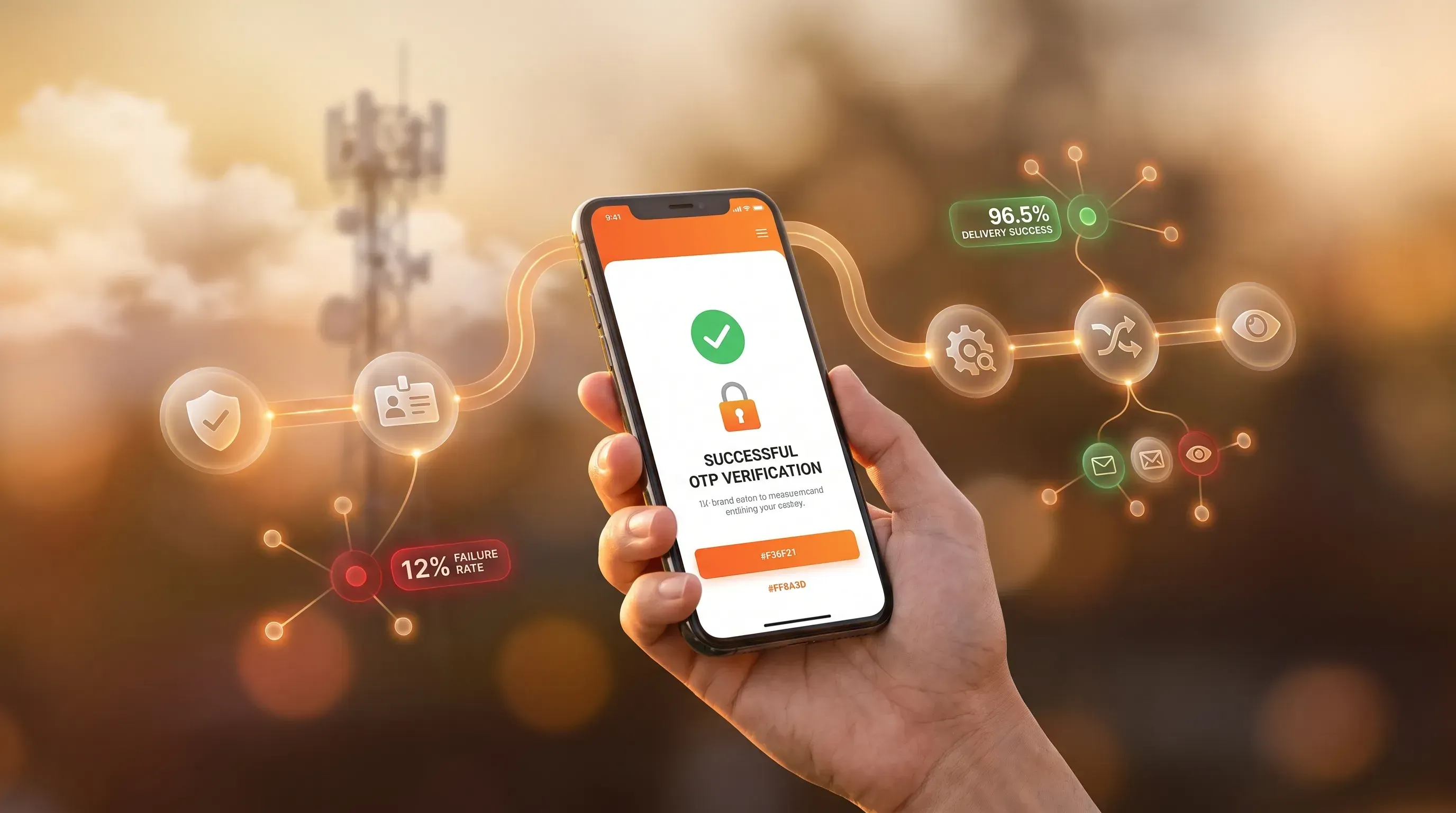
Some sends stall in transit, and this is where traffic spikes and network congestion do their damage. Codes get delayed past their expiry window during peak load, and if you're not watching, the first signal you get is a support ticket. The fix is automatic retry logic backed by real-time otp delivery monitoring, so a stalled code is detected and resent within seconds.
Watch the delivery receipts and status callbacks your provider sends back. A message accepted without a delivered status is your cue to act. The build is mostly wiring the status path into a monitor that can trigger a resend.
Retry behavior needs limits, though, or you'll spam users and trip carrier abuse thresholds. Set a short delay before the first retry and cap total attempts. Never retry a send once the receipt is confirmed as delivered.
Add fallback channels and smart routing
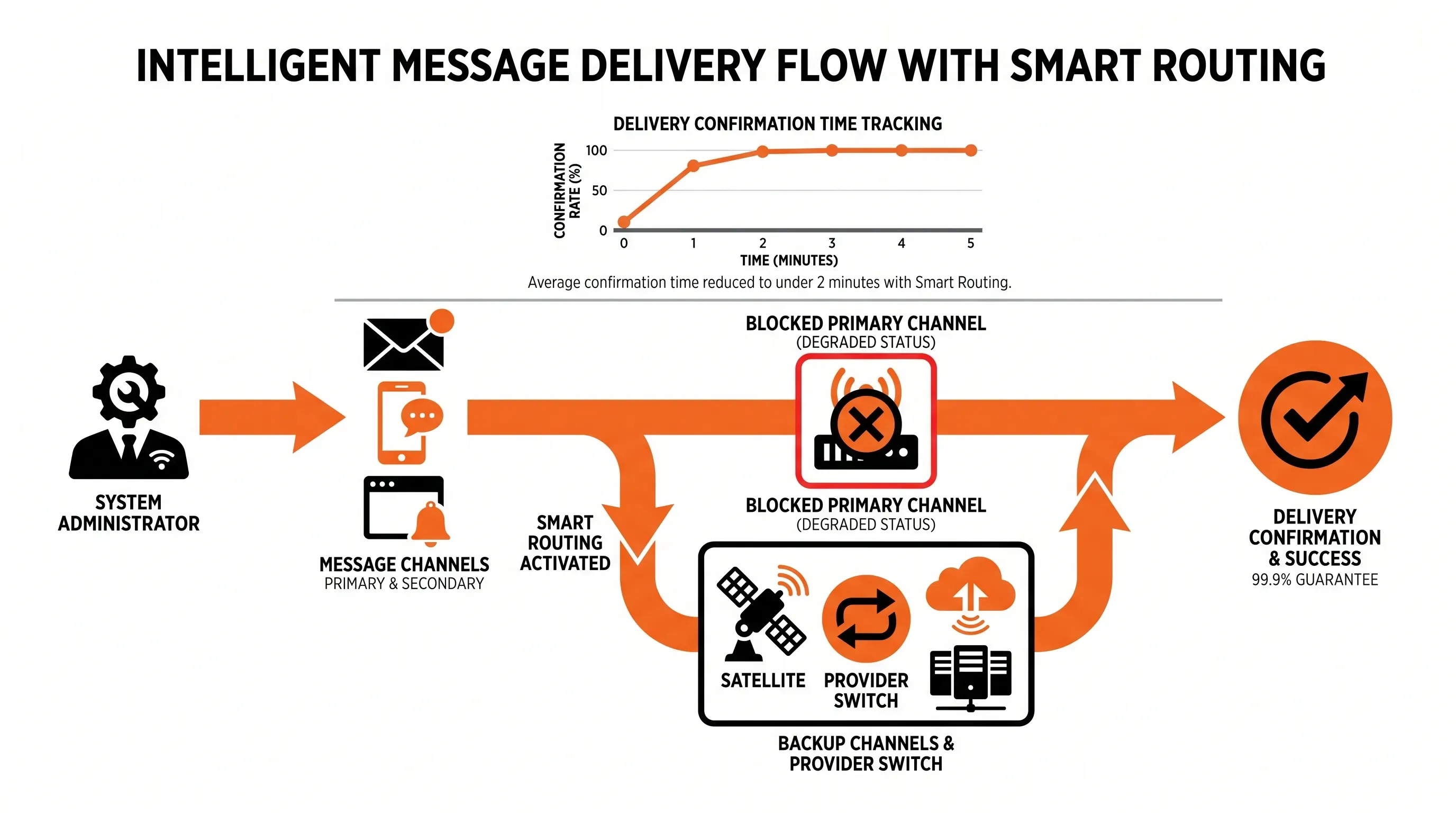
Every verification channel degrades, so distribute your traffic across channels to preserve a backup path.
Layer in backup delivery channels and routing that switches provider or channel when the primary SMS doesn't confirm delivery within a few seconds.
Choose backup channels
Pick a sensible order of preference for when SMS doesn't land.
-
WhatsApp utility messages sit at a 96.5% open rate, and because it runs over data and Wi-Fi, it can reach users with weak cellular signal that SMS never will.
-
Voice call, which reads the code aloud for users who simply never receive the text.
Email works as a further backstop when neither lands. Offering an alternative is what keeps a stuck user inside the flow instead of abandoning a sign-up or checkout.
Route across providers automatically
Intelligent routing watches OTP delivery and switches to a different provider or channel when the primary SMS fails to confirm within a few seconds. It handles carrier-specific filtering and congestion without anyone touching a dashboard, so verification stays fast even when one route degrades.
Run it with an OTP SMS service
You can build all of this by hand. You can also run the whole thing through one otp SMS service. That approach puts the provider connections and retry logic in one place. An otp SMS service brings the workflow into one place, from validation through monitoring.
Acudo fits here as one delivery and verification option. Its single platform includes real-time mobile number validation, carrier and line-type insight, and SMS communications. Some setups also lean on virtual numbers for SMS verification to manage sender identity across regions, and pairing virtual numbers with a single provider keeps that identity consistent as you scale into new markets.
Putting the sequence together
Start by validating the number and registering a branded sender ID. Then format the message so the code reads fast. Monitor and retry stalled sends, and use fallback routing across channels when the primary path fails. Hand that list to your team as a checklist.
Each step removed one specific cause. Together they eliminate the single-channel mistake for good. Start with number validation today, or run the full setup through a multi-channel option like Acudo to strengthen OTP end-to-end delivery.