Mobile number portability: what businesses need to know about network switching

Content authorBy Claire ConnorPublished onReading time8 min read
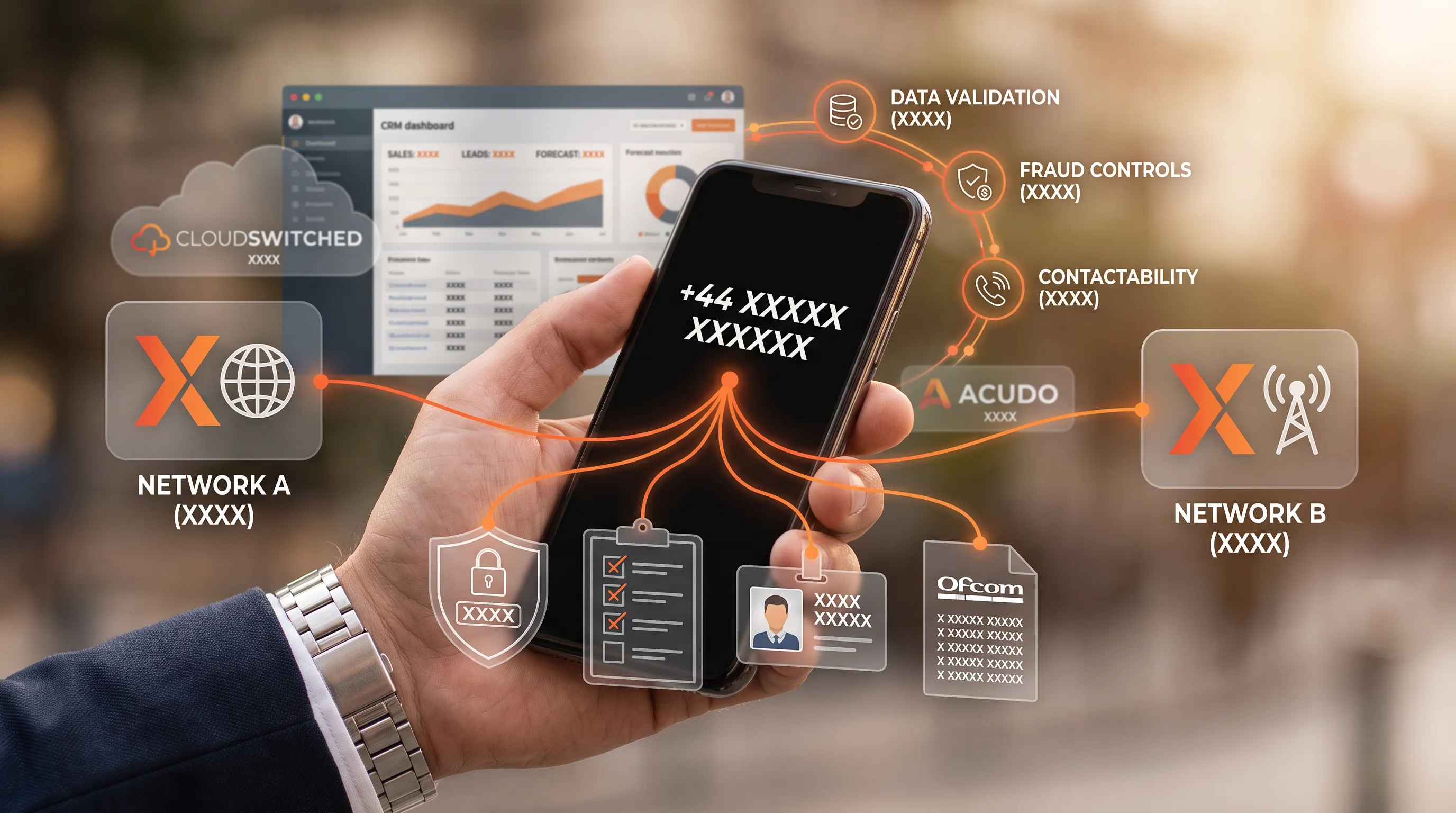
A business professional's hand holds a smartphone displaying 'X' digits, connected by glowing lines to semi-transparent network icons and regulatory symbols.

Mobile number portability lets customers keep the same phone number when they change mobile networks, but the carrier behind that number can change without any visible change to the number itself. For businesses, that creates a data-quality problem: a customer’s MSISDN can remain unchanged while the network, routing information, and reachability data associated with it become outdated. Understanding how portability works helps teams maintain reliable customer communications, verification, fraud controls, and contactability across markets where numbers can move between networks.

Why number outlives contract

Mobile number portability (MNP) allows customers to keep their existing mobile number when they move from one network to another. In the UK, it is a regulated right, and Ofcom has estimated that around 3 million consumers port a mobile number each year. For businesses, the important point is that the number itself does not reveal that the underlying network has changed.

Most ports complete without incident for the customer. The less visible issue for businesses comes afterwards: the customer can keep the same number while its underlying network information changes. If that carrier data is stored in a CRM, customer database, routing system, or risk workflow and never refreshed, the record can become stale without anyone noticing.

The mechanics of a port are relatively straightforward. What matters for businesses is understanding what changes during the process, which data becomes unreliable afterwards, and where network-aware validation can prevent stale records from affecting customer interactions.

What mobile number portability means

Mobile number portability moves the customer's mobile number from one network to another while the number itself remains unchanged. The commercial relationship with the old provider does not move with it, but the network associated with the MSISDN does. That distinction is important for businesses that use carrier information to make routing, verification, fraud, or contactability decisions.

That distinction matters because it sets expectations for everything else. The new provider issues a new SIM and a new plan, and the old plan terminates. Under Ofcom's General Conditions C7, the losing provider's contract ends automatically on the working day the port completes, and pay-as-you-go credit is refunded on request rather than carried across.

The important distinction for businesses is that any system that assumes a number's original network remains unchanged can become inaccurate over time.

How mobile number portability starts

MNP processes vary by market, but the underlying principle is the same: a subscriber authorises a move from one network to another while keeping the same number. The difference between recipient-led and donor-led porting is useful for understanding how the switch is initiated, but businesses generally do not need to manage the customer's port request themselves. Their concern is what the network change means for the customer data they already hold.

Validate every number. Deliver every message.

Talk to our team about real-time phone number validation, fraud prevention, and high-deliverability SMS for your business.

Recipient-led porting

In a recipient-led market, the customer approaches the network they want to join, and the new provider takes it from there. The gaining provider checks that the number is eligible and submits the request to the losing provider.

The customer never speaks to the network they're leaving. That's the appeal of the model for customers, and it's also why validation problems surface late: the gaining provider is working from details the customer typed into a form, while the losing provider relies on its own records. When those two versions of a name or address disagree, the request bounces back.

Donor-led MNP

Donor-led MNP puts a code in the middle. The customer asks their current provider for it, then hands it to the new one, and nothing moves until that code reaches the gaining provider.

In the UK, that code is the Porting Authorisation Code (PAC). Since 1 July 2019, customers get it by texting PAC to 65075 from the SIM they're leaving, and the reply arrives within a minute. It's valid for 30 days, and the text also spells out any early termination fee and any credit balance they'd lose.

What changes when a mobile number switches networks

The customer-facing porting process is relatively short, but businesses should focus on what happens to the number's underlying network data. The customer may experience little more than a SIM change, while systems that store carrier information can be left with an outdated network record.

There's also a regulatory impact: the losing provider must keep serving you on the same terms until the migration completes. The mobile number portability process itself must finish within one working day of SIM activation or of the PAC reaching the new provider, and any loss of service during the switch must not exceed one working day.

If the port fails outright, the losing provider has to reactivate the user's number and service until it's completed properly.

Why mobile number portability creates a data-quality problem

The bigger business risk is not a failed port. It is a successful port that goes unnoticed. If the associated carrier data is never refreshed, your system can continue making decisions based on information that is no longer true.

Cloudswitched, a UK provider handling business ports, names account name mismatch as the number one cause of porting rejections in the UK. But a failed port is mainly a customer inconvenience. The bigger issue for businesses is the port that succeeds without anyone noticing: once a number has moved networks, any carrier data stored against it can be out of date until it's refreshed. That's why the useful preparation is administrative and not technical.

Validate every number. Deliver every message.

Talk to our team about real-time phone number validation, fraud prevention, and high-deliverability SMS for your business.

Mobile number portability checklist for businesses
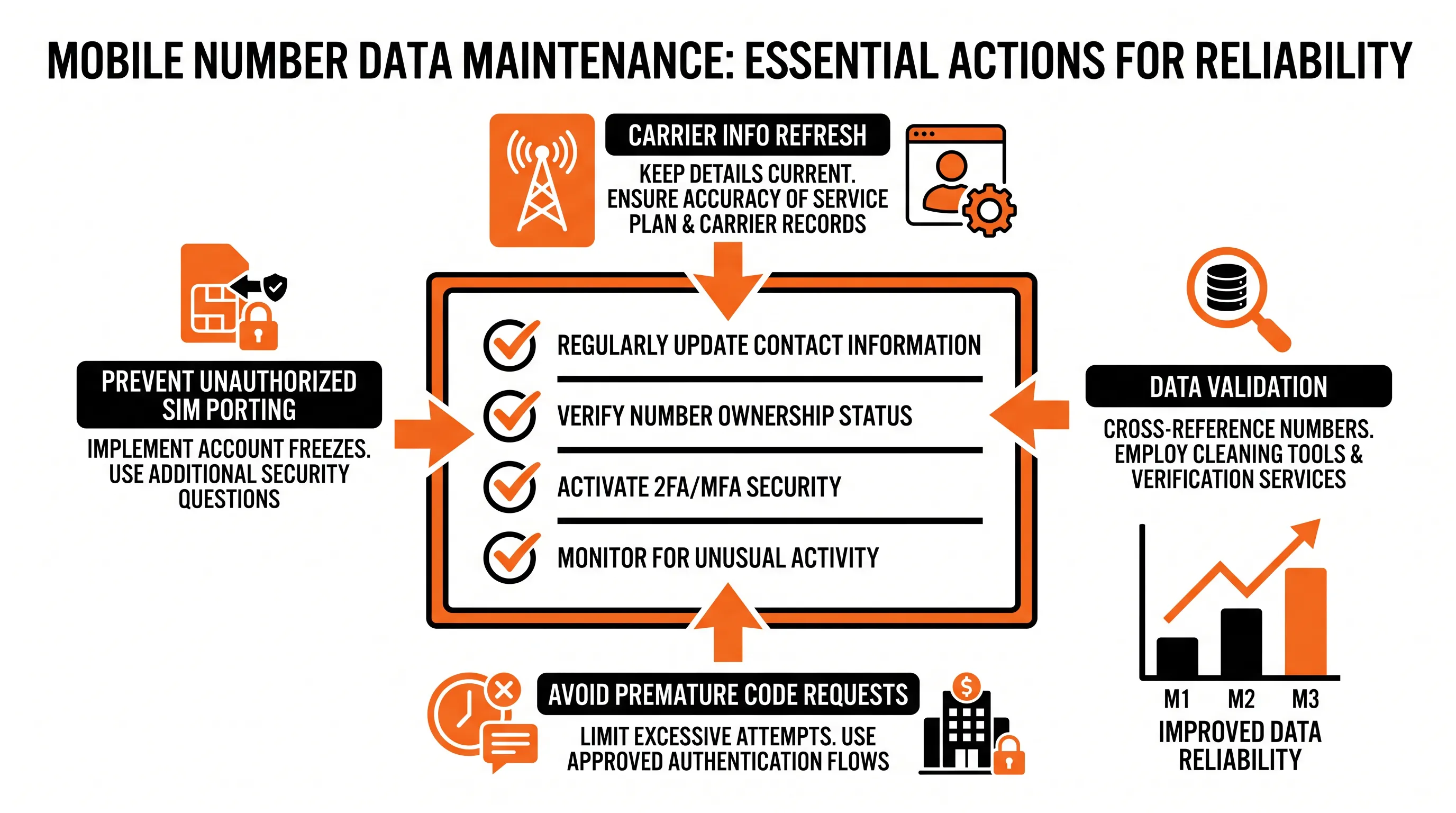
Bold infographic on a white background featuring a central checklist with orange and black icons, surrounded by color-coded data maintenance clusters.

For teams maintaining customer number records, use this checklist to keep stored mobile-number data reliable:

  • Don't assume the carrier associated with a number's prefix is still correct

  • Refresh carrier and network information for numbers already stored in your customer database

  • Use current carrier and reachability signals when deciding whether a number is suitable for a call, SMS, or verification workflow.

  • Consider network changes when investigating unexpected delivery failures or changes in customer contactability

  • For fraud and risk workflows, treat carrier information as a data point that needs to be current rather than as a permanent attribute of the number

  • Revalidate important customer records periodically instead of relying exclusively on the data captured at signup

Two habits cause most of the avoidable delay in SIM porting: the customer requesting a code before they've decided where they're going, and letting someone other than the account holder start the request. Both are cheap to fix in advance and expensive to fix afterwards.

After the cutover

Your customer's number can remain exactly the same while the network behind it changes. For a business storing thousands or millions of mobile numbers, that creates a simple but important data-quality problem: the MSISDN stays stable while carrier information can become stale.

A number's prefix is not a reliable way to determine its current network in an MNP market. Once a subscriber ports, systems relying on historical carrier data or prefix-based assumptions can continue associating the number with its previous network.

For businesses, stale carrier data can affect more than routing. It can contribute to delivery failures, unnecessary messaging costs, inaccurate contactability decisions, and unreliable customer records. The same problem can also matter in fraud and risk workflows when teams use carrier information as one signal among several. A phone number validated once at signup does not guarantee that its network information will remain current months or years later.

That's the case for revalidating rather than trusting what you captured. A live HLR lookup returns the current network for a number and flags ported status, which is what routing and contactability decisions actually depend on. Prefix data is a guess. Customer network data is an answer.

What mobile number portability means for your business

Mobile number portability is easy for customers to overlook because the number they use does not change. For businesses, that same stability can hide an important change underneath: the network associated with the number may no longer be the one stored in your systems.

That matters when carrier information feeds customer communications, contactability, fraud and risk decisions, or operational workflows. If your database still reflects the network a customer used when they first signed up, you're making decisions from historical data.

Acudo helps businesses revalidate mobile numbers at scale with current carrier and reachability data, so teams can work with a more accurate view of the numbers in their customer databases. If you're dealing with stale carrier information, unexpected delivery issues, or a large mobile-number database that needs regular validation, talk to Acudo about how network data can be kept current.

Validate every number. Deliver every message.

Talk to our team about real-time phone number validation, fraud prevention, and high-deliverability SMS for your business.

Keeping the same number doesn't change your WhatsApp account because it is registered to the number rather than the mobile network. Your chats stay on your device. If you also change phones, wait until the new SIM receives text messages before you request WhatsApp verification.

Yes, mobile number portability also applies when your new provider supplies an eSIM instead of a physical SIM. Give the new provider your PAC and follow its eSIM activation instructions. Keep the old eSIM active until the port completes, then remove it only after calls and texts reach the new service.

Yes, bank security texts should continue to reach the same number after the port completes. A brief cutover gap can delay a message on the switching day. If texts still don't arrive after service is active, restart your phone and ask the new network to check messaging on the line before changing your bank details.

Contact the new provider and report that incoming texts have not transferred correctly. A port can complete unevenly while network records update, so calls and messages can behave differently for a short period. Keep the old account unchanged and record failed message times to help the provider investigate.

Acudo can use an HLR lookup to check the current carrier and ported status attached to a mobile number. Businesses can query this data before they route messages, because the original number prefix doesn't update when a customer changes networks. This supports routing decisions based on current network information.

Get in touch

Talk to our team about phone number validation, fraud prevention, and reliable SMS communications.

You Might Also Like

Discover more insights and articles

Title:
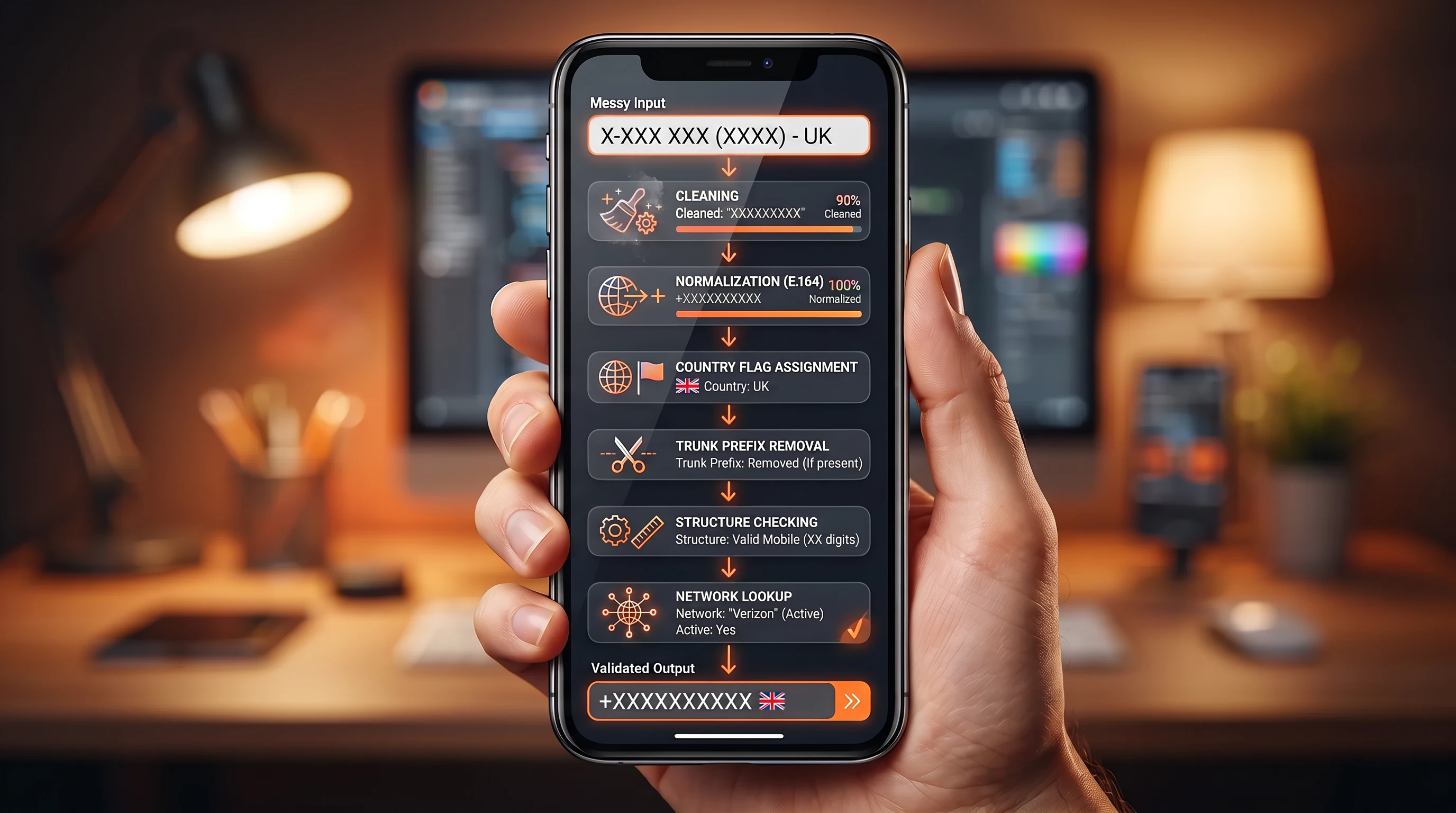
How to create phone number validator rules that catch common errors

Meta description:
Learn how a phone number validator lets you clean input and check whether numbers can receive messages.

A

How to create phone number validator rules that catch common errors

Turning messy phone input into stored numbers you can actually message means building a validation pipeline, not a single regex. From cleaning through to a live network lookup, then what to return to the caller and how to test the whole thing end to end.

A realistic smartphone in a hand displays a phone number entry UI, glowing network overlay, and a secure checkmark, with warm bokeh background.

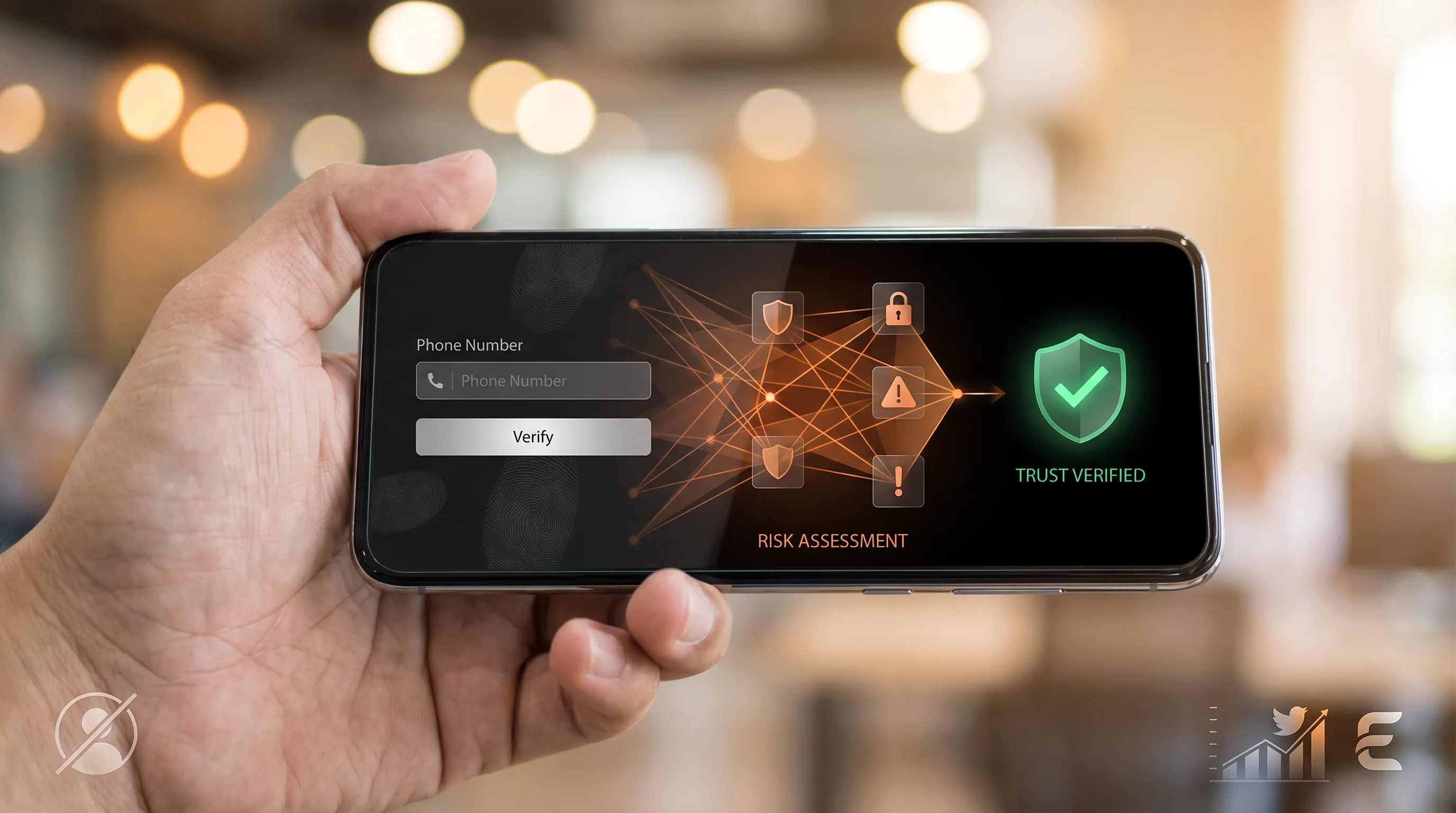
Phone verification for trust & safety teams

Fake accounts are rarely stopped by adding another verification step. The better approach is to use phone intelligence to decide which signups need more friction and which can pass with minimal interruption.

For trust & safety teams, the goal is not to verify every phone number in the same way. It is to identify numbers that look risky, validate legitimate ones quickly, and reserve stronger verification for accounts that show other signs of abuse.

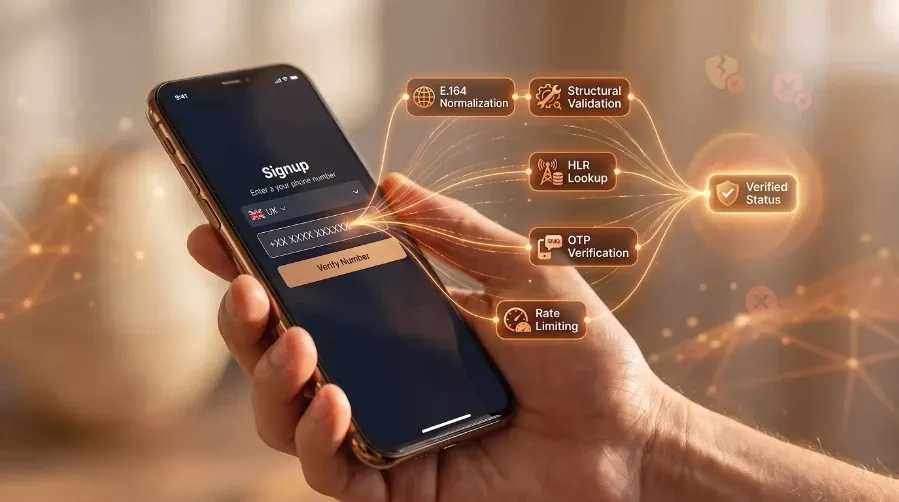
A close-up of a realistic hand holding a smartphone displaying a UK phone number signup interface with a glowing network overlay.

How to set up UK phone number verification

A UK mobile number can look perfectly valid and still be unsuitable for an OTP, onboarding check, or critical customer message. The problem is what happens between accepting the number and sending the message: format validation can confirm that the number follows UK numbering rules, but it cannot tell you everything about the line itself. A stronger verification flow puts number validation and intelligence before the OTP send, so product, engineering, and trust & safety teams can make a better decision about whether to proceed.

A realistic hand holds a glossy smartphone displaying an SMS campaign dashboard, with glowing network icons and warm bokeh background.

How to build a bulk SMS messaging campaign that drives results

A first bulk SMS messaging campaign either sets the pattern for every one that follows, or teaches an expensive lesson in consent and list hygiene before a single message goes out. Getting it right comes down to sequence: one measurable goal, defensible consent, a validated list, and a message worth reading, built on the UK rules that decide whether a text lands or gets filtered.