Phone Number Intelligence for Customer Contactability

Content authorBy Claire ConnorPublished onReading time9 min read
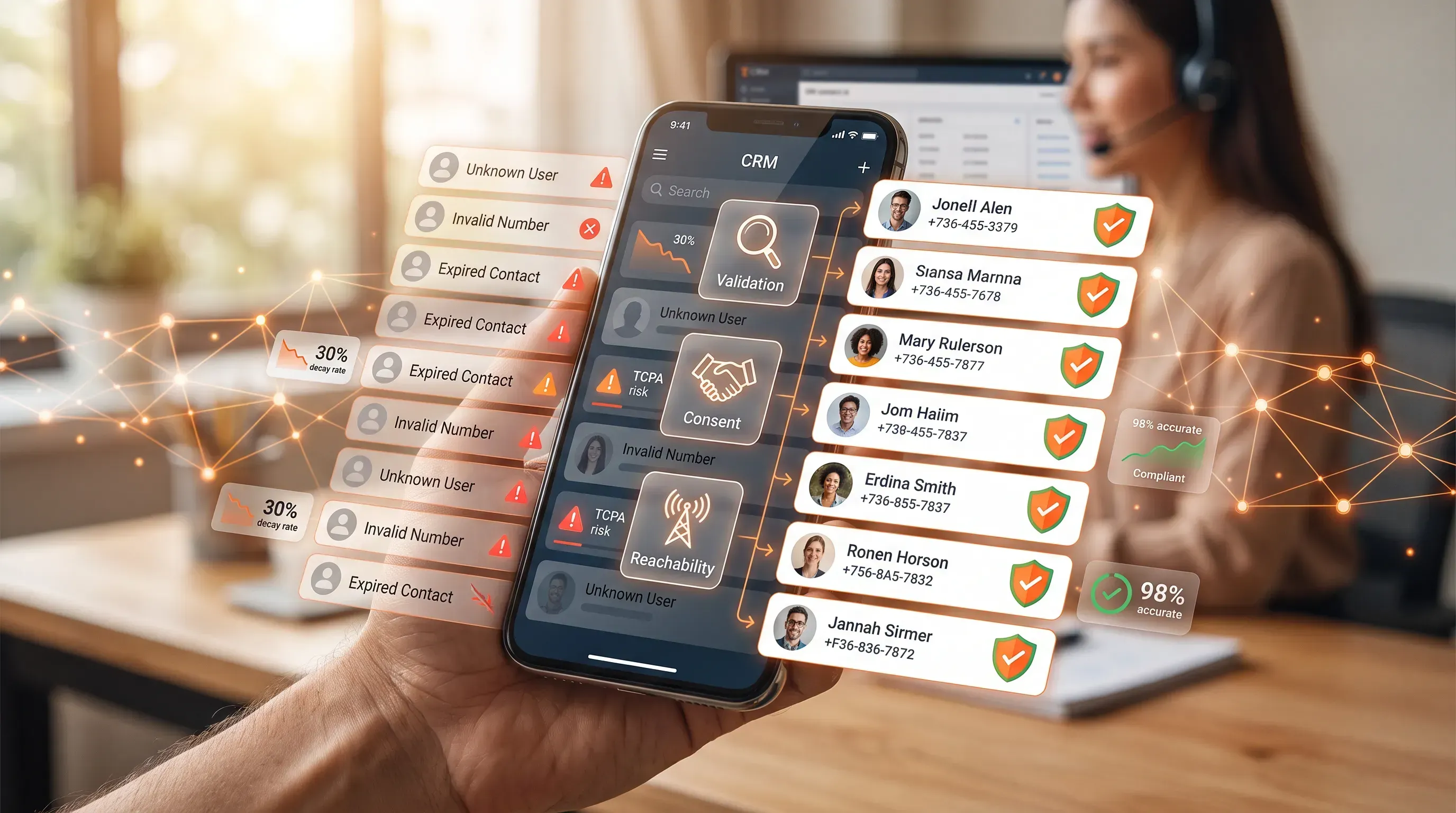
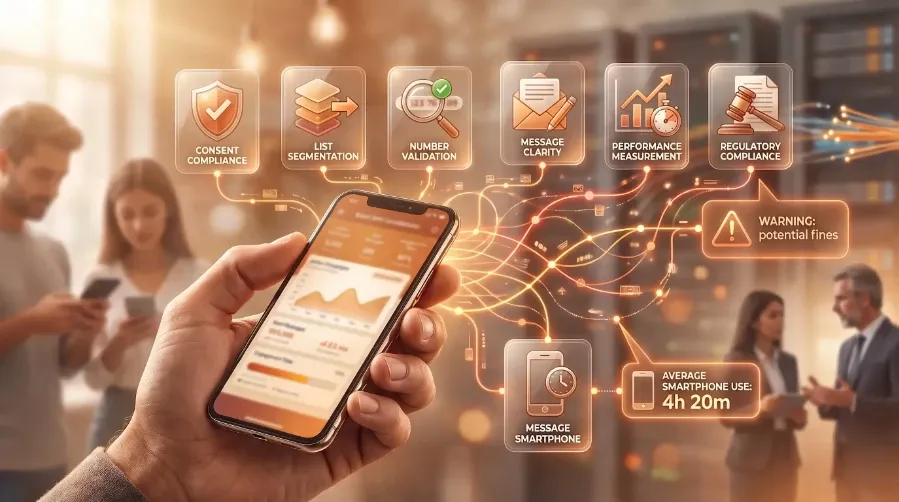
A hand holds a smartphone displaying a CRM contact list transitioning from error-prone to validated contacts, set against a warm bokeh background.

How does number intelligence fit in your contact workflow? Where is the hard line between contactability and consent? Learn the signals that tell you which numbers are worth contacting before you hit send.

Why so many numbers fail

You own a database full of phone numbers, and number intelligence starts with an uncomfortable truth about it: a real share of those numbers bounce or reach someone who is not your customer. Messages are already sent, the delivery report comes back thinner than expected, and by then the spend is gone.

The reasons are less exotic than they sound. Phone data decays as people switch carriers or cancel service. 30% of B2B contact records go stale within twelve months; a record that was accurate in January is unreliable by autumn. Numbers get ported between networks. They also get reassigned, and the scale of that is not small. Add the everyday mess of capture at the form, where a customer enters a wrong digit or drops the country code, and a clean-looking list is quietly full of dead ends.

The cost lands in places you feel:

  • Wasted send spend on numbers that were never going to receive the message can incur charges whether or not delivery happens.

  • Skewed campaign metrics, since delivery and click rates are calculated against a denominator stuffed with numbers that can't respond.

Then there is the failed service contact, which is worse than any marketing miss. A fraud alert or a delivery update that never lands damages trust more than a promo text. But there is a practical way to know which numbers are worth contacting before you contact them, and it has a name.

What number intelligence means

Number intelligence is a data quality and contactability layer. It validates and enriches a phone number with current carrier information before you use it. It also establishes line type and reachability, so a sending decision rests on what a number is today rather than what it looked like when someone typed it in. It checks numbers before outreach begins.

Contrast it with static number data. A number allocated to a UK mobile range tells you how the number was originally handed out. It says nothing about whether the SIM is still active or whether a handset can receive a text right now.

An HLR lookup, a real-time query to the mobile operator's Home Location Register, is one way that current status gets confirmed. This information helps guide sending decisions, and it helps determine the next steps.

Contactability, identity, and consent

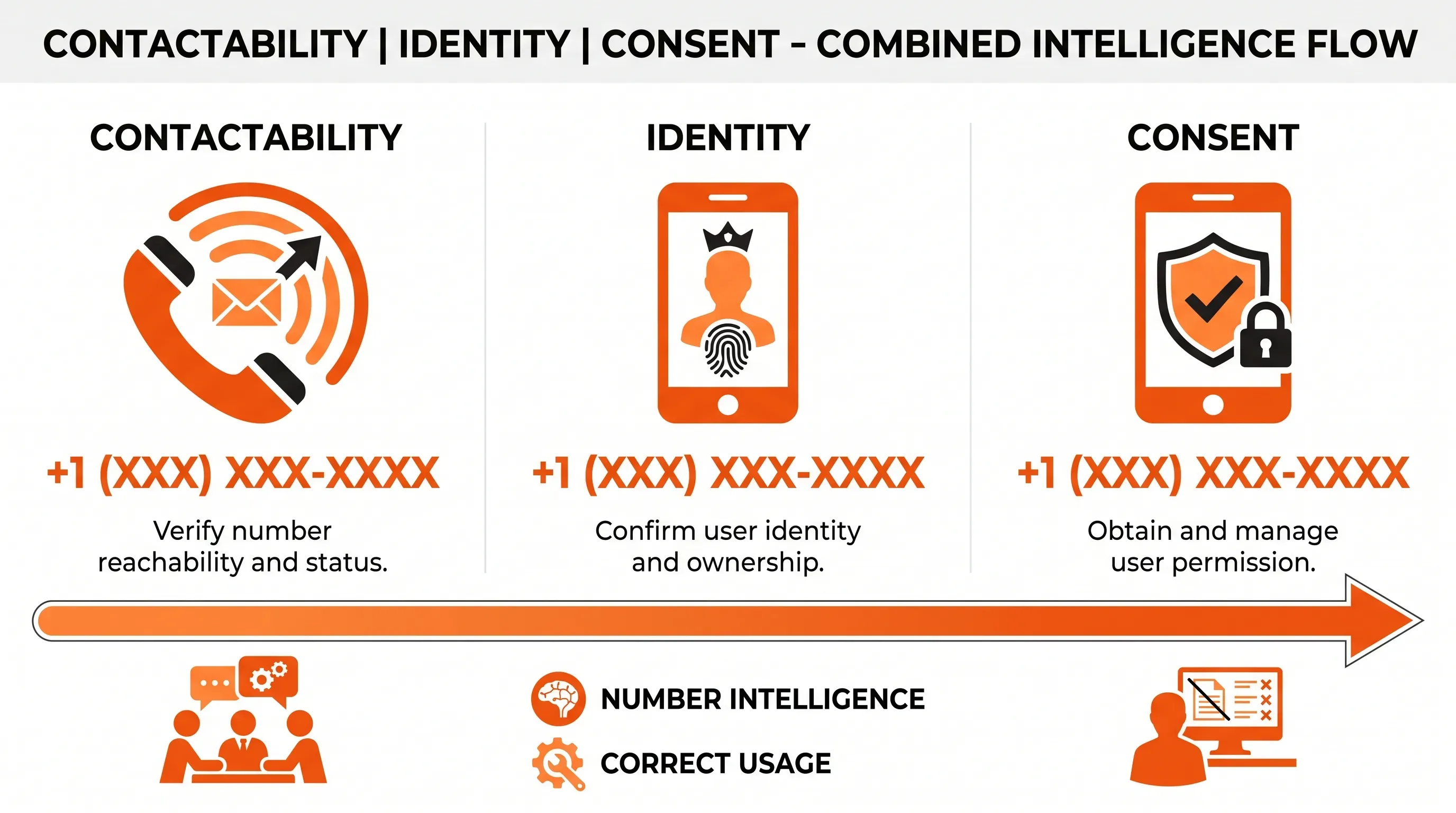
Bold infographic with three vertical columns labeled 'Contactability', 'Identity', and 'Consent', featuring solid orange and black icons.

A number can be reachable but belong to the wrong person and be off-limits for contact, all at once. It is important to keep these concepts separate. Here's what is different about them:

Can the number be reached

Contactability is whether the number is live and capable of receiving the channel you intend to use, whether that's a voice call or an SMS. It must also be correctly formatted.

However, a number can be a textbook example of the E.164 international standard, the ITU-T numbering plan that caps a number at fifteen digits with a leading country code, and still be dead. Format validity confirms the number exists. Contactability confirms a message will land.

Validate every number. Deliver every message.

Talk to our team about real-time phone number validation, fraud prevention, and high-deliverability SMS for your business.

Whose number is it

Identity is whether the number belongs to the intended person. It's not always the case: after a port or a reassignment, the line is live and will receive your text, but the human holding the handset changed. That's how a helpful account update ends up on a stranger's screen.

Porting and carrier signals tell you a number moved or changed hands, which warns that the person changed too. Confirming who holds the line requires a separate, explicit verification.

Are you allowed to contact

This is a compliance and permission question. A number can be reachable and correctly identified and still be entirely off-limits to contact.

Contactability does not automatically stand in for consent. That substitution is common and expensive. Penalties are steep, so thousands of texts turn into real money fast. Permission records live in your consent and opt-out systems, and they override a green signal every time.

Number quality signals to watch

Number intelligence combines several data points, the importance of which depends on what you're about to do with the number. A signal that matters for a promotional blast matters differently for a one-time security code.

Key signals to monitor

The core number quality signals describe what a number is and whether it's worth contacting. Start with these:

  • Confirm that the number is up to the standards with E.164 to know whether it exists as a real line.

  • Line type tells you whether you're looking at a mobile or a landline. It determines which channels apply.

  • Active or inactive status, which reflects whether the subscription is live on the network right now.

These signals help determine how each record should be handled. A valid, active mobile is worth an SMS. A valid landline is worth a call. An inactive number belongs in a follow-up path. Using these signals turns a raw phone field into a routing decision.

Carrier and porting history

Carrier data tells you which network currently holds the number, and porting history tells you whether it moved. Both matter for reachability and for how much you trust the record. A number that recently ported is a number where the surrounding data, including who owns it, deserves a second look.

Porting can break good numbers. For example, a customer switches from one carrier to another and nothing about the number on your screen changes. The record still looks perfect. But routing shifts underneath it, and a system that hasn't refreshed its carrier data can misroute or misprice the message. The current network and portability status are what a live registry check returns, so you track porting as a number quality signal.

Validate every number. Deliver every message.

Talk to our team about real-time phone number validation, fraud prevention, and high-deliverability SMS for your business.

Fraud and risk flags

Fraud and risk indicators are a secondary signal here, and that placement is intentional. They can flag high-risk or disposable numbers that fraudsters generate programmatically through free VoIP services to bypass SMS verification and inflate OTP traffic. Useful context, and worth having on a registration flow.

Treat risk flags as one more input among the number quality signals, valuable when they fire, secondary to the contactability question that drives the rest of the work.

Reachability and mobile data quality

Mobile data quality confirms the line type and live subscription. It also identifies the carrier and indicates whether porting occurred.

This is the information your SMS workflow depends on. Your SMS delivery rate is messages delivered divided by messages intended, and a low rate points straight at problems like invalid numbers. A well-formed unreachable number drags that ratio down and drags your reporting down with it. Checking reachability before sending is how you make the delivery number mean something.

CRM hygiene

Number intelligence feeds ongoing CRM hygiene. You validate new numbers at capture, and you refresh existing records on a schedule. Contact data decaying at 22.5% per year means a database left alone for two years loses almost half its accuracy while you keep paying to store and message all of it.

Validation results are time-bound for the same reason. Store the check and its line type and reachability status. Record the carrier with the last-checked date, so the record tells you what it found and when.

Ownership breaks down like this:

  1. Data or RevOps owns the schema and determines which validation fields live on the record and how they are structured.

  2. CRM and marketing operations own the suppression rules and turn a failed check into an action, such as a decision to keep a number back from the next SMS send.

  3. Operations runs bulk validation on a periodic schedule across the base.

Clearly define these responsibilities and the hygiene program runs on its own. Leave them fuzzy and validation becomes a project someone does once and never repeats.

Pre-send decisions

A pre-send check turns the framework into a set of concrete instructions for the batch in front of you.

The logic is direct: send SMS to active mobiles, route landlines to a call path. Suppress inactive and unreachable numbers, and flag them for re-collection because the customer is real. Cleaning a list this way cuts spend on invalid numbers, and it fixes your metrics. When the denominator holds numbers that receive the message, your delivery and engagement rates finally describe the campaign instead of the junk in the list.

That's the payoff of separating contactability from identity and consent up front. A pre-send check screens for whether the number is available for contact, while your consent records govern permission. They work in parallel.

Better service-led support

Number intelligence supports service-led and support use cases, because a service notification or a callback has to reach the specific customer who needs it, right now. A one-time passcode that never arrives is a broken promise at a moment the customer is paying attention. So is a delivery update that lands on a reassigned number or a callback to a disconnected line.

The customer-experience cost of failing to reach someone during a time-sensitive support moment dwarfs a missed promo. Confirming reachability before a service message goes out is how you keep the reliability of contact high when it counts, which is the difference between a support system customers trust and one they route around.

Where to start

The key point is this: number intelligence is a contactability and data quality layer that answers whether a number is worth contacting. It remains distinct from identity and from consent. Keep these three concepts separate, and the rest of your contact workflow gets more honest.

Acudo can help ecommerce and operations teams confirm whether numbers are real and active before budget is spent, without the complexity of building a full CPaaS solution. Speak to Acudo about mobile validation workflows and put number intelligence in front of your next send.

Validate every number. Deliver every message.

Talk to our team about real-time phone number validation, fraud prevention, and high-deliverability SMS for your business.

Treat an unknown result as a hold, not as approval to send. Retry the lookup once after a short delay if the provider identifies a temporary network issue. If the status remains unknown, use another verified contact channel or ask the customer to confirm their number.

Run a basic format check while the customer enters the number, then run a live check after submission or before the first message. This approach catches obvious entry errors early without making the form depend on a network lookup at every keystroke.

No. Number intelligence assesses a phone line’s current contactability, while email verification checks a different channel with different failure patterns. Keep the results in separate fields, then use the verified channel that matches the message and the customer’s stated communication preference.

Replace the old number only after the customer confirms the new one through your approved verification process. Run a fresh contactability check on the replacement, preserve the change date for audit purposes, and apply existing consent rules before any message is sent.

Start with a limited test using records that reflect your usual countries and message types. Compare returned statuses and timestamps with your CRM requirements, then check how results feed suppression rules. Speak to Acudo about mobile validation workflows if its fields and integration options fit that process.

Get in touch

Talk to our team about phone number validation, fraud prevention, and reliable SMS communications.

You Might Also Like

Discover more insights and articles

Title:
How to create phone number validator rules that catch common errors

Meta description:
Learn how a phone number validator lets you clean input and check whether numbers can receive messages.

A

How to create phone number validator rules that catch common errors

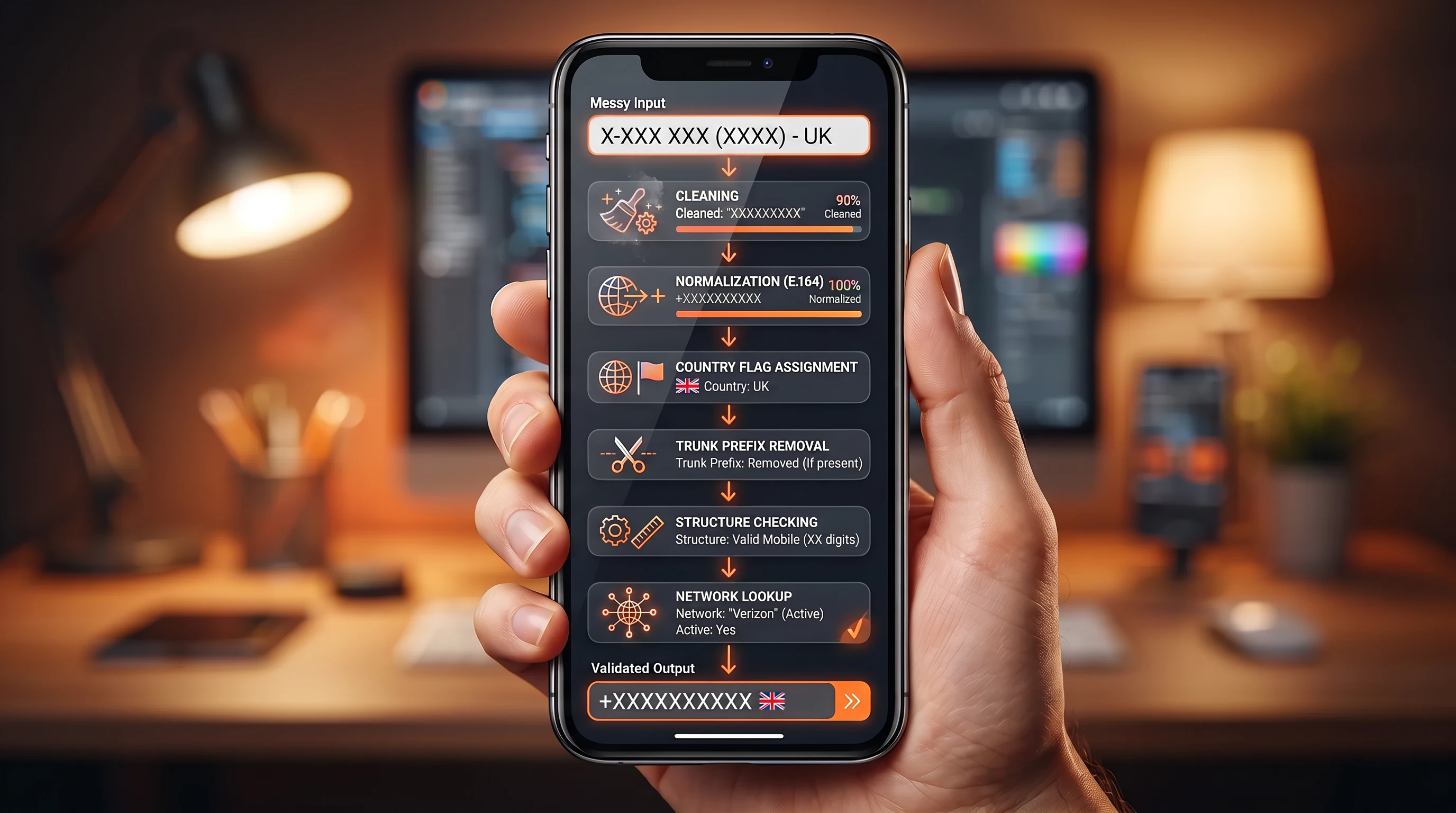
Turning messy phone input into stored numbers you can actually message means building a validation pipeline, not a single regex. From cleaning through to a live network lookup, then what to return to the caller and how to test the whole thing end to end.

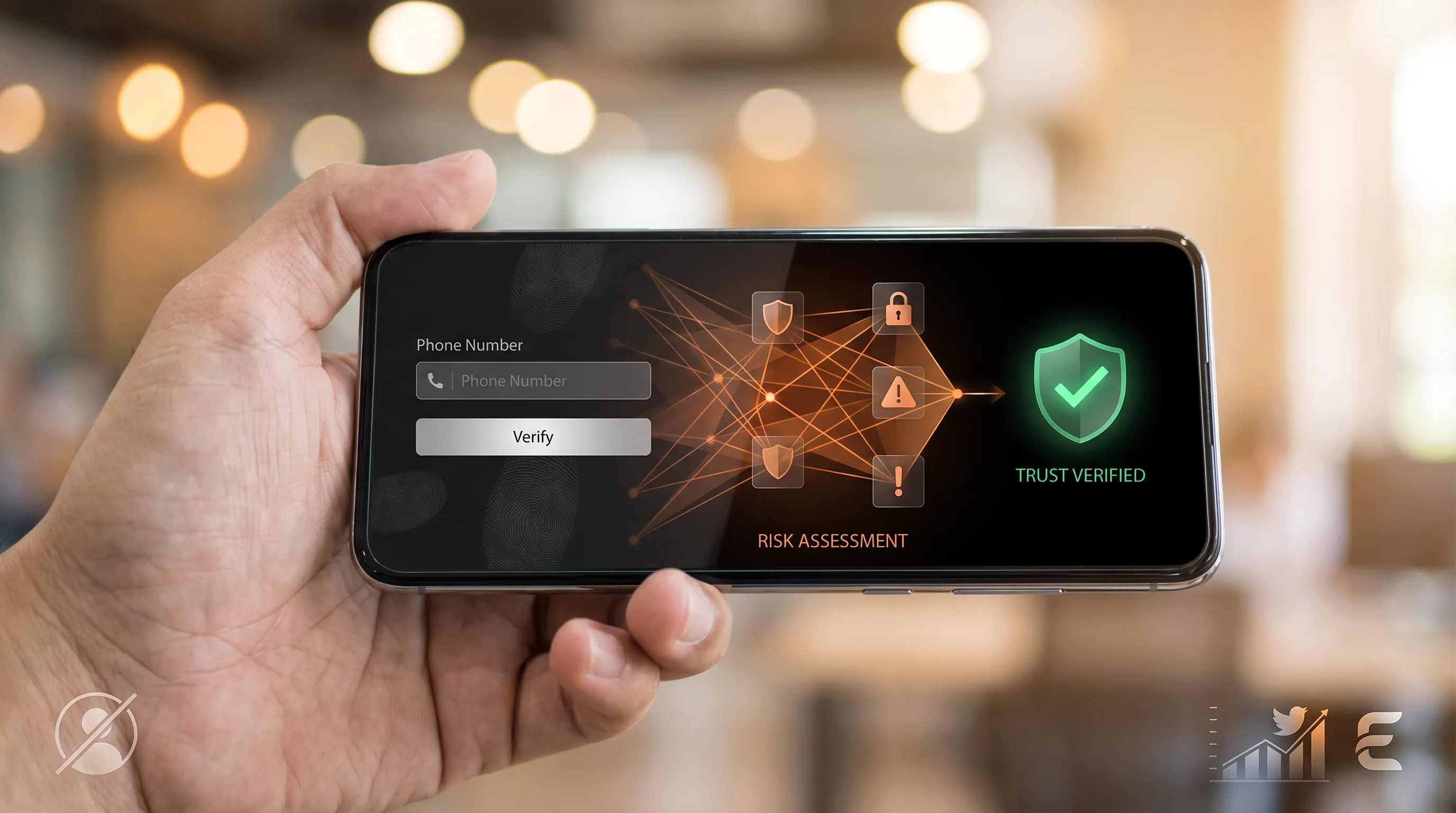
A realistic smartphone in a hand displays a phone number entry UI, glowing network overlay, and a secure checkmark, with warm bokeh background.

Phone verification for trust & safety teams

Fake accounts are rarely stopped by adding another verification step. The better approach is to use phone intelligence to decide which signups need more friction and which can pass with minimal interruption.

For trust & safety teams, the goal is not to verify every phone number in the same way. It is to identify numbers that look risky, validate legitimate ones quickly, and reserve stronger verification for accounts that show other signs of abuse.

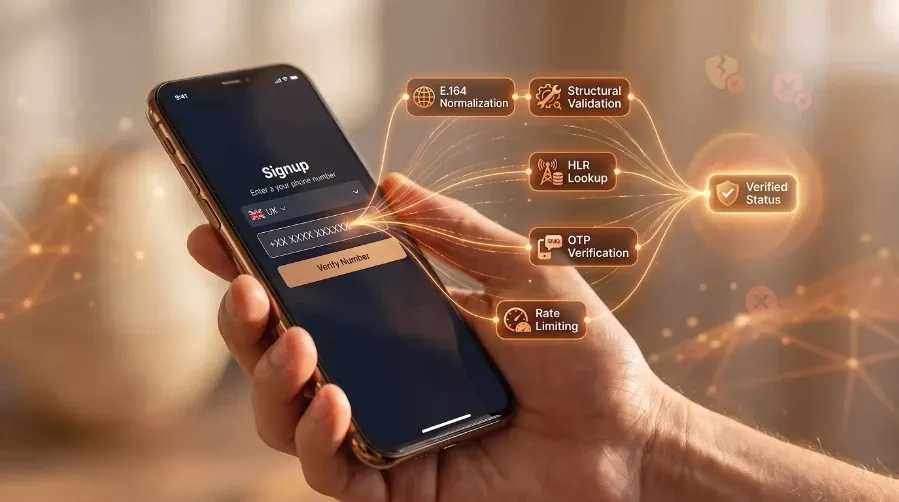
A close-up of a realistic hand holding a smartphone displaying a UK phone number signup interface with a glowing network overlay.

How to set up UK phone number verification

A UK mobile number can look perfectly valid and still be unsuitable for an OTP, onboarding check, or critical customer message. The problem is what happens between accepting the number and sending the message: format validation can confirm that the number follows UK numbering rules, but it cannot tell you everything about the line itself. A stronger verification flow puts number validation and intelligence before the OTP send, so product, engineering, and trust & safety teams can make a better decision about whether to proceed.

A realistic hand holds a glossy smartphone displaying an SMS campaign dashboard, with glowing network icons and warm bokeh background.

How to build a bulk SMS messaging campaign that drives results

A first bulk SMS messaging campaign either sets the pattern for every one that follows, or teaches an expensive lesson in consent and list hygiene before a single message goes out. Getting it right comes down to sequence: one measurable goal, defensible consent, a validated list, and a message worth reading, built on the UK rules that decide whether a text lands or gets filtered.