Batch CRM cleansing
Batch work follows its own rhythm. Export or submit the stored numbers and retain the record identifiers so results map back to the right rows. Process the results, then write standardized values and statuses into the correct CRM records. The identifier discipline is the part people skip and regret, because a result with no home is a result you cannot use.
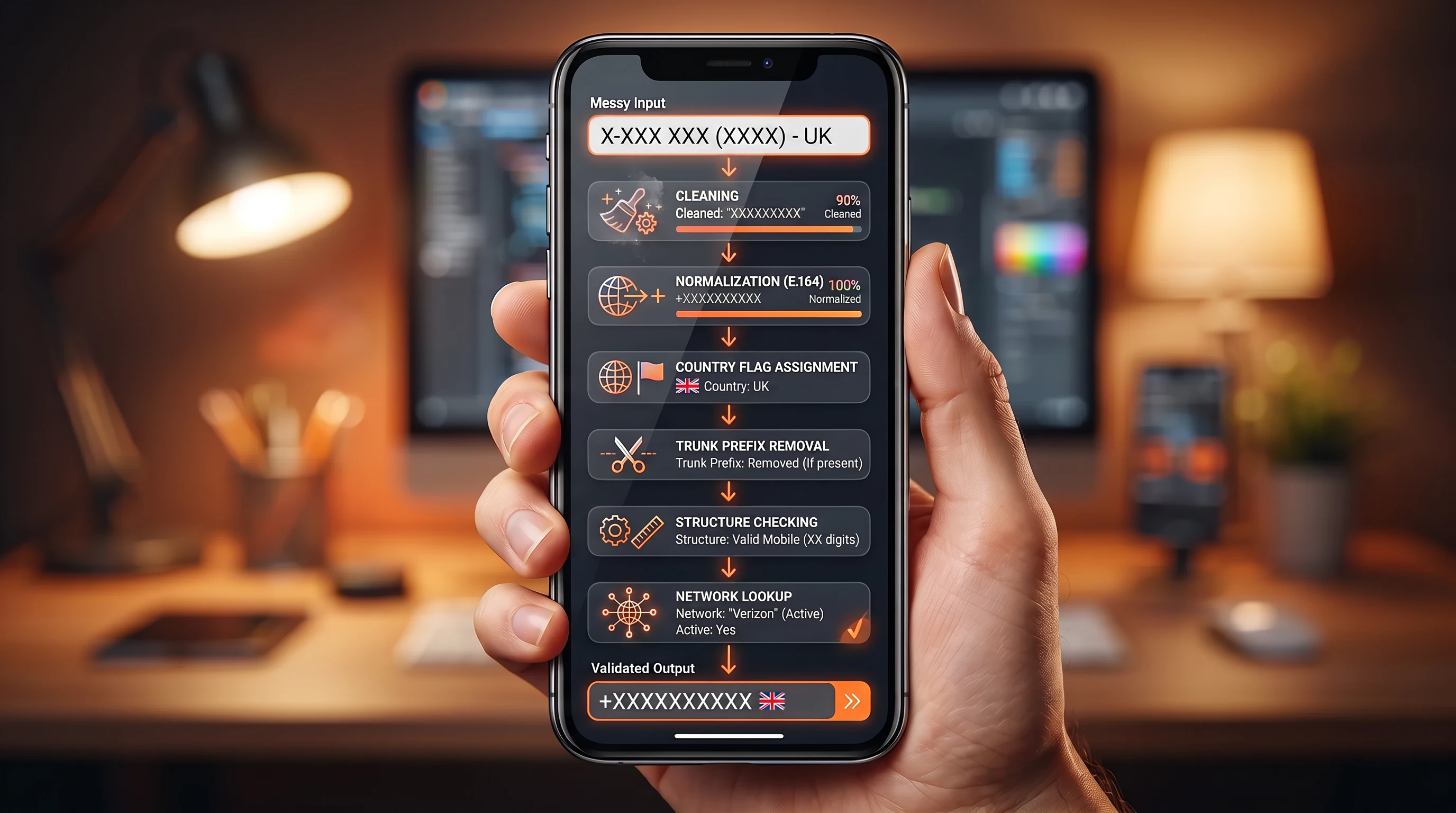
Normalization pays off here in a way it does not at entry. Once every number is in E.164 form, differently formatted versions of the same line become identical strings, which makes exact-match deduplication far more reliable.
Phone number verification tells you when two records point to the same line. Choosing the survivor is a separate job that needs your own merge and survivorship rules. For auditability, retain the original and normalized values. Record the result, with its reason, on the date of verification. When someone asks why a record was suppressed six months from now, that trail is your answer.
Design the data fields
How you model the fields decides how much of this works later. Capture the country or country calling code separately from the national number, so a locally entered number can be interpreted against the right numbering plan instead of guessed at.
The core fields worth storing are:
-
The raw input exactly as the user or source system provided it
-
The normalized E.164 number
-
The carrier
-
The line type
-
The verification status and a reason code explaining it
-
The verification method used and the timestamp of the check
A consistent model across connected systems lets you deduplicate and segment records. It also supports channel routing and later revalidation without rebuilding the logic each time. One warning that saves rework: do not overwrite the raw value before the normalized result has been reviewed and mapped correctly. If normalization goes wrong and you have already discarded the original, you have lost your only way back.
Build the API workflow
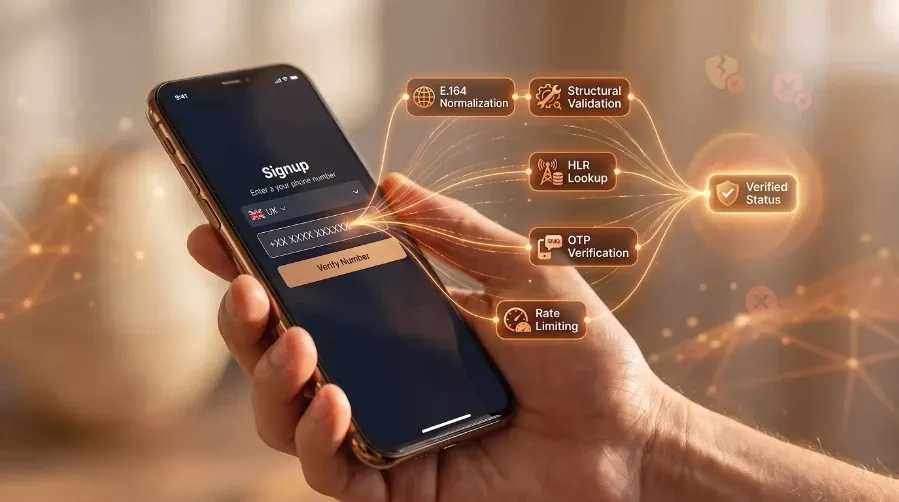
Connecting a verification API for phone number verification across your systems follows the same shape regardless of where it plugs in. Authenticate the request and send the number with its country context. Then map the response fields into your model. Apply your business rules and log the outcome. That is the spine, and it does not need to become a code tutorial to get right.
The parts teams underbuild are the ones that fail quietly in production. Define retry logic for timeouts and temporary failures, and know your rate limits before you hit them. Decide fallback behavior for when the service is slow or down. Set up monitoring so you notice degradation early, and put access controls around what is, after all, personal data. Before you enforce any rule live, test the workflow against known examples across its possible outcomes. Include international examples so a customer abroad does not trip a rule written for one country.
Set rules for results
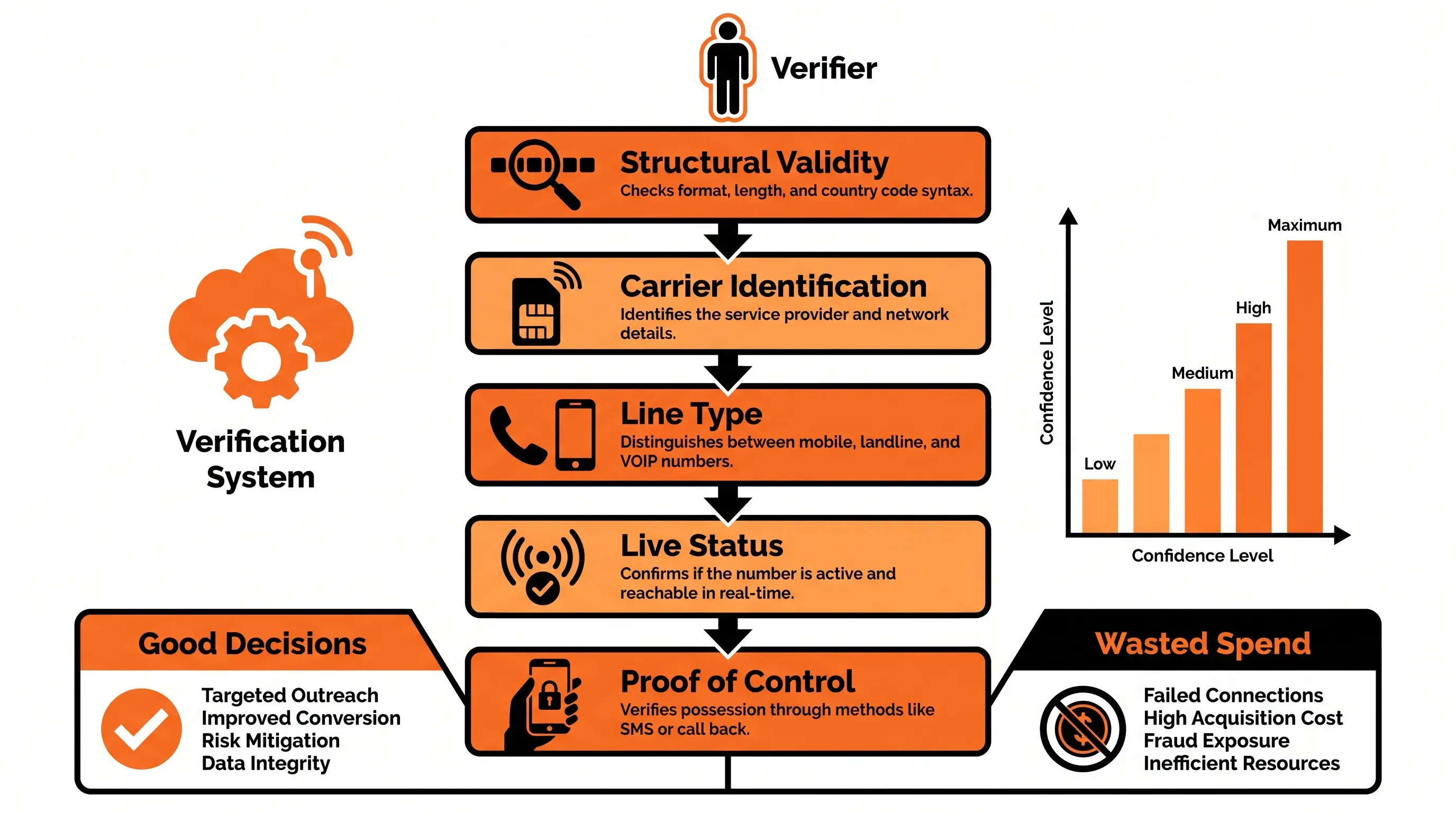
A phone number verification result is only useful once it maps to an action. Treating every non-valid result the same way throws away the whole point of running layered checks. So, here is how the common outcomes translate:
-
Format failure: prompt the user to correct the specific problem
-
Landline detected: block SMS routing to it and reach the customer another way
-
Non-fixed VoIP on signup: flag for review before granting full access
-
Inconclusive network check: retry rather than reject
-
Confirmed inactive: suppress from outreach so reps stop dialing it
Match the response to the workflow's risk and how much friction your customers will tolerate. Reject outright when the risk is high, or accept when it is low. When you are unsure, quarantine the result; request an OTP when you need proof of control before proceeding.
Add a revalidation policy, because every result has a shelf life. Numbers disconnect or are ported after you check them. They also change hands. Because carriers reassign lines in as little as two days, a status you trusted last quarter can already be wrong. Recheck on a schedule tied to how you use the record.
Apply Acudo across records
Acudo works in the two modes this article has described. It validates numbers in real time through an API, so you can check at signup, checkout, and account updates while the customer can still fix an error. And it cleanses existing datasets through bulk processing, so inherited lists, migrations, and campaign prep run through the same checks before you send anything.
The outcomes worth measuring are practical ones. Measure cleaner customer records and fewer wasted contact attempts. Measure whether line type improves channel routing because it tells you where a message will land. Stronger resistance to fake or risky accounts when carrier data flags what format validation misses. And phone number verification adds support for identity confirmation when you pair validation with the right control checks.
If you are weighing where to validate at the point of entry and how to clean the records already in your CRM, talk to Acudo about your entry-point and stored-data requirements and how phone number verification fits your workflows.