SMS Marketing Compliance and Clean Contact Data

Content authorBy Claire ConnorPublished onReading time5 min read
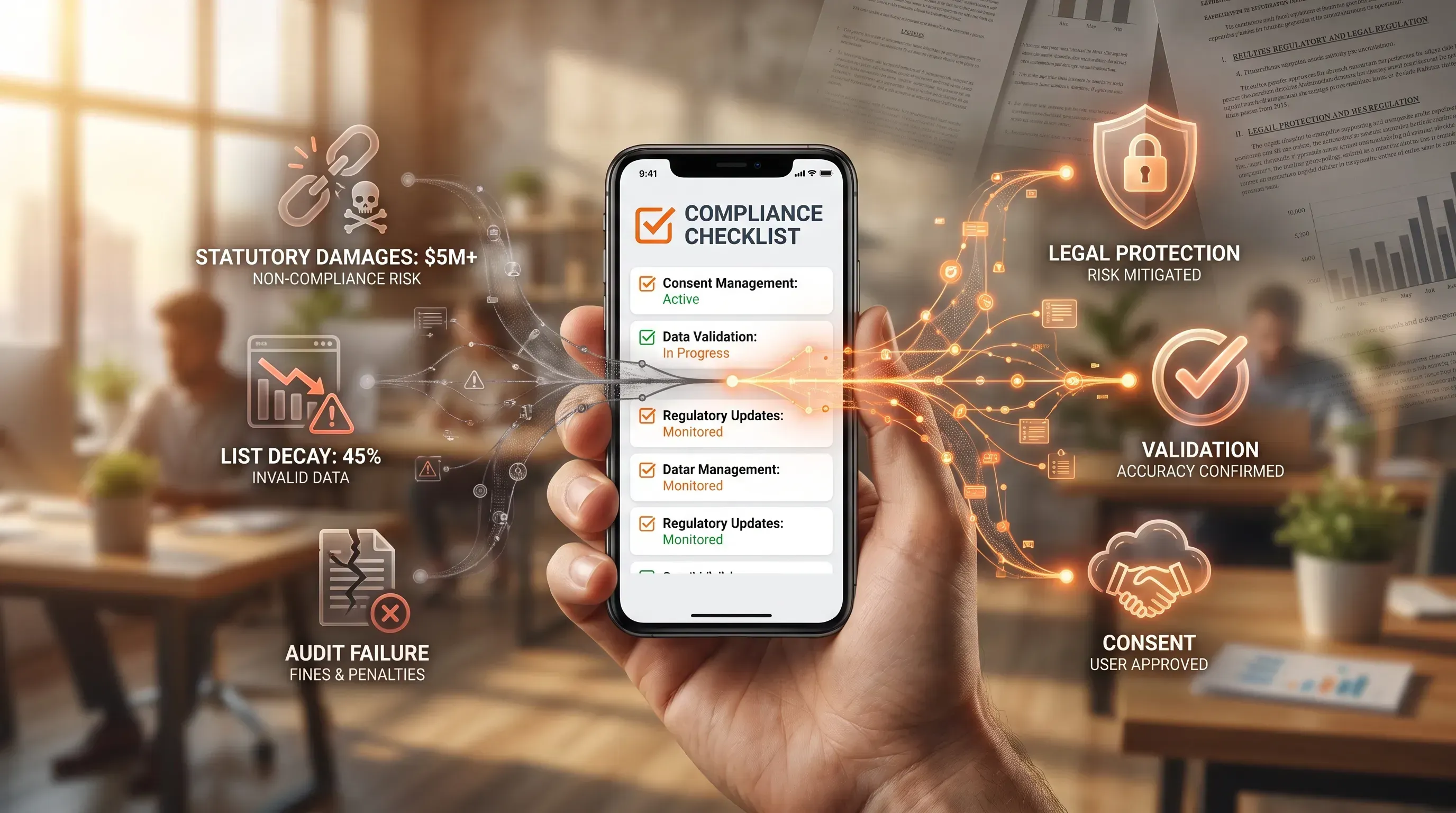
A warm, hyper-realistic office scene featuring a smartphone displaying a compliance checklist, surrounded by glowing icons and network flows.

SMS marketing compliance depends as much on the quality of your contact data as on your consent language. It shows how list hygiene and mobile number validation affect legal risk before every send.

Why compliance and data quality are linked

You run SMS campaigns. You know consent matters, and you have a process for capturing it. In most teams, retention, CRM operations, SMS marketing compliance and data cleanup live in separate places. Treating compliance as a legal issue and data quality as routine maintenance creates unnecessary risk.

A compliant program depends on permission and accuracy. A flawless consent record attached to a dead or reassigned number creates risk and burns budget at the same time.

What SMS marketing compliance requires

Before looking at data quality, it's worth reviewing what the regulations require. The first is prior express written consent.

You need documented permission before a marketing text goes out, with disclosures that make clear what the person signed up for and that consent isn't a condition of purchase. The second is honouring opt-outs promptly. When someone replies STOP, you stop, and you keep a record of when they did. Under the Privacy and Electronic Communications Regulations that took effect on 20th of August, 2025, consumers can revoke consent through more channels, and opt-outs from other channels must be processed within 10 business days.

Everything depends on accurate recordkeeping. You need timestamped consent and withdrawal records that survive an audit, because the cost of getting this wrong has changed sharply. PECR fines were capped at £500,000 for two decades; the Data (Use and Access) Act 2025 raised that ceiling to £17.5 million or 4% of global annual turnover (whichever is higher), bringing the penalties in line with UK GDPR.

Consent lives on a record, tagged to the specific channel it covers. The opt-out or "do not contact" flag lives on a record. If the record is wrong, the compliance built on top of it is wrong too.

Validate every number. Deliver every message.

Talk to our team about real-time phone number validation, fraud prevention, and high-deliverability SMS for your business.

How bad data breaks compliance

Your database is the one place that stores both "this person said yes" and "this number can receive the message." You usually don't notice the problem until after a campaign has been sent.

Contact data decays fast, which causes numerous problems. These issues often appear in CRM data before a campaign.

Invalid and disconnected numbers

Texting numbers that are invalid, including those that are inactive or disconnected, wastes every credit you spend on them. Worse, it inflates your bounce rate and skews the campaign metrics you use to judge performance. An underperforming engagement list is a list full of numbers that never delivered.

Reassigned and ported numbers

A reassigned number that retains a stale consent flag can cause a lawsuit. That new person never agreed to hear from you. But your record still says consent is on file, so your team sends with full confidence it's compliant.

Landlines and non-mobile numbers

Landlines can't receive standard SMS at all, and certain VoIP numbers reject it or route it unpredictably. When your platform tries to text them, the message fails silently while you still pay for the attempt. Those failures pollute your metrics and drag down the deliverability signals carriers watch.

Validate every number. Deliver every message.

Talk to our team about real-time phone number validation, fraud prevention, and high-deliverability SMS for your business.

Consent-aware workflows that stay clean
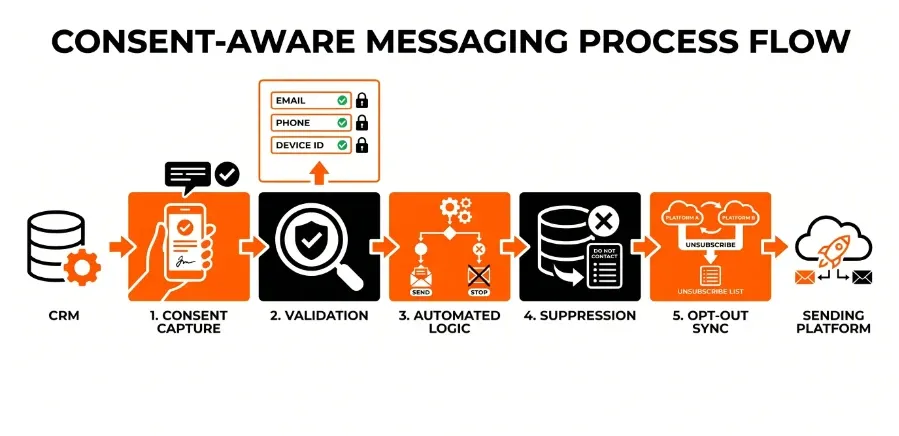
Bold flat infographic on a white background illustrating a horizontal process flow for consent-aware messaging with orange and black icons.

In most CRM environments, a well-run team ties consent and data quality together in the record itself. This is what consent-aware workflows are designed to achieve. The record stores a phone number and identifies its validation status. It also records the consent source and capture date. Once those fields are available, automated logic can check them before any message goes out.

When your CRM stores a validation status field (populated from an API lookup), suppression logic runs on its own.

To make this work, a few fields and habits do most of the work:

  • A validation status field on every contact record, so suppression can filter automatically before a send

  • Consent source and timestamp stored alongside the number, so an audit request is a query rather than a scramble

  • Opt-outs synced across every channel, so a STOP by text also suppresses email-triggered SMS and vice versa

Campaign list hygiene is the habit that keeps all of this honest over time. It separates durable consent-aware workflows from ones that decay quietly. Schedule regular campaign list hygiene into the calendar.

Pre-send validation before each campaign

Run a pre-send routine every campaign, not once a quarter. It's short, and it's where SMS marketing compliance and data quality become the same check.

  1. Confirm mobile eligibility. Run a line-type lookup to retain SMS-capable mobile numbers; route landlines and non-SMS VoIP lines out.

  2. Remove or suppress invalid and disconnected numbers. Anything flagged as unreachable comes out before the send, so you protect both your spend and your sender reputation.

  3. Confirm consent status is current. Check current consent status, including any opt-out since the last send or number reassignment.

  4. Refresh validation tags on a schedule. Because lists decay throughout the year, re-verify on a recurring cadence so today's "valid" tag still means something at your next send.

Validation is not a cleanup you finish. Tie the routine to each campaign, and campaign list hygiene stops being a project you keep meaning to start. This is where compliance checks and data validation come together.

Building cleaner SMS workflows with Acudo

SMS marketing compliance depends on reliable contact data. Validating mobile numbers before you send protects your budget and the consent records your program depends on, because a consent record is only as good as the number attached to it.

Acudo helps businesses validate mobile numbers before critical communications go out without building a full CPaaS solution. Its checks cover line type and reachability, which establish eligibility. Speak to Acudo about mobile validation and how it supports cleaner, consent-aware workflows and stronger SMS marketing compliance across your sending program.

Validate every number. Deliver every message.

Talk to our team about real-time phone number validation, fraud prevention, and high-deliverability SMS for your business.

You should revalidate before every campaign and on a recurring schedule between campaigns. sms marketing compliance depends on current reachability as well as consent. A number marked valid in January can become disconnected or reassigned before a later send, so pre-send checks should control eligibility.

Each record should include consent information, including its source and timestamp, plus a current validation status for the phone number. The sending system must also access the record's opt-out status across channels. These details let automated suppression remove ineligible contacts before messages enter the queue.

No. A reassigned number belongs to a new person, and consent from the prior holder doesn't transfer. Check for reassignment before contact and suppress uncertain records until you verify fresh permission. The FCC's Reassigned Numbers Database helps businesses identify this risk.

You should remove landlines because standard SMS messages can't reach them. Certain VoIP numbers also fail or route unpredictably. Use a line-type lookup before the send to identify mobile numbers, then route non-mobile contacts to a channel that matches their number type.

Acudo can check line type and reachability before critical communications enter the queue. Those results support rules that exclude non-mobile or unreachable numbers from SMS audiences. Speak to Acudo about mobile validation workflows if your team needs validation status available in its CRM or sending platform.

Get in touch

Talk to our team about phone number validation, fraud prevention, and reliable SMS communications.

You Might Also Like

Discover more insights and articles

Title:
How to create phone number validator rules that catch common errors

Meta description:
Learn how a phone number validator lets you clean input and check whether numbers can receive messages.

A

How to create phone number validator rules that catch common errors

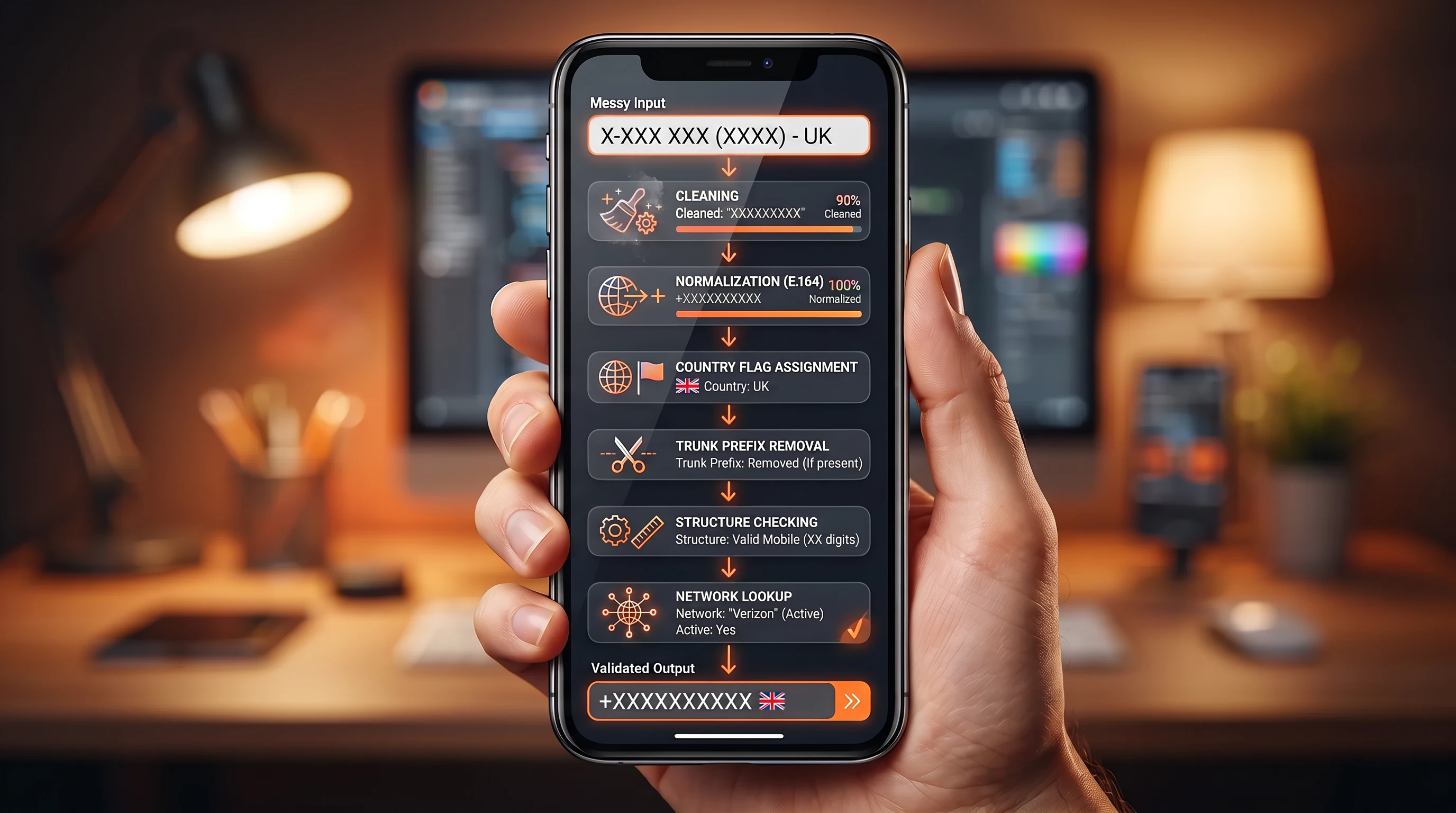
Turning messy phone input into stored numbers you can actually message means building a validation pipeline, not a single regex. From cleaning through to a live network lookup, then what to return to the caller and how to test the whole thing end to end.

A realistic smartphone in a hand displays a phone number entry UI, glowing network overlay, and a secure checkmark, with warm bokeh background.

Phone verification for trust & safety teams

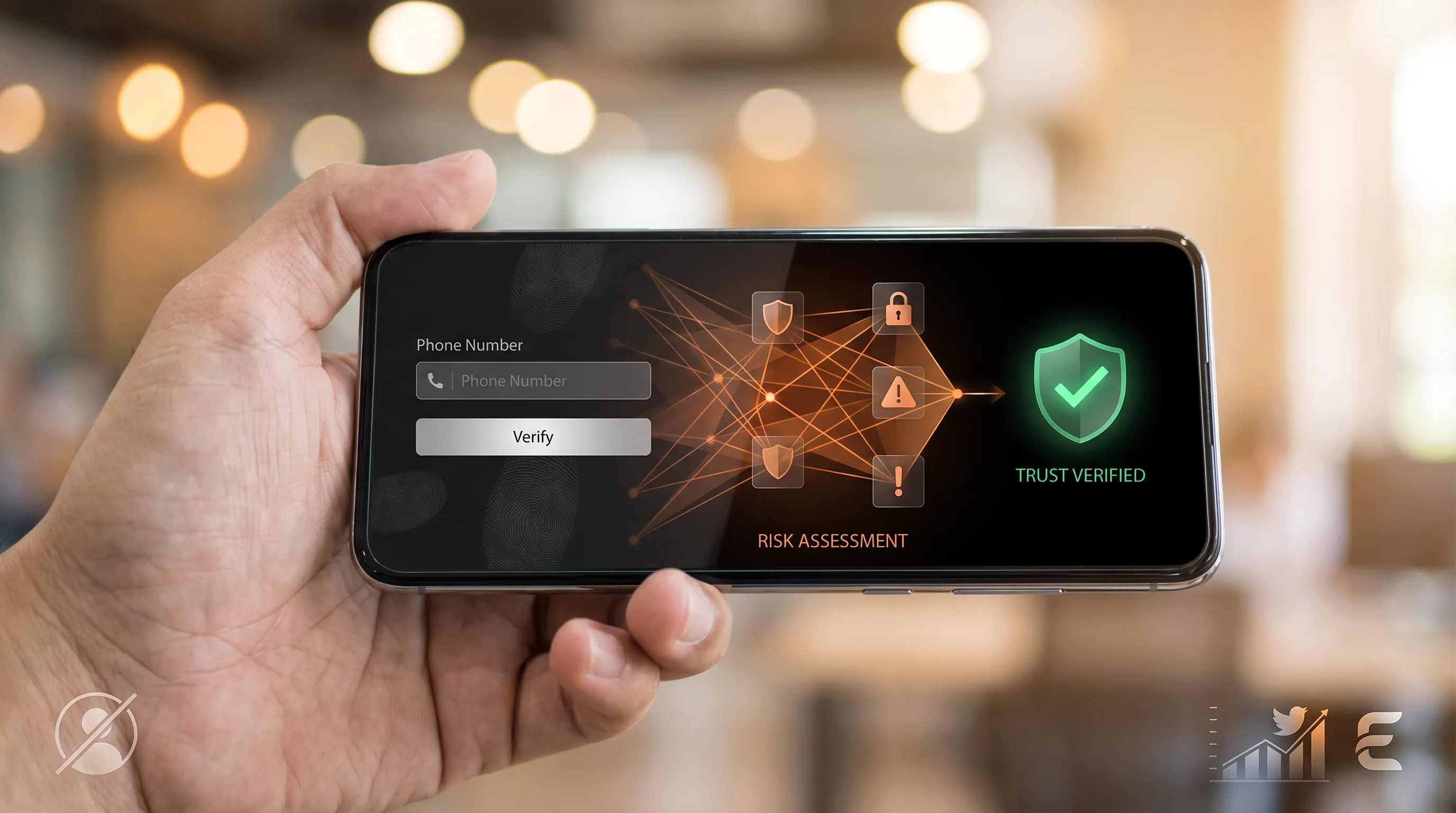
Fake accounts are rarely stopped by adding another verification step. The better approach is to use phone intelligence to decide which signups need more friction and which can pass with minimal interruption.

For trust & safety teams, the goal is not to verify every phone number in the same way. It is to identify numbers that look risky, validate legitimate ones quickly, and reserve stronger verification for accounts that show other signs of abuse.

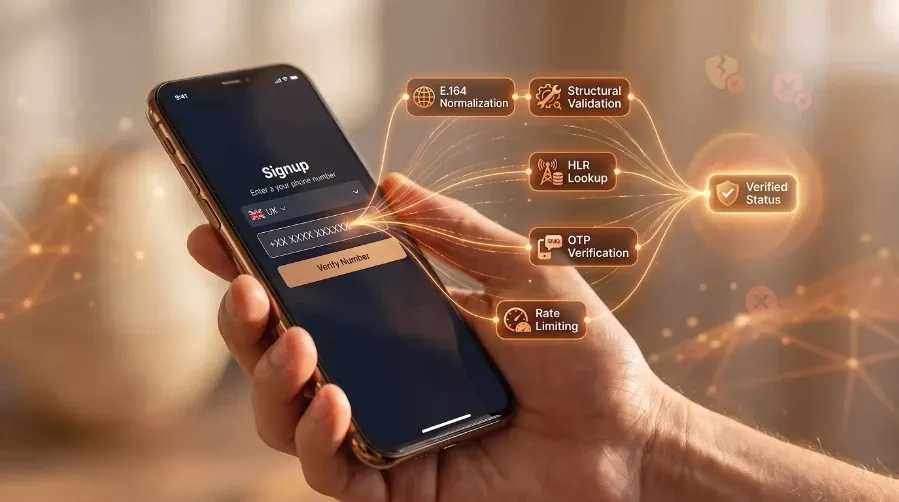
A close-up of a realistic hand holding a smartphone displaying a UK phone number signup interface with a glowing network overlay.

How to set up UK phone number verification

A UK mobile number can look perfectly valid and still be unsuitable for an OTP, onboarding check, or critical customer message. The problem is what happens between accepting the number and sending the message: format validation can confirm that the number follows UK numbering rules, but it cannot tell you everything about the line itself. A stronger verification flow puts number validation and intelligence before the OTP send, so product, engineering, and trust & safety teams can make a better decision about whether to proceed.

A realistic hand holds a glossy smartphone displaying an SMS campaign dashboard, with glowing network icons and warm bokeh background.

How to build a bulk SMS messaging campaign that drives results

A first bulk SMS messaging campaign either sets the pattern for every one that follows, or teaches an expensive lesson in consent and list hygiene before a single message goes out. Getting it right comes down to sequence: one measurable goal, defensible consent, a validated list, and a message worth reading, built on the UK rules that decide whether a text lands or gets filtered.