Why phone data quality matters now
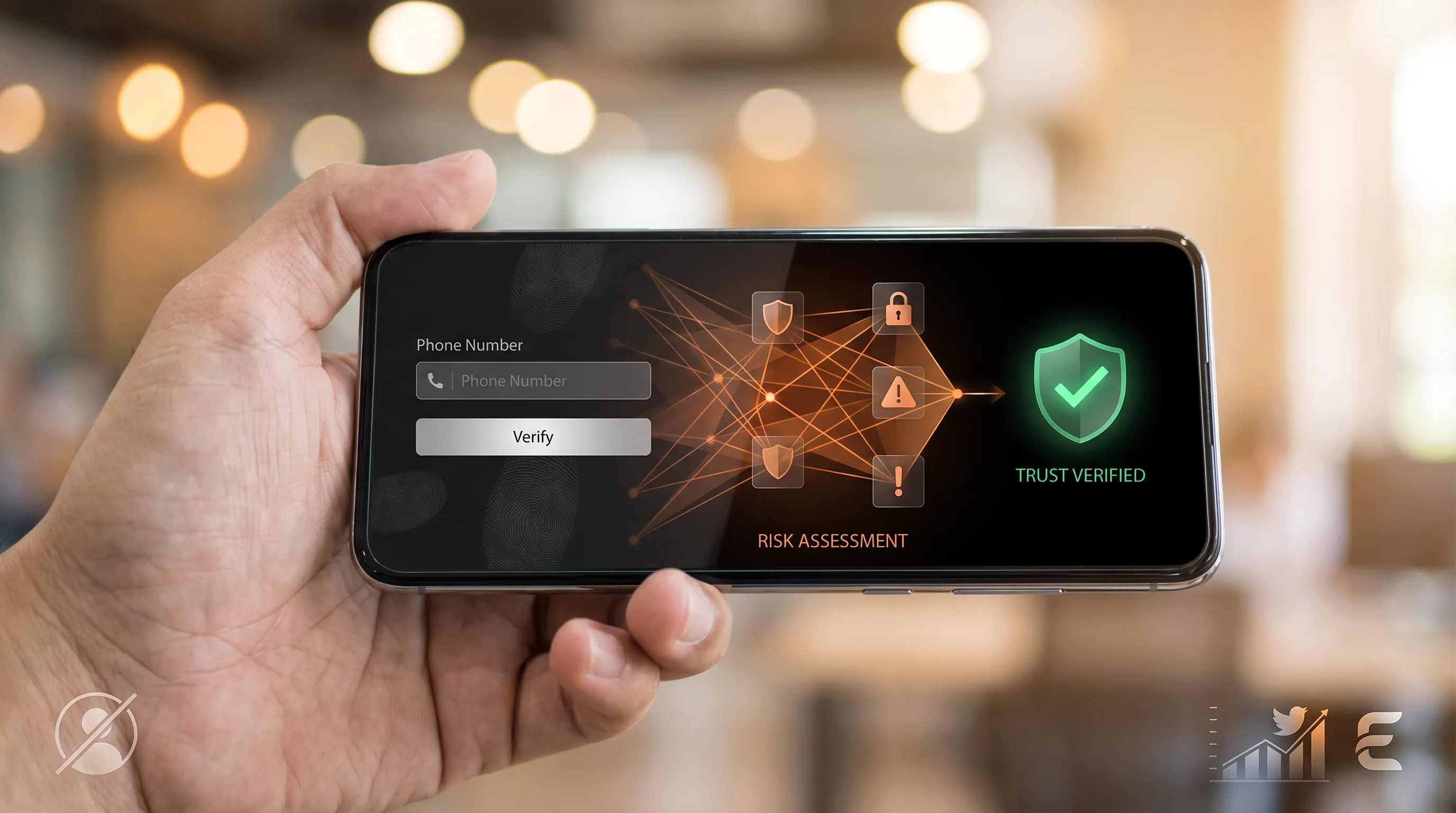
Bad phone data quietly drains budgets long before anyone notices it on a dashboard. A phone number validation service sits at the front of every messaging workflow and filters out invalid or inactive mobiles before alerts and one-time passwords are sent. Without that filter, retail and logistics teams pay for SMS that never arrives, and two-factor flows break for legitimate customers.
The scale is significant. Data Axle estimates phone data decays at roughly 18% each year, and Landbase research shows 42.9% of business contacts experience a phone number change within twelve months. Retail acquisition costs are climbing in parallel, with paid retail CAC hitting $226.38 in 2024, a 7% year-on-year rise. Every wasted SMS or failed OTP is now measurably more expensive than it was two years ago.
What a phone number validation service actually does
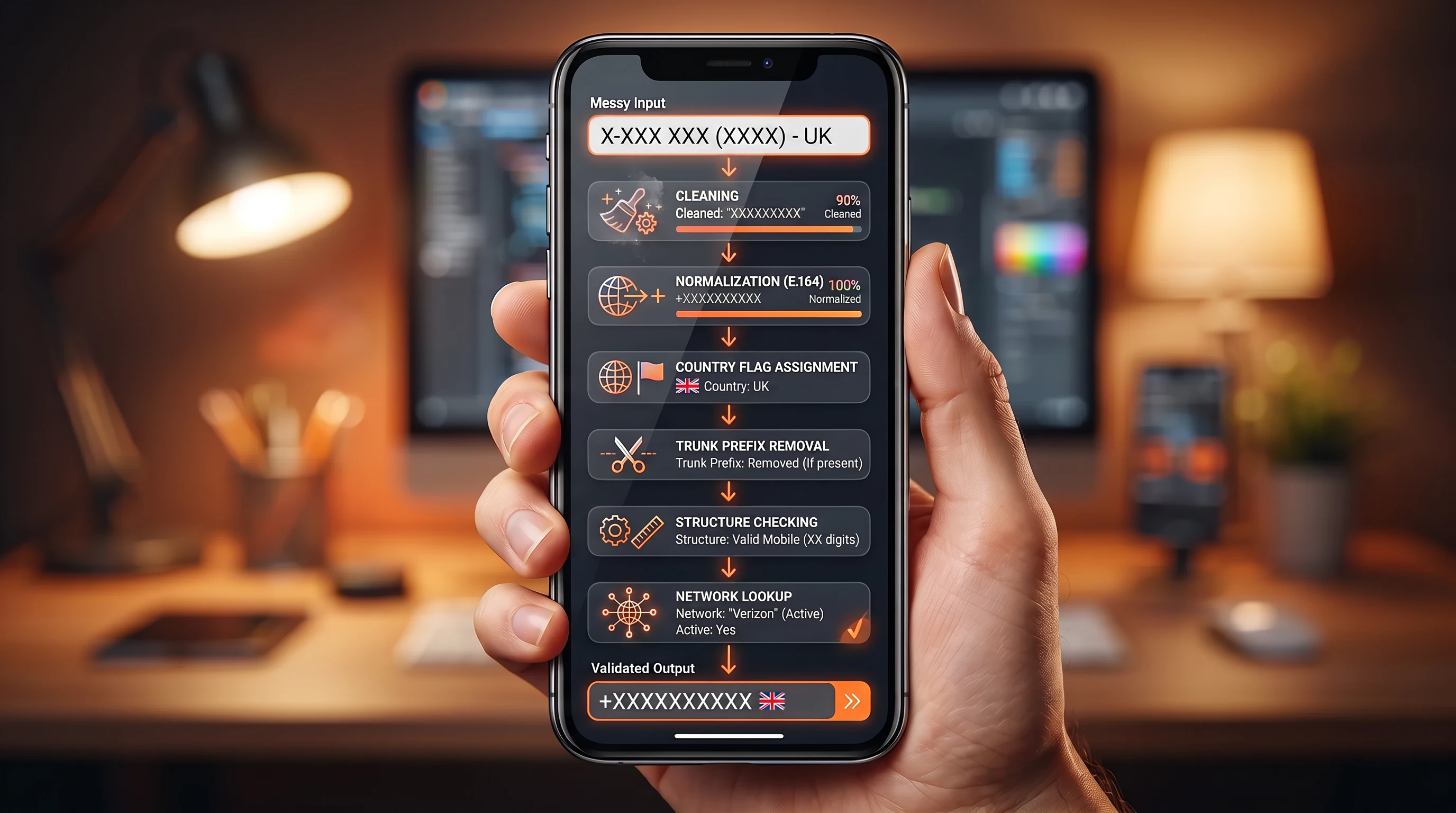
Validation is a layered check, and the layers matter because each one answers a different operational question. At the surface, syntax and country-code checks confirm a number conforms to the E.164 international standard published by the International Telecommunication Union, which caps numbers at 15 digits and prefixes a country code. That step alone catches typos and wrong-country submissions on signup forms.
Deeper checks then ask whether the number is genuinely live. A Home Location Register (HLR) lookup queries the mobile operator's subscriber database in real time and returns whether the SIM is active, which network currently serves it, and roaming status. As Tata Communications explains, this is what separates a formatted number from a reachable one. A Mobile Number Portability (MNP) check adds the next layer because it identifies where a number has been ported so SMS routes to the correct operator.
Draw a clean line between the services people conflate:
-
Formatting tools normalize input to E.164 but say nothing about whether the SIM exists.
-
HLR lookups confirm activity and current carrier at the moment of the query.
-
Full phone number validation services combine formatting, HLR, MNP, line-type detection, and confidence scoring into one workflow.
A phone number validation service plugs in upstream of your CRM and contact center stack. It cleans data before it reaches the systems your teams rely on, so those systems receive less noise.
Decide what you need before you shop
Walking into phone number validation service vendor calls without a written requirement is the fastest way to end up with the wrong tool. Start by mapping the volume pattern. Are you validating a few thousand checkouts a day with sub-second latency, or scrubbing a five-million-record CRM once a quarter? Those two profiles point at different products, and many buyers need both.
Next, document geographic coverage honestly. A fintech operating across the EU and MENA has different carrier-data needs than a US-only retailer, and a phone number validation service that performs well on T-Mobile USA has weaker performance on Etisalat or Vodafone Egypt. Then list every system that will consume the result: your CRM, marketing platform, SMS gateway, and any analytics warehouse.
Use this short checklist to frame the internal conversation before procurement starts:
-
Average and peak validation volume by month, by region.
-
Latency tolerance for each use case, from onboarding checks to overnight list cleansing.
-
The teams that will read the output, such as CX and data engineering.
-
The workflows being protected, such as OTP delivery and pre-send campaign filtering.
With those four items captured, you have a brief that the rest of this guide turns into a vendor scorecard.
Key criteria when evaluating a phone number validation service
No single phone number validation service vendor wins on every dimension. A platform with the deepest reporting has weaker EU coverage. A specialist validation partner with strong MENA data lacks a self-serve dashboard. The point of this section is to weight criteria against the priorities you defined above and accept that trade-offs are normal. The criteria below are the ones that matter most in real procurement cycles.
Accuracy and data freshness
Accuracy is the criterion vendors quote most loudly and explain least clearly. Ask how often the underlying data refreshes and which carriers are queried directly versus inferred. A real HLR query against a live operator network is not the same as a lookup against a cached list updated weekly.
Test accuracy yourself. Build a sample file of a few thousand records that includes known-good numbers from your active customers and known-bad numbers from previous bounce logs. Run that file through each phone number validation service vendor on your shortlist and compare results against ground truth. If a vendor quotes 99% accuracy without disclosing the methodology behind the figure, treat that number as marketing copy.
Bulk processing and API options
Batch and API are different products dressed in similar language. Batch cleansing fits quarterly CRM hygiene and migration projects where you process millions of records overnight. A real-time API fits signup forms, checkout, OTP issuance, and any workflow where the answer is needed in under a second.
Confirm both modes are available even if you only need one today. Check file-size limits and throughput on the batch side, and request rate limits and uptime SLAs on the API side. A specialist validation partner with expert support helps with the batch design itself, which matters when your data engineers are already stretched.
Support model and managed data support
The gap between self-serve dashboards and hands-on managed data support is wider than it looks on a pricing page. Self-serve works when you have an in-house data team that can interpret status codes and monitor delivery downstream. Managed data support works when you want a named contact and a vendor that flags anomalies before they hit your campaigns.
The questions to ask are concrete. Is support included in the contract or billed extra? What are response times by severity? Who is the escalation path when something fails at 2am during a flash sale? A specialist validation partner with managed data support answers these without hesitation. A generalist platform sometimes treats validation as a side feature and routes you to tier-one support that has never seen an HLR error code.
Reporting and result transparency
Good reporting answers questions from finance and marketing at the same time. Look for breakdowns by status code, line type (mobile, landline, VoIP), country, carrier, and confidence level. Exportable CSV or Parquet outputs matter because each team will want to slice the data differently.
Be wary of black-box outputs that return only a pass-or-fail flag. As IPQualityScore notes about HLR data, a phone number validation service surfaces 20-plus data points such as subscriber line status and Mobile Network Code. Without that detail, your team cannot diagnose why messages failed or build smarter routing logic over time.
Implementation effort
A realistic onboarding runs two to six weeks. The early steps are API key issuance and sandbox testing before a small integration with one consuming system. After that comes CRM connector work and SFTP drop configuration for batch loads, followed by migration of any existing validation logic from a previous tool.
Documentation quality is a leading indicator of vendor maturity. If the API reference is incomplete or the sandbox is broken, expect the same friction in production. A focused specialist validation partner invests heavily here because validation is their only product. Large platforms with dozens of features sometimes leave validation docs underbuilt.
Pricing transparency
Pricing models cluster around per-lookup fees and tiered volume bands, with annual commitments handled through overage rates. Each one has hidden costs. Per-lookup looks cheap until you discover that failed lookups are still billed. Tiered volume punishes you for usage spikes around campaigns. Annual commitments lock in rates the market moves past.
Request an itemized quote that models both your average and your peak month, and ask explicitly about charges for retries and API calls that return errors. Twilio, for example, charges $0.001 for messages that bounce, and similar fee structures appear in validation pricing. If a vendor refuses to publish indicative pricing or walks you through a 30-minute discovery call before sharing a rate, that opacity is a procurement risk on its own.
Focused partner or broad platform
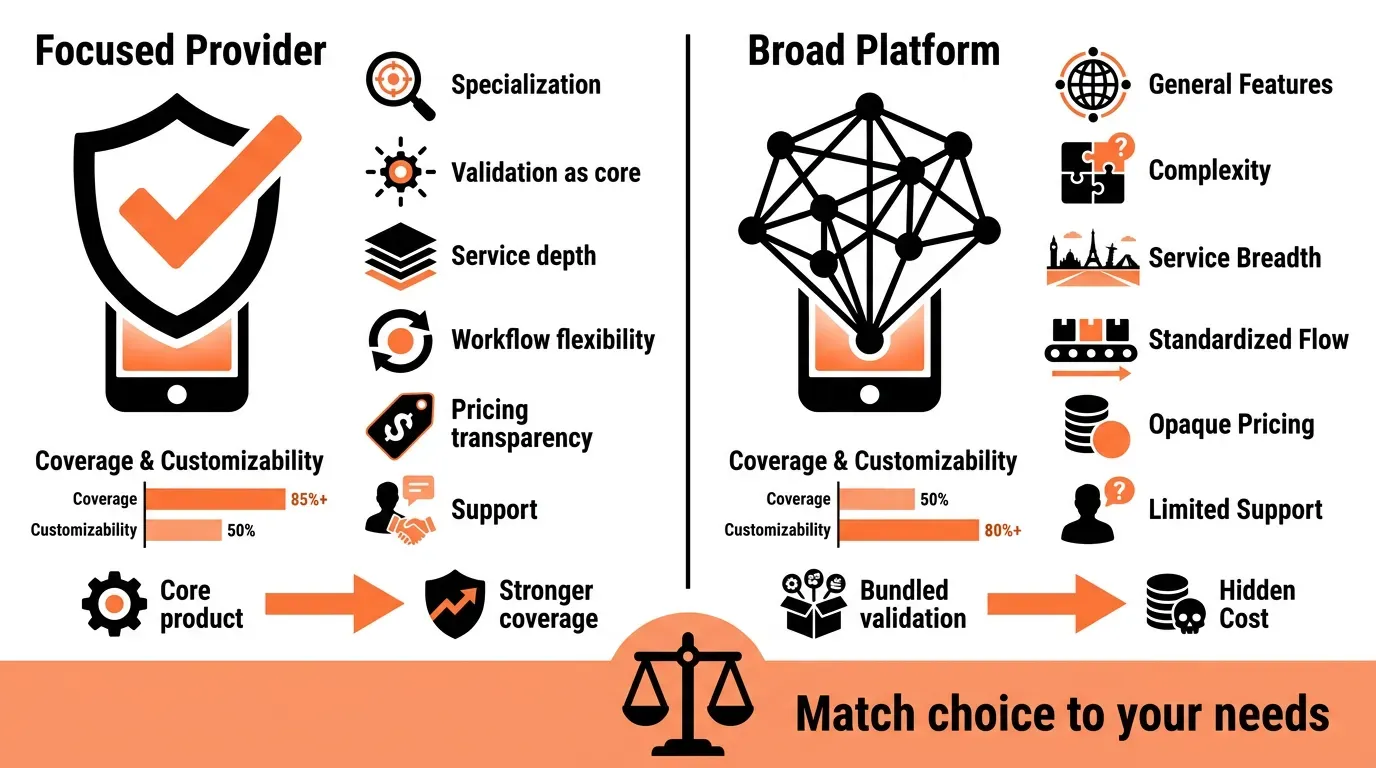
The vendor market splits cleanly into two profiles. Broad CPaaS and customer-data platforms include validation as one feature inside a wider product suite covering SMS sending, voice, email verification, and identity. Focused providers specialize in phone data and treat validation as the core product.
Each profile has real strengths. A broad platform makes sense when you want a single contract covering messaging and basic validation, and when contactability is one priority among many. A focused, service-led specialist validation partner makes sense when mobile reachability and CRM data quality are the priority and when managed data support from someone who knows phone data is more valuable than another dashboard tab.
The practical trade-offs:
-
Depth: focused vendors have stronger HLR coverage and more granular status codes.
-
Flexibility: focused vendors customize batch workflows more readily because validation is their full attention.
-
Pricing: broad platforms bundle validation into wider commitments, which can hide the true cost per lookup.
-
Attention: a specialist validation partner with managed data support assigns a named contact, while a platform routes you through general support.
Neither profile is universally better. Match the choice to whether validation is incidental to your stack or central to it.
Questions to ask every vendor
A tight, identical question set sent to every shortlisted vendor produces comparable answers. Use the list below as the spine of your RFP and add company-specific items as needed.
-
Where does your underlying data come from, and how often is it refreshed by country?
-
How do you measure accuracy, and can you share the methodology behind any published figure?
-
What is included in standard support, and what triggers extra fees?
-
Which security and compliance certifications do you hold, such as ISO 27001 and GDPR documentation?
-
What contract lengths are available, and is there a usage floor or true-up clause?
-
Can you provide two reference customers in our industry and region?
After you send the same questions to every phone number validation service vendor, score the answers against the requirements brief you wrote earlier and give the strongest written response more weight than the strongest sales pitch.
Run a structured proof of concept
A short pilot, run on real data, is the only reliable test. Pick a sample of 10,000 to 50,000 records that mirrors your production mix across geography and source. Define success metrics before the pilot begins: match rate against known truth, time-to-result for batch loads, API latency at the 95th percentile, and the readability of the output for your CX and marketing teams.
Keep the pilot to four weeks. Involve a named owner on your side and a technical contact from the vendor, with at least one downstream stakeholder set up to read the results. Raw match rates are not enough on their own. Ask whether the report told your marketing team something useful about list quality and whether the specialist validation partner with managed data support responded to questions within agreed times.
At the end of the pilot, compare the result against the original requirements brief. If the vendor scores well on the criteria you weighted highest, the decision is straightforward. If two vendors score similarly, the tie-breaker is the quality of the managed data support relationship, because that is what you will rely on for the next three years.
Make the decision and plan next steps
Weigh the pilot results against your written requirements. Build a one-page internal business case that ties the chosen phone number validation service to concrete outcomes: fewer wasted SMS sends, higher OTP delivery rates, cleaner CRM segments, and lower agent time spent on disconnected numbers. Plan the rollout in phases. Start with one high-volume use case before you extend it to the rest of the stack.
The right choice depends on your volume, your regional mix, and whether you want hands-on managed data support or a self-serve product. If contactability and mobile data quality sit at the center of your operations, speak to Acudo about mobile validation workflows. As a specialist validation partner focused on phone number validation service delivery without unnecessary CPaaS complexity, Acudo helps retail and logistics teams validate mobile numbers before critical communications are sent.