Validate before you send
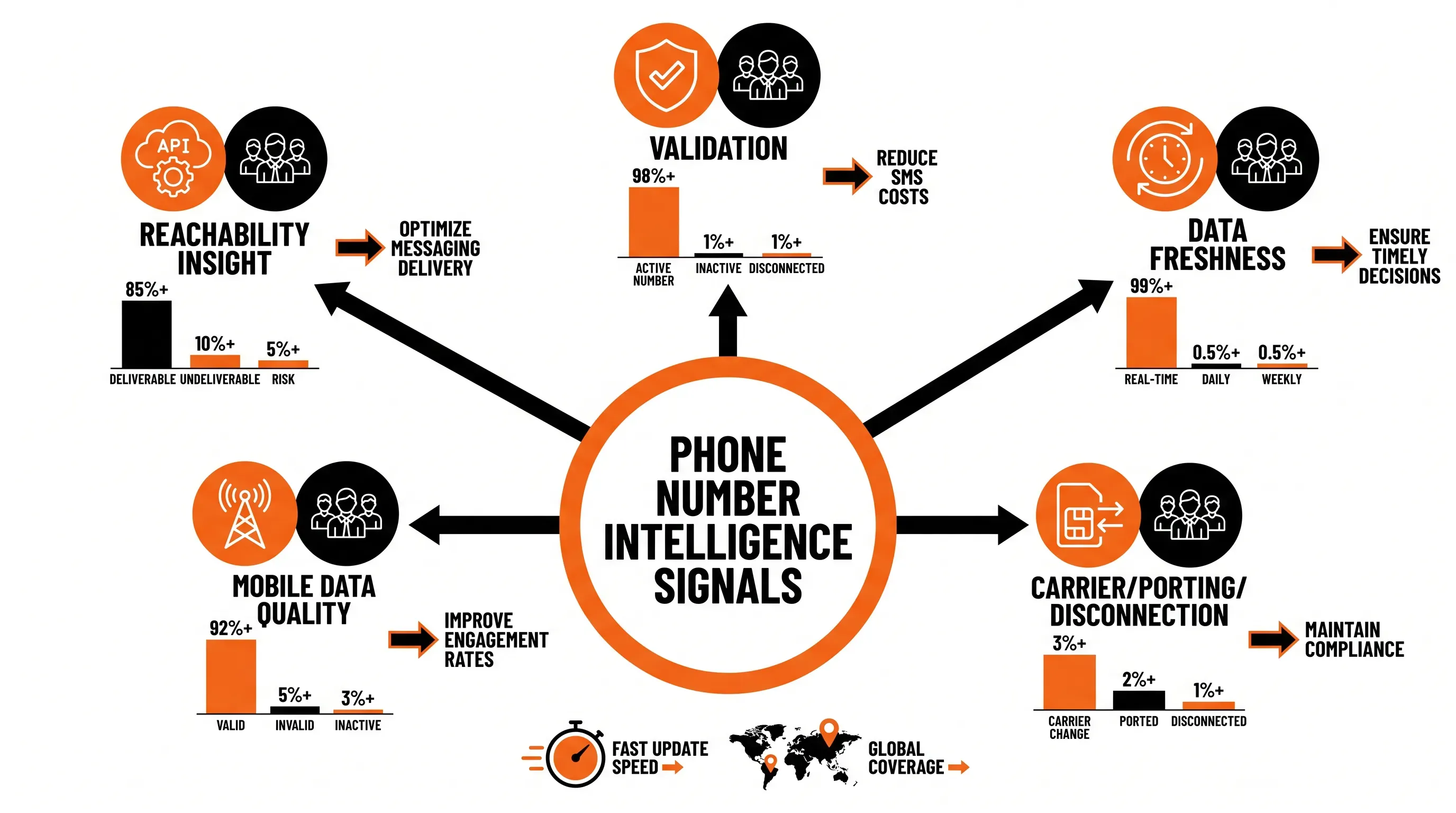
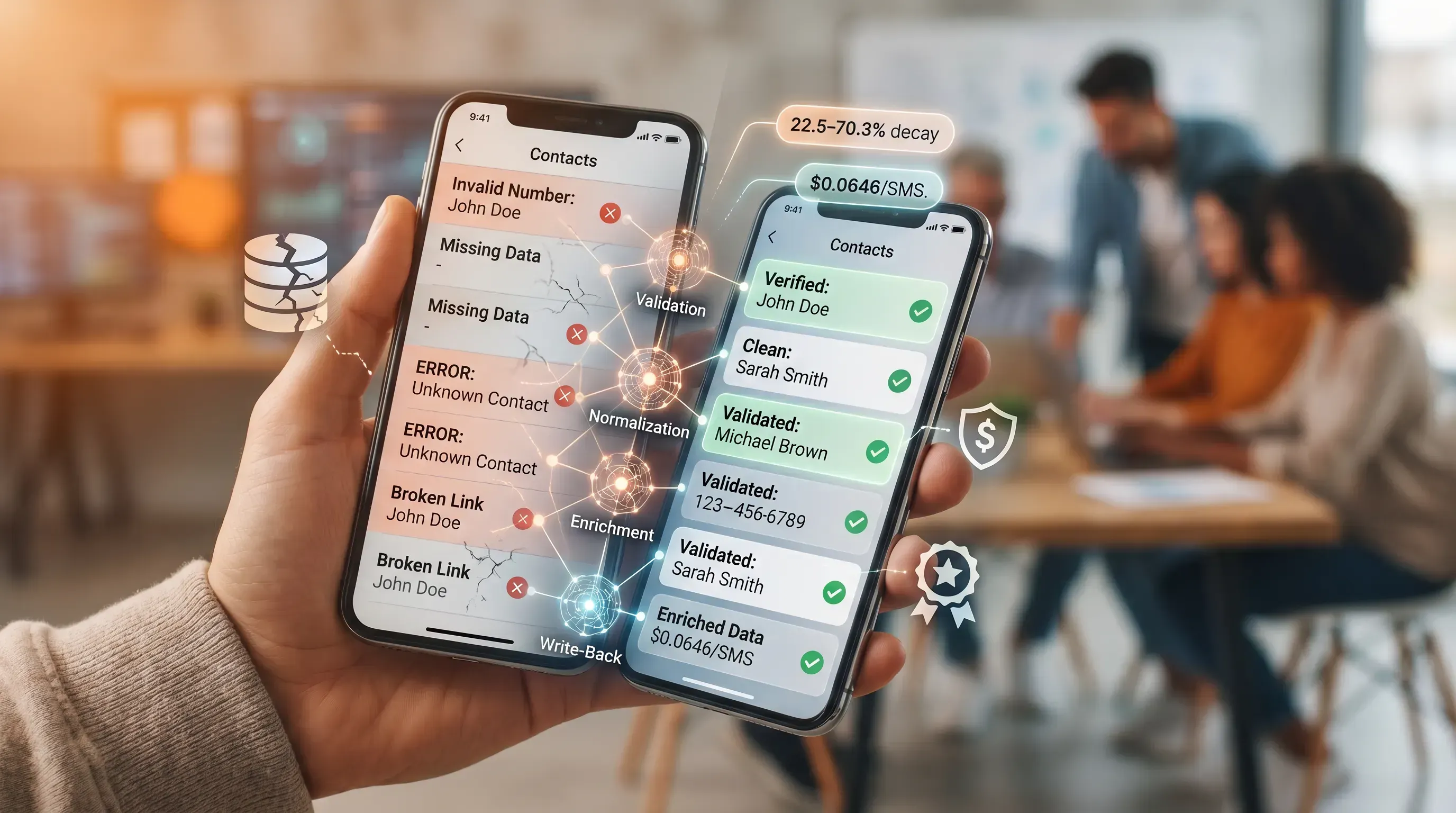
Pull the individual signals together and you get the workflow this whole piece is arguing for: check the number before you commit the send. Validation shifts from a periodic cleanup job into a decision layer that sits in front of every message and determines whether the message is worth sending at all.
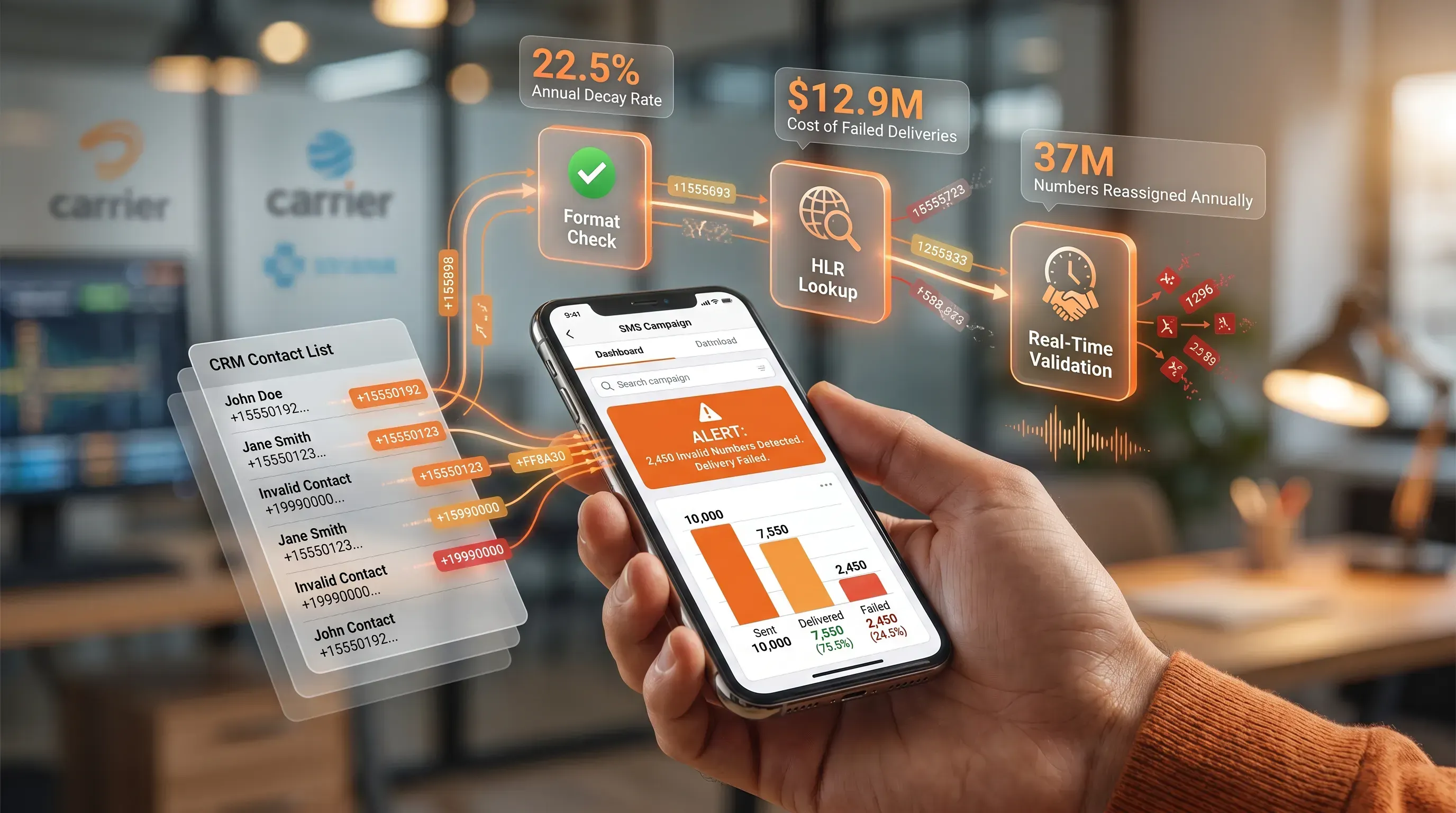
The phone number lookup API call fits naturally at a few points in a typical flow. At sign-up, you validate the number the moment a user enters it, so a mistyped or VoIP number gets caught before it ever blocks a verification. Before a campaign, you run the list through lookup as a batch, so marketing spend goes only to reachable mobiles. And as a gate in front of an OTP send, you check reachability first, so you're not firing a code at a dead line and watching the user abandon.
What the system does next is the simple part. A pass means the number is valid and reachable, so the message proceeds. A fail means the number is inactive or invalid for the channel, so the system suppresses the send or prompts the user to correct it. That fork is the entire value. It turns reactive cleanup, where you find out after the failure, into a proactive choice you make before spending anything. Validating before you send also blunts SMS pumping fraud, where bots feed numbers they control into your input fields.
Adding lookup to your stack
For the people who'll actually wire this in, the integration shape is straightforward. You make a request with the phone number, and the response gives your code the signals described above so it can branch on those fields. The phone number lookup API does the telecom work. Your job is deciding what each result triggers in your own flow.
The consideration that shapes the build is timing. Real-time flows like sign-up and OTP sit in front of a waiting user, so you have a latency budget measured in seconds, and the lookup has to resolve fast enough to feel invisible. Acudo's API returns results in under four seconds per number, which keeps it inside that budget. Batch enrichment is the other mode, used for cleaning an existing list or prepping a campaign, where you process numbers in bulk and latency per number matters far less than throughput.
A few decisions to settle while scoping the work:
-
Where you call lookup so the user flow stays fast, with the call at the point of entry.
-
Whether each flow needs a real-time call or fits a scheduled batch, since OTP gating is real-time and a quarterly CRM cleanse is batch.
-
What your system does on a fail, whether that's suppressing the send or asking the user to re-enter.
Acudo supports both API and bulk processing, so you can run real-time gates and batch cleanses through the same service. That's enough to plan an integration. The exact request and response fields come from the provider's documentation, and you'll wire your branching logic around them.
Measuring what lookup saves
Once the phone number lookup API is live, someone will ask whether it's worth the call cost and the integration time. Keep the proof to a handful of numbers that tie straight back to the failures from the opening, rather than building an exhaustive dashboard nobody reads.
Start with undeliverable rate before and after. Industry guidance puts a healthy SMS delivery rate above 98%, with failure rate held under 2%, so the gap your lookup step closes is measurable against that benchmark. Then count sends avoided on invalid or unreachable numbers, because every suppressed send to a dead line is spend you didn't waste.
Two more numbers close the loop:
-
OTP completion rate, since the validate-before-you-send gate lifts the share of users who request a code and finish verification, which recovers the drop-off the opening described.
-
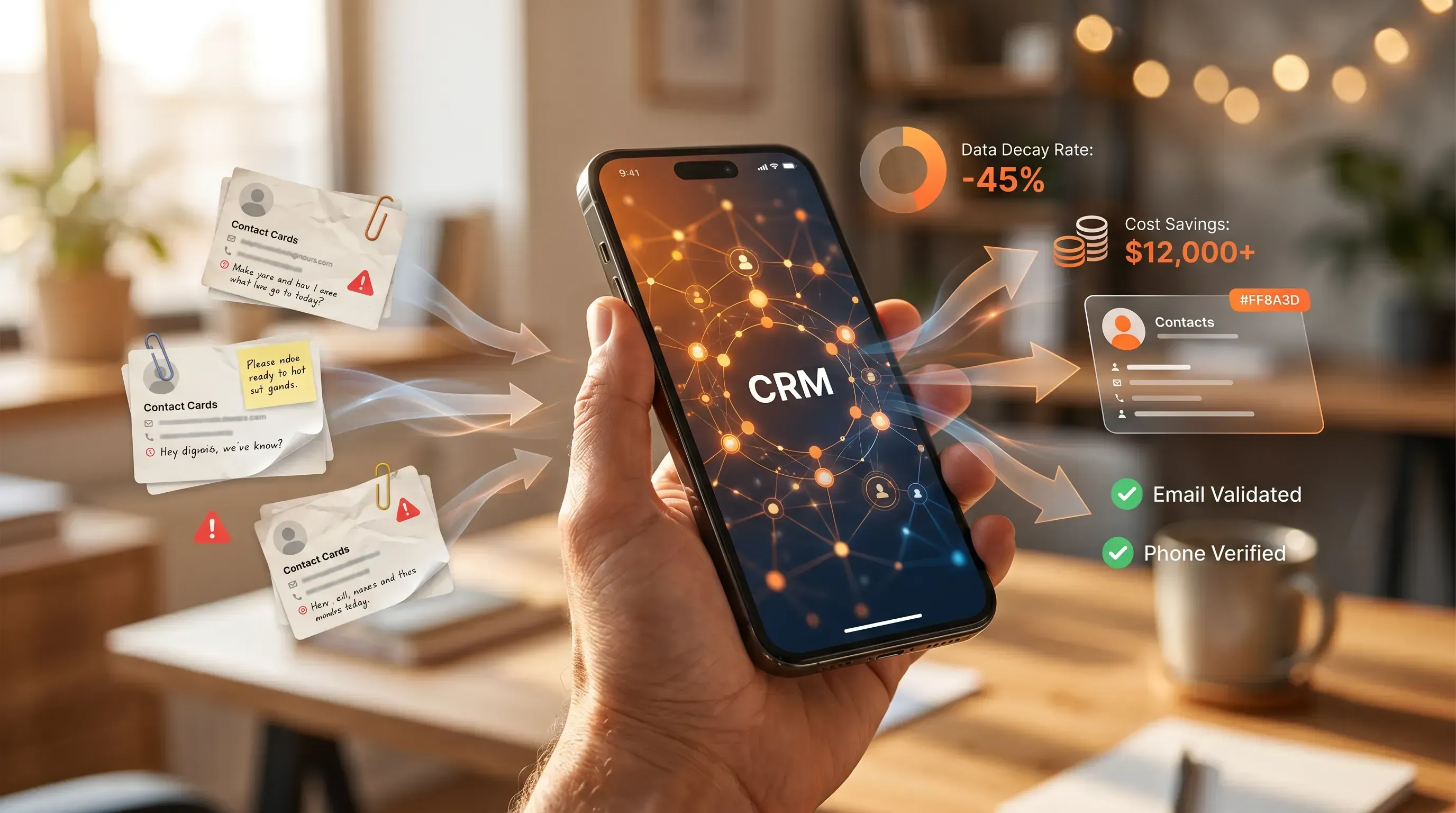
Spend recovered, which is the avoided sends multiplied by your per-message cost plus the support and pipeline cost of each failed contact, estimated at around $100 per stale record in wasted rep time and downstream damage.
Report those against the baseline you had before lookup, and the value stops being a claim and becomes a line your finance team can read. The metrics map directly onto the problems you started with, which is how you know the loop has closed.
Talk to Acudo about lookup
Knowing a number is valid and reachable before you send is cheaper and more reliable than cleaning up failed sends after the fact. The signals are there to be checked, and the measurement proves itself within a billing cycle. The only real decision left is whether to add the check.
If you're weighing how to fit validation into your OTP, alert, and campaign flows, Acudo can help you scope it against your actual data and volume. A phone number lookup API from Acudo validates mobile numbers in real time and at scale so you can confirm reachability before critical messages go out. Speak to Acudo about lookup and validation workflows suited to how your team sends.