Voice-only number ranges
Geographic numbers on 01 and 02, along with non-geographic 03 numbers, are voice destinations among UK number ranges and Ofcom number ranges. Treating them as SMS destinations produces silent failures. If your CRM has a single "phone" field, this is where mixed data does the most damage.
Within 03, the distinction that matters for assessing misrepresentation is between 030 and 033. Ofcom reserves the 030x ranges for public sector bodies and not-for-profit organisations, and providers verify eligibility before issuing one. Simwood's support documentation states plainly that 0300 and 0303 are reserved for public sector bodies and not-for-profit bodies such as registered charities, while 0330 and 0333 are available for general allocation.
That asymmetry is useful. A commercial entity presenting an 0300 number is worth a question, because a provider checks a charity registration or public body status before allocating it. An 0330 tells you nothing except that someone bought a non-geographic number, which any business can do.
Ranges to review
Some Ofcom number ranges among UK number ranges are poor fits for a customer contact list because of what they are, not because of whether they work. Numbers on 084, 087, 09 and 118 are service numbers, which means the caller pays a service charge on top of an access charge. Ofcom caps the service charge at 7p per minute for 084 and 13p per minute for 087, while 09 service charges run to £3.60 per minute or £6 per call.
Directory enquiries sit in the same bracket and carry the sharpest history. Before regulation, some providers charged almost £20 for an average 90-second call, and Ofcom capped 118 service charges at £3.65 per 90 seconds from 1 April 2019. Jane Rumble, Ofcom's Director of Consumer Policy, said at the time: "Directory enquiry prices have risen in recent years, and callers are paying much more than they expect."
Here's why these entries matter beyond cost:
-
A service number in a customer record means the record was scraped or purchased.
-
Ringing one back exposes your business to a charge set by whoever holds the number, which is the mechanism behind callback fraud.
Migration ranges need review too. The 034 range exists for numbers migrating from matching 084 numbers, and 037 for numbers migrating from matching 087, which means an 0345 or 0370 record has a commercial service line behind it and a corresponding 08 number somewhere in the same organisation's history. That's a support line in a customer field.
Freephone needs context
Numbers on 0800 and 0808 are free for the caller and have been free from mobiles as well as landlines since 1 July 2015, when Ofcom's UK Calling reforms shifted the mobile call cost onto the number's owner. Before that change, calls to freephone numbers from mobiles cost between 14p and 40p per minute, which is why so many people still hesitate before dialling one.
They're inbound voice lines belonging to organisations, and if one appears in a customer record, someone has captured a company's support number. That happens during data migrations and form autofill.
The right treatment is to quarantine. An 0808 in a mobile column is a signal that the surrounding record deserves inspection, because whatever process produced it probably produced others.
Range checks prove little
Every check described so far tells you about a number. None of them tells you about a caller. Calling Line Identification can be spoofed, and Ofcom has spent years tightening the rules precisely because it can. In 2024, the regulator strengthened its CLI Guidance to expect providers to identify and block calls from abroad using a UK number as a Presentation Number, except in limited legitimate use cases, and later extended that approach to +447 mobile Presentation Numbers.
The scale explains the urgency. Juniper Research counted over 129 million fraudulent robocalls received by UK subscribers in 2024, and providers were given until 29 January 2025 to implement the presentation number blocking measures. Ofcom's own consultation noted that around 20% of people answer a withheld call, which is why anonymising spoofed traffic was an incomplete fix.
So position range and prefix checks where they belong. They're a first-pass filter that removes numbers which can't work for your channel. They are not evidence of who is on the other end of a call.
Check before contact
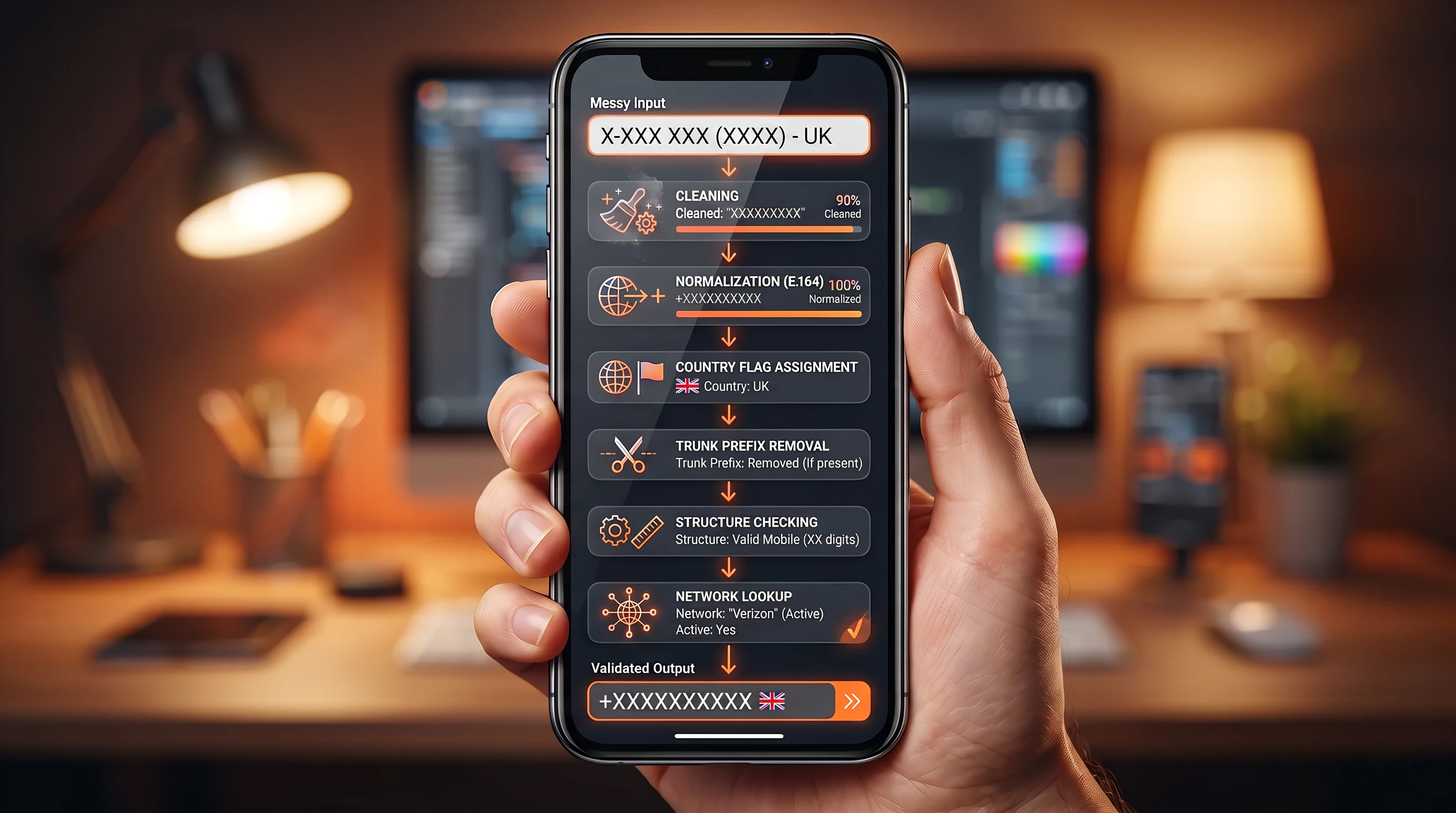
Acudo checks line type and current status before you send an SMS or dispatch a one-time passcode, which catches the dead numbers and the non-mobile look-alikes. The results are point-in-time network signals, and Acudo's screening also covers the TPS and CTPS registers so marketing calls stay on the right side of the preference rules. If you're cleaning a contact file or building a verification flow around UK number ranges, talk to Acudo about where the check belongs in your workflow.