Bulk Phone Number Validation for Cleaner Contact Lists

Content authorBy Claire ConnorPublished onReading time12 min read
Title:
Bulk Phone Number Validation for Cleaner Contact Lists

Meta description:
With bulk phone number validation, you can clean your database to lower SMS costs and improve delivery rates before you

This article explains how bulk phone number validation helps CRM, marketing operations, ecommerce, and customer experience teams clean their contact databases before campaigns or system migrations. It walks through the operational triggers, the data fields to inspect, and how a one-off batch pass works alongside real-time checks.

The hidden cost of dirty phone data

Every CRM carries a quiet liability inside its contact records. Numbers were captured years ago at checkout, or they arrived through call-centre typos and acquisitions that never got cleaned up. They sit there looking valid, until the SMS bill arrives or a service team realises half its outbound calls are reaching voicemail boxes that no longer belong to the customer on file. Industry research reports that contact data decays at roughly 30% per year, and phone numbers are among the worst offenders because reassignment happens silently.

The scale of the silent waste is striking. The Federal Communications Commission estimates that around 37 million telephone numbers are reassigned to new subscribers in the United States each year. Multiply that by the SMS volumes most retailers push through during peak trading, and the wasted spend stops being a rounding error. Authsignal's research on banking authentication flows reports that 10-15% of SMS OTPs never reach users, with one banking partner seeing 12% non-delivery purely from data and network issues.

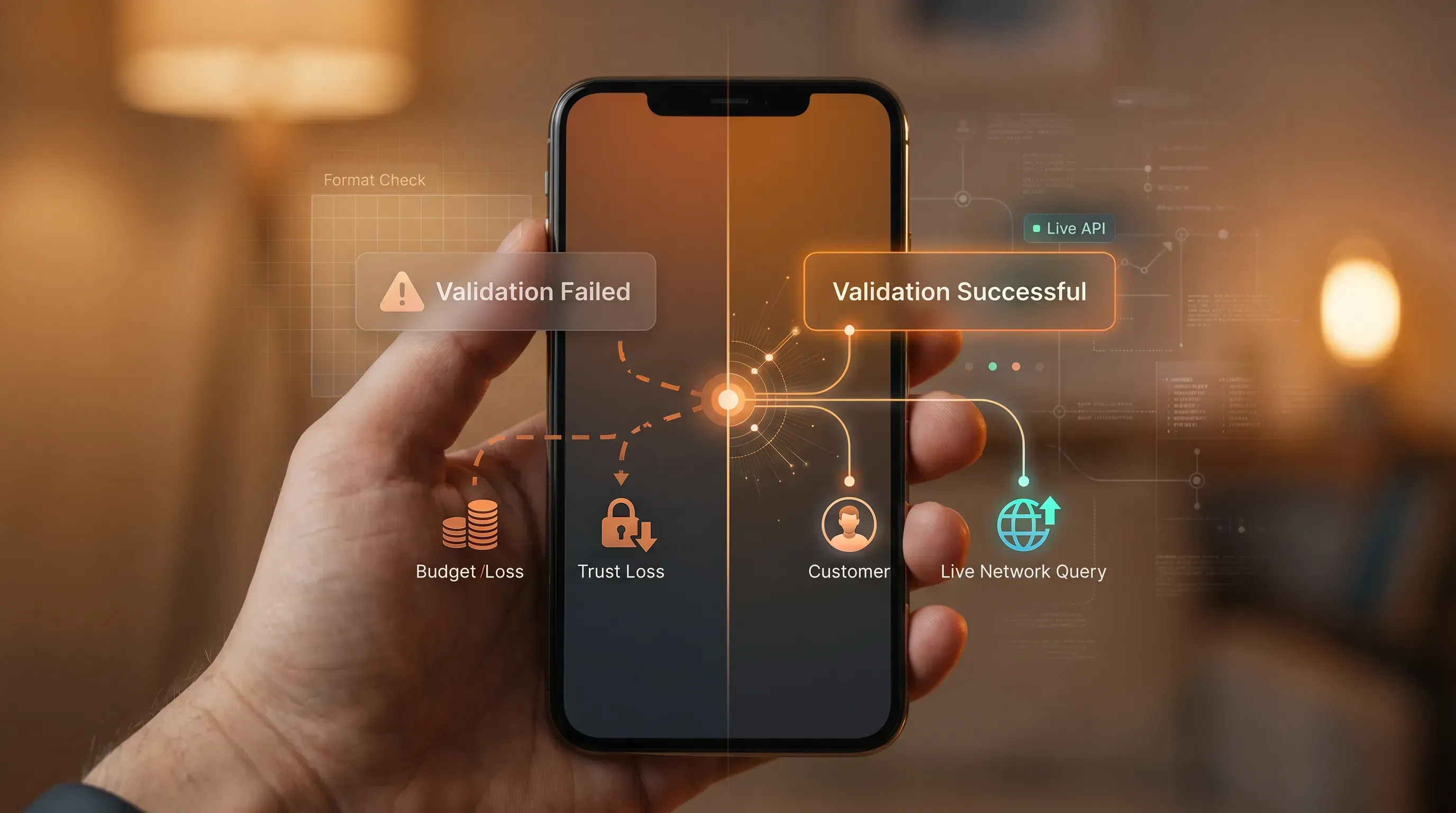
Dirty phone data distorts campaign reporting because delivery rates and click-throughs are calculated against a denominator stuffed with dead numbers. It frustrates customer service agents who chase leads that were never reachable to begin with. And it inflates churn metrics when a service team marks an account as unresponsive, when the real problem is a stale mobile number nobody re-collected. Bulk phone number validation is the practical fix because it treats the database as the source of send failures.

What bulk phone number validation actually does

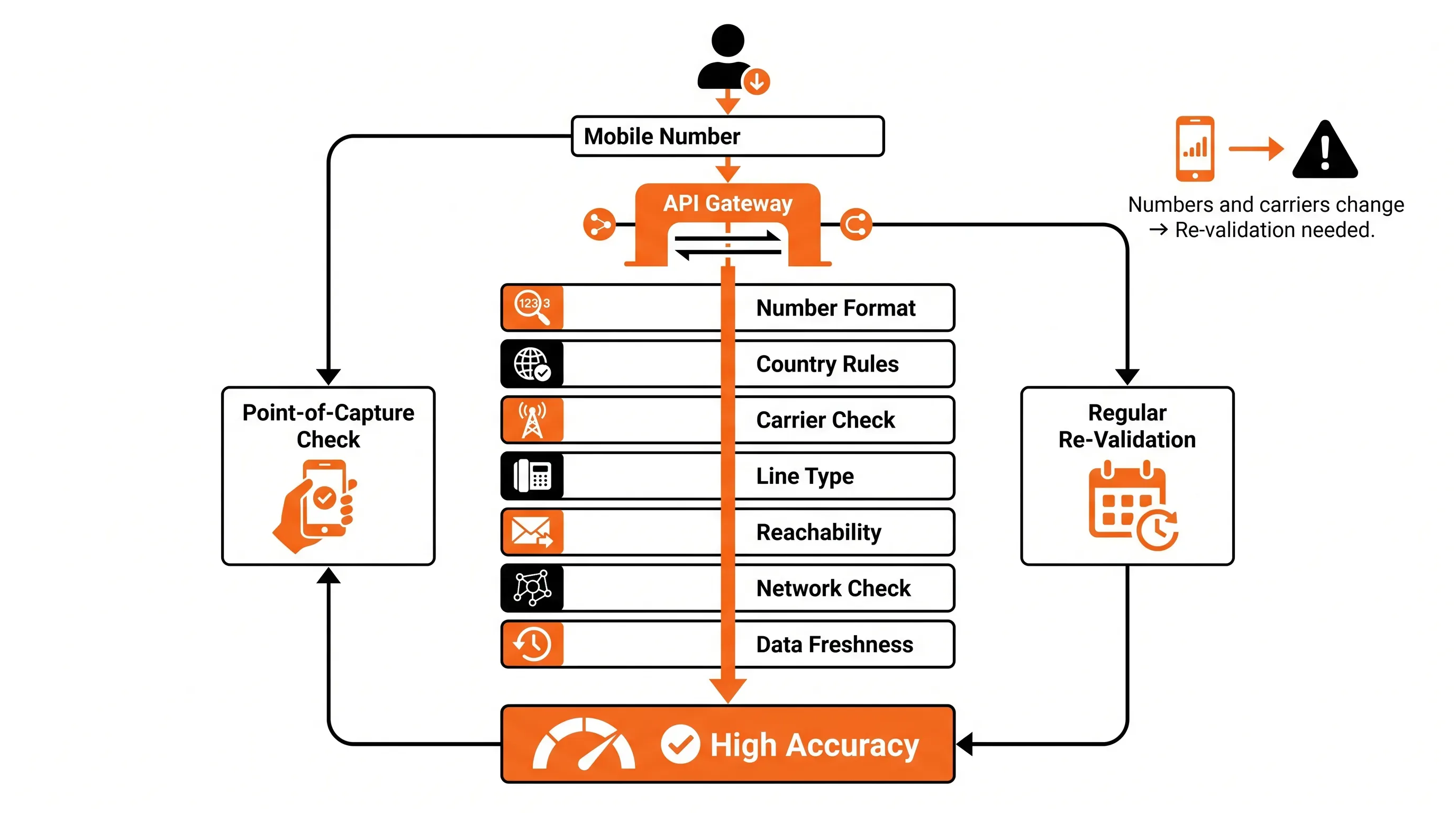
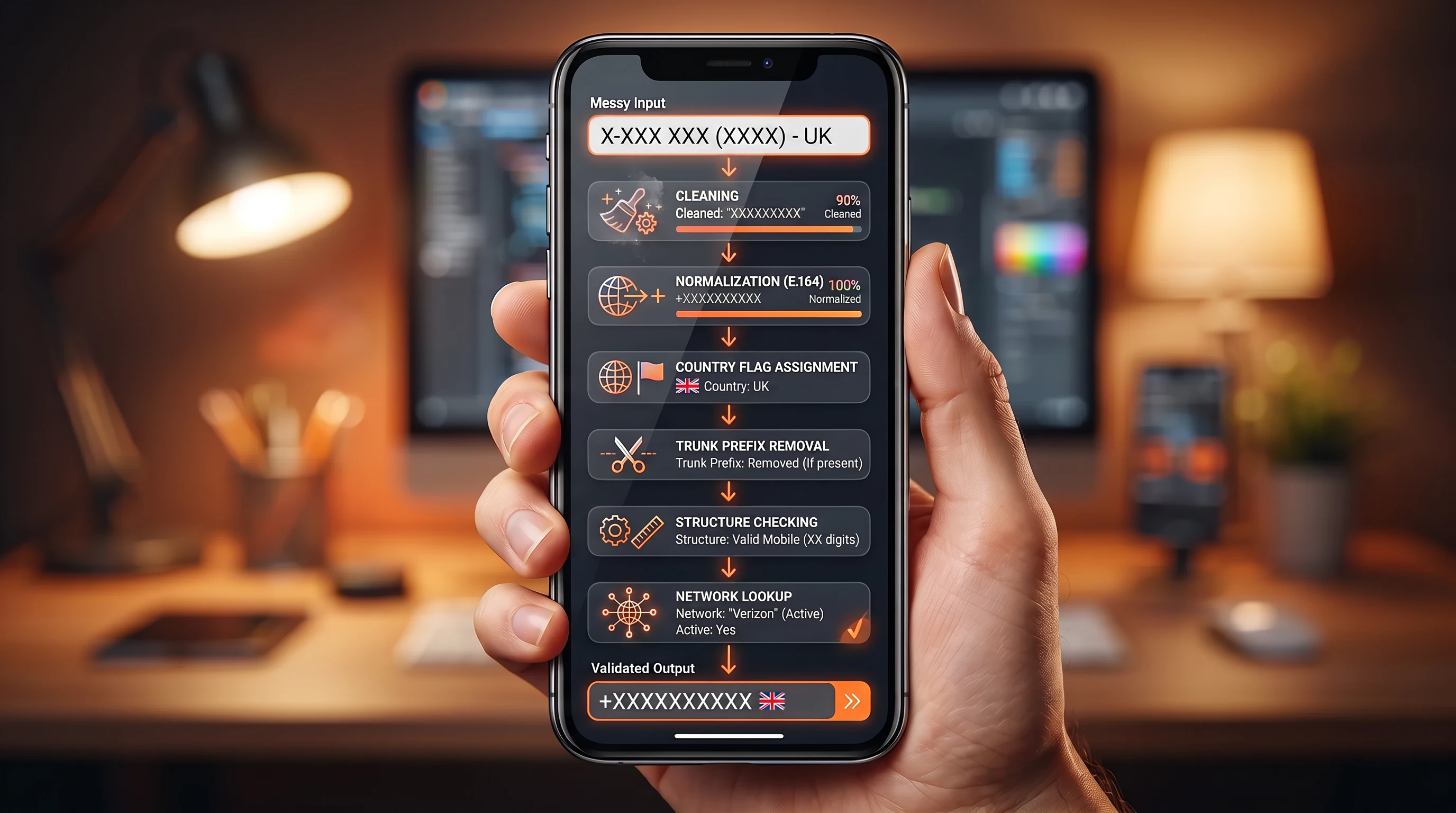
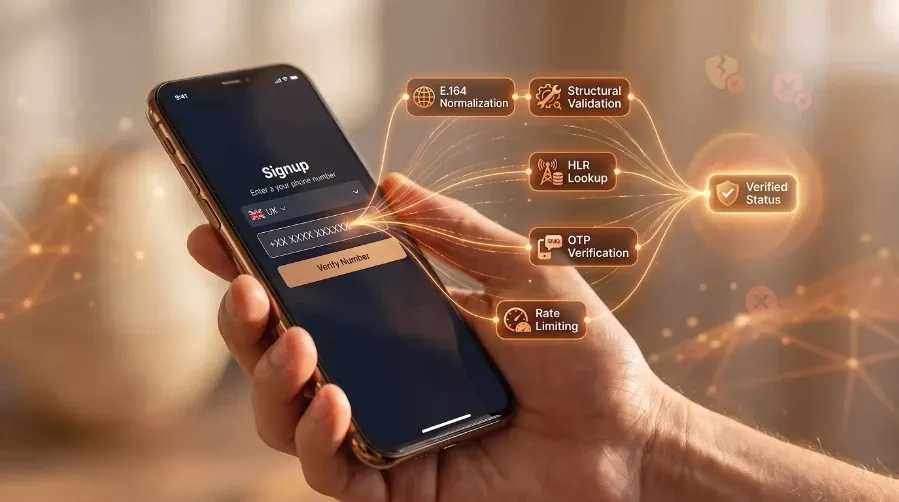
Bulk phone number validation is a batch process that takes a full file of mobile records at scales of millions of rows at a time and returns a structured verdict on each one. It checks format against the E.164 standard, identifies the country and carrier, classifies the line type, and confirms whether the handset is currently reachable on the network. The output is a clean table that says, for each number, whether to keep it or move it into a follow-up path for suppression or re-collection. This is fundamentally different from a manual spot-check or a guess based on how a number looks on screen.

The defining word is batch. A real-time API call validates a single number at the moment of capture, but bulk phone number validation runs against the existing base in one go. Acudo's platform, for example, can process weeks of batch work in seconds and return detailed reports that separate clean records from invalid or ported numbers. The output is the input that makes every downstream cleanup decision possible inside the CRM.

When to run a bulk check

There are specific operational moments when a bulk pass earns its keep. Each one is tied to a business event where bad phone data turns from a background nuisance into a direct cost or risk.

Before a major campaign

Bulk phone number validation before a large SMS or voice push prevents the marketing team from paying to send messages into the void. ClearoutPhone's analysis of cleaned lists suggests businesses can save up to 20-30% of total SMS costs by removing bad numbers before send. The saving compounds across seasonal sends and re-engagement pushes aimed at customers who haven't opened anything in a year.

There is a reporting argument too. When the campaign goes out to a list that hasn't been validated, the delivery rate gets dragged down by numbers that were never going to deliver in the first place. The marketing team then spends a week debating creative or send time when the real problem was the underlying data.

Validate every number. Deliver every message.

Talk to our team about real-time phone number validation, fraud prevention, and high-deliverability SMS for your business.

Ahead of peak trading

Retailers learn the hard way that peak windows are the worst possible moment to discover delivery problems. Dotdigital reported that it delivered 12 million SMS messages over the Black Friday and Cyber Monday weekend in 2024, up 22% on the previous year. Braze recorded an even sharper picture, with 17 billion messages sent on Cyber Monday alone, a 28% year-on-year jump.

Those volumes are unforgiving. If 10% of the audience file is unreachable when the promotional clock starts, the revenue lost to undelivered offers can't be recovered the following week. Running a bulk check four to six weeks before peak gives operations time to suppress dead numbers and trigger a re-capture flow for the records worth saving. Sinch's data showing 75.8% of consumers expect order confirmations within five minutes makes the same point from the service angle. There is no slack in the timeline during peak.

During CRM migrations

Moving data from one platform to another is the most natural moment to clean it. The records are already being mapped and reformatted, so adding a validation step costs little extra effort and stops bad data being carried into the new system as if it were trustworthy. Bringing dirty numbers into a new CRM means the new platform inherits the same suppression problems and reporting noise as the old one.

A bulk validation during migration also surfaces formatting work that the old system was hiding. Numbers stored without country codes or in mixed national and international formats get standardised on the way in. That alignment matters for the new platform's automation rules. A few wins to capture during the migration window:

  • Standardise every number to E.164 so downstream tools agree on what "valid" means

  • Deduplicate records where the same customer was stored twice under different formats

  • Suppress numbers flagged as invalid or permanently disconnected before they pollute the new CRM

  • Tag ported numbers so the line type and carrier fields stay accurate

For service and transactional workflows

Validation matters most where a failed message has a direct customer consequence. One-time passwords for login, delivery updates from a courier, appointment reminders from a clinic, fraud alerts from a card issuer, all of these collapse the moment the underlying mobile record is wrong. 8x8's CPaaS research notes that 93% of businesses worldwide rely on SMS OTP verification, which means the operational exposure is huge.

A bulk validation against the existing customer base catches dormant and reassigned numbers before they cause an incident. That is also the compliance angle. Under the Telephone Consumer Protection Act, calls or texts placed to a reassigned number can create liability because the new subscriber never gave consent. Checking the base periodically is part of what regulators describe as reasonable dialing practices and reduces legal risk alongside the operational benefits.

What data to check in each record

Bold flat infographic on a white background featuring a segmented contact record card with icons for SMS workflow and number validation.

A useful bulk validation returns more than a true or false verdict. It returns the fields that let an operations team decide what to do with each record. The first field is format. Is the number well-formed against E.164 with the correct country code, and does the length match the national numbering plan? A misformatted number is the easiest to fix because a data-entry artifact can be corrected without replacing the contact.

The second field is line type. Mobile and landline records behave differently when an SMS hits them, and VoIP needs its own policy. RingCentral's high-volume SMS guidance notes that sending text messages to landlines is one of the most common causes of low deliverability because the message simply cannot be received. A retailer running an SMS promotion needs to know which numbers in the file are mobile and which are landline. The third field is active status, ideally drawn from a Home Location Register lookup that confirms the SIM is currently reachable on the carrier network. The fourth is porting and reassignment data, which tells the team whether the original consent and customer profile still apply to the current subscriber.

With those fields in hand, the cleanup decision becomes straightforward. Keep the active, correctly formatted mobiles. Suppress the invalid and disconnected numbers from SMS workflows, and route landlines away from SMS. Route VoIP numbers through a different policy if fraud risk is a concern. Flag ported numbers for a closer look because the underlying subscriber is uncertain. And mark the records that come back as inactive for a re-capture prompt at the next service touchpoint.

Validate every number. Deliver every message.

Talk to our team about real-time phone number validation, fraud prevention, and high-deliverability SMS for your business.

How validation supports contact list hygiene

Bulk phone number validation feeds directly into the broader contact list hygiene work that CRM and operations teams already run on email and address fields. A bulk phone number validation pass without a follow-up cleanup is wasted effort because the verdicts need to change how the database behaves. That means tagging records with the validation status and suppressing unreachable numbers from active campaigns, with flagged contacts routed into a re-capture workflow at the next interaction.

The practical contact list hygiene routine has a few moving parts that benefit from the validation output:

  1. Add a validation status field to each contact record so suppression logic can read it directly

  2. Route invalid and disconnected numbers out of SMS audiences without deleting the record outright

  3. Trigger a re-collection prompt the next time a flagged customer logs in or calls support

  4. Refresh the validation tags on a defined schedule so contact list hygiene work doesn't drift back into chaos

Done properly, contact list hygiene also fixes the reporting problem mentioned earlier. Deliverability and engagement metrics start measuring real audience behaviour. The campaign data cleanup that comes out of a bulk pass gives the marketing team a defensible baseline. When the next quarterly review asks why open or response rates moved, the answer reflects creative and timing decisions. Campaign data cleanup also shortens the feedback loop on A/B tests because the test cells aren't diluted by unreachable contacts.

A quick note on terminology. Contact list hygiene is the ongoing discipline. Campaign data cleanup is the project work that happens around specific sends or system changes. Both rely on the same validation output, but they live on different cadences inside the team's calendar. The campaign data cleanup work is event-driven, while contact list hygiene runs as a steady background process.

When to pair bulk checks with real-time validation

Bulk phone number validation handles the existing base. Real-time validation protects new data at the point of capture. The two work on different problems, and most businesses with active acquisition channels need both. A bulk pass is the right tool for a database that has accumulated bad records over years. A real-time check at the form is the right tool for stopping the next bad record from entering the system five minutes from now.

The scenarios where both are needed are easy to spot. High-volume signup forms, ecommerce checkouts, lead generation landing pages, and onboarding flows in fintech apps all benefit from real-time validation because they generate new records continuously. A retailer running a Black Friday landing page that doesn't validate at capture is feeding tomorrow's problem into the CRM in real time. 8x8's OTP delivery guidance puts it directly: validate numbers in real time to stop delivery failures before they happen.

A simple rule of thumb. If the database has more than a year of accumulated records and no validation history, start with a bulk pass to fix the inheritance. If new records are flowing in at any meaningful rate, add real-time checks at the capture points so the bulk pass doesn't have to repeat itself every quarter. Together, they keep contact list hygiene on a steady maintenance cadence.

Building a repeatable cleanup routine

A one-off bulk phone number validation feels productive, then drifts. The data decays. New records arrive without checks. Six months later the team is back where it started and still pays for SMS sends that go nowhere. The fix is to turn the cleanup into an operational rhythm with named owners and tracked metrics.

A workable rhythm looks like this. Run a full bulk phone number validation pass quarterly against the whole customer base. Layer real-time validation onto every public capture point so new data enters clean. Schedule a focused campaign data cleanup four to six weeks before any major commercial event, like a peak trading window or a re-engagement push. Tie ownership to the teams that actually feel the consequences. The CRM team owns the database schema and the validation status fields. Marketing operations owns the suppression rules and the campaign data cleanup calendar. The data team owns the bulk run itself and the reporting on outcomes.

The metrics worth tracking are short. Invalid rate measures how much of the base is unreachable on the day of the run. Suppression rate measures how much of the active audience was pulled out of a given send. SMS delivery rate measures the bottom-line outcome the business cares about. Watch those three over four consecutive quarters and the routine pays for itself. The difference between a one-time project and a lasting habit is whether anyone is reading those numbers next quarter.

Clean your customer number database with Acudo

The practical takeaways are direct. Bulk phone number validation lowers wasted SMS spend and sharpens deliverability reporting, while service teams get a contactable base. Pair it with real-time checks on new captures and the cleanup becomes a habit.

Acudo specialises in mobile number validation for businesses that depend on accurate customer contact data. The team brings the expertise of HLR Lookup and e164 into one platform built for bulk processing and real-time API checks across 200+ countries. If your CRM is carrying numbers you no longer trust, speak to Acudo about running a bulk phone number validation pass on your customer database and putting a real-time check in front of your capture flows.

Validate every number. Deliver every message.

Talk to our team about real-time phone number validation, fraud prevention, and high-deliverability SMS for your business.

Use a CSV with one row per contact. Keep the contact ID and phone number in separate columns so the returned status can be matched back to the right CRM record. Remove duplicate rows before upload if your CRM exports the same contact more than once.

Treat unknown results as records that need a second check, not as clean numbers. Network outages, roaming status, or carrier response limits can stop a firm result. Put these contacts into a temporary hold segment and recheck them before the next high-cost SMS or voice campaign.

No, validation confirms whether a number is formatted, mobile, and reachable. It doesn’t prove that the customer agreed to receive SMS messages. Keep consent fields separate from validation fields, and suppress any record that lacks the permission required for the campaign type.

Treat validation results as time-bound because phone numbers get disconnected, ported, and reassigned. For active SMS programs, refresh bulk phone number validation results at least quarterly. For low-volume service messaging, align refresh timing with your risk level and the cost of failed contact attempts.

Acudo can support the validation step while your team controls CRM rules and customer follow-up. A practical setup is to export records, validate mobile numbers, then import status fields back into the CRM. Speak to Acudo about mobile validation workflows if you need both batch checks and real-time checks.

Get in touch

Talk to our team about phone number validation, fraud prevention, and reliable SMS communications.

You Might Also Like

Discover more insights and articles

A human hand holds a glossy smartphone, showcasing a contact list transforming from messy to clean entries against a warm bokeh background.

Customer Phone Number Cleansing for Better SMS Campaign Readiness

This article explains customer database cleansing and shows how a practical pre-send cleanse protects SMS delivery and budget before a large campaign or seasonal peak.

A hand holds a glossy smartphone displaying a dynamic CRM interface, surrounded by organized contact nodes and metrics in a warm office setting.

Customer Data Cleansing: Keep Contact Records Accurate Before You Message

This article treats customer data cleansing as an ongoing maintenance cycle that explains contact record decay and builds a repeatable routine around its costs so your messages keep reaching real people.

A realistic tech scene featuring a smartphone displaying an SMS campaign dashboard, with glowing validation nodes and a CRM contact list overlay.

CRM Phone Data Quality: Why Customer Phone Numbers Matter Before You Send

This article explains why CRM data quality shows up first in the phone number field and how that quiet decay drags down your SMS results. It also explains what to do about it. You will finish able to diagnose whether your own contact data is costing you reach and money through weaker delivery, and to make the case for fixing it.

A realistic hand holds a smartphone, surrounded by warm bokeh, with data icons streaming in and glowing contact nodes on the side.

Customer Phone Data Cleaning for More Reliable SMS Communication

This article explains why customer data cleaning is the real fix behind reliable SMS for order alerts and delivery updates. It walks through the data faults that make contact records go stale and break message delivery, then shows what a practical pre-send validation process looks like for ecommerce and operations teams.

Get in touch

Talk to our experts about validating phone numbers and delivering business-critical SMS with reliability and speed.

Close