Line type and reachability
Line type detection tells you when a number is mobile and when it belongs to a landline or Voice over Internet Protocol (VoIP) service. That single attribute decides whether SMS will ever land, because a landline cannot receive a text. Catching landlines at this stage means you stop routing them into an SMS campaign and send them to voice instead, or suppress them.
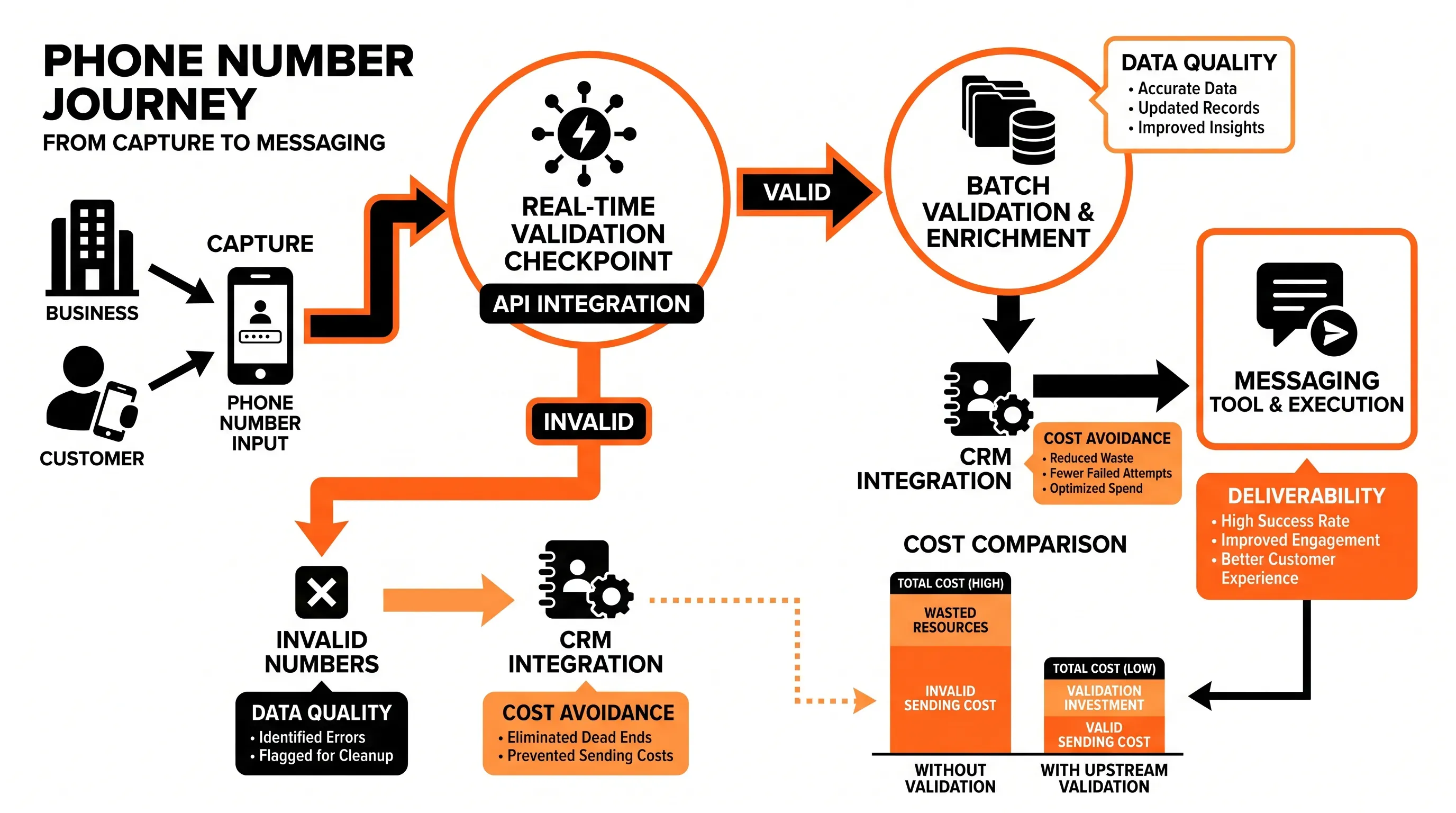
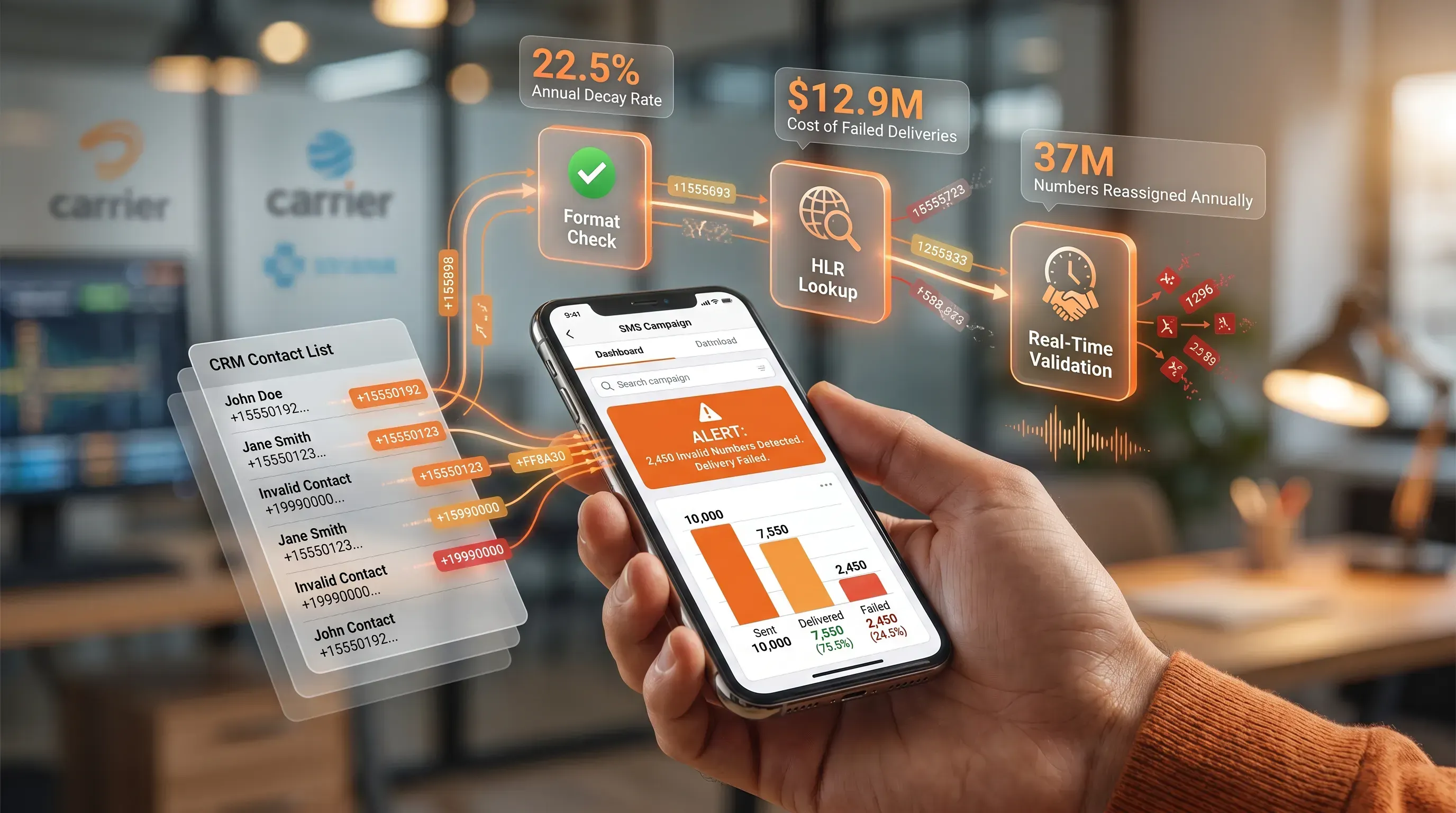
Validity and active status go a layer deeper. A Home Location Register (HLR) lookup queries the mobile network directly to confirm whether a number is live and active, without sending a message at all. If the network returns no subscriber information, the number is disconnected or unassigned. That's a record you suppress before the campaign sends, which keeps it out of the bounce report.
This is where the difference between four states of a number becomes practical:
-
Invalid: the number is malformed or doesn't exist on any network, so nothing you send will reach it.
-
Inactive: the number was real once but the network no longer recognizes an active subscriber.
-
Formatted: the number is syntactically correct and properly normalized, which is necessary but not proof it's reachable.
-
Reachable: the network confirms an active line that can receive your message.
Formatting alone fools a lot of teams. A number can pass a format check and still be dead, which is why active status matters more than a clean-looking string.
Carrier and porting signals
In a phone number lookup for business, carrier identification tells you which network a number sits on now, and porting history tells you whether it recently moved or changed hands. Both matter more than they sound. Porting and reassignment are constant, and a number that looks fine can belong to a completely different person than the one who opted in.
The scale here is large. The Federal Communications Commission found that roughly 35 million numbers are disconnected and available for reassignment each year, which works out to about 100,000 a day. When you message a number that has been reassigned, you're contacting a stranger who never consented, and that's both a compliance exposure under the Telephone Consumer Protection Act and a wasted send. Reassigned-number class actions have produced eight-figure settlements.
Carrier and porting data also lets you route messages correctly to the network that actually holds the number. Knowing a number has recently ported helps you keep customer records accurate and avoid compliance issues tied to contacting the wrong recipient. The implication matters: a recently ported or reassigned number carries both reachability and legal risk.
Business number intelligence in practice
No single signal decides anything on its own. Business number intelligence is what you get when reachability signals combine with carrier and porting history into one judgment about contactability. That business number intelligence is what turns a row in a spreadsheet into a decision.
Here's how that reads in practice. A record comes back as a valid mobile, active on its network, with no recent porting flag. That's a clean send. Another comes back as a valid landline, which means SMS is off the table and voice is the right channel. A third returns active but recently ported, so you treat it with caution and check it against the reassigned-number database before contacting it. A fourth returns no active subscriber, and you suppress it. Those four records produce four different actions from one phone number lookup for business.
That's the shift business number intelligence makes. You decide whether each number should receive a send or move to another path before a single credit is spent. The judgment is operational and ready to act on, which is exactly what you need when you own the budget behind the campaign.