Reading the API response
If you're the one wiring this call, the shape of the response decides how much you can automate. A clean, predictable response model lets you build real logic on top of it. A messy one forces you to hard-code exceptions, so plan for the structure before you plan the integration.
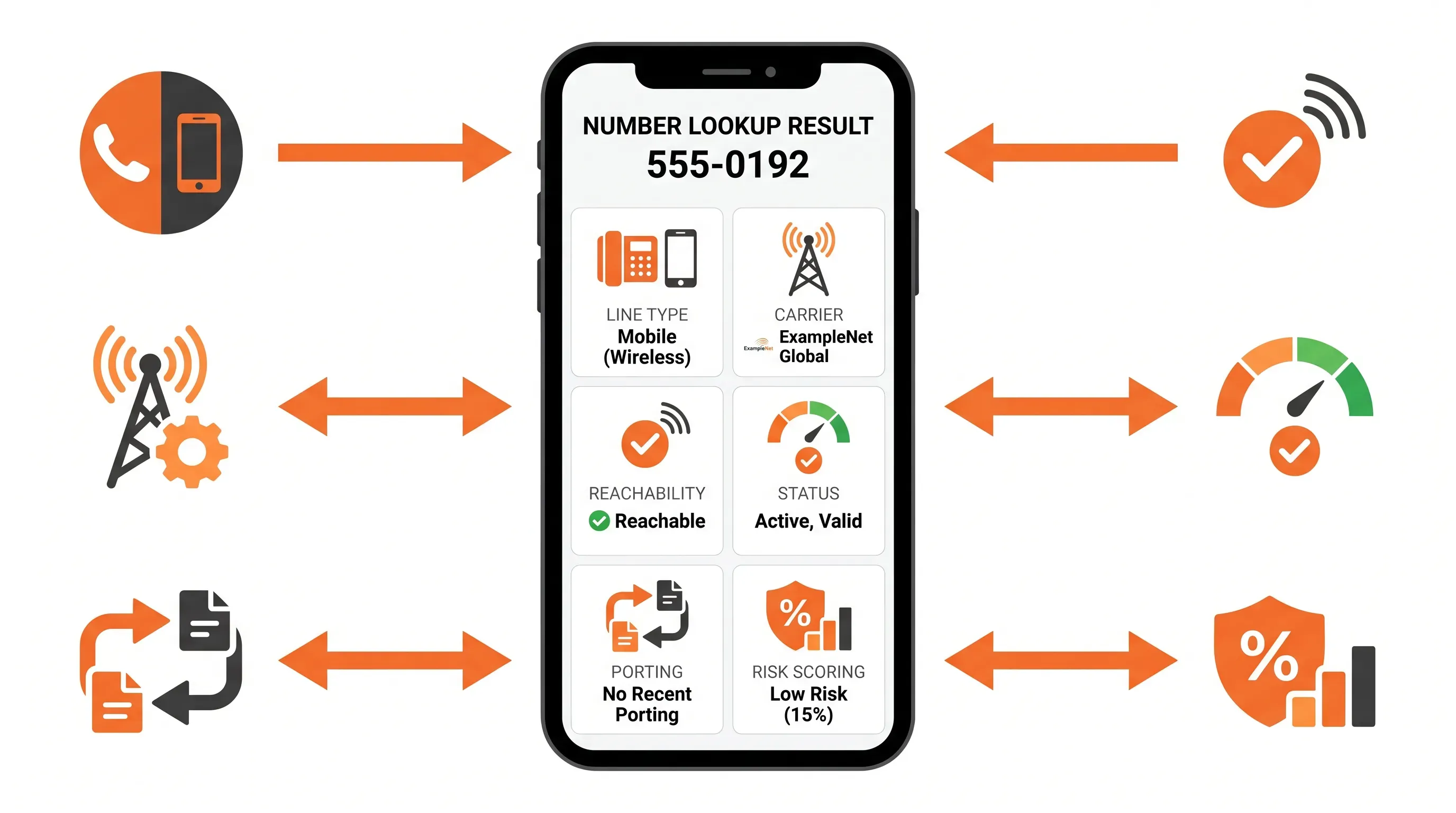
A typical number lookup API response is a structured object with the number in E.164 format and the requested data packages; each package also has an error field that can fail independently. Design your parser to expect partial objects, because a lookup can succeed on line type and fail on reachability in the same call.
Confidence and status codes are where the automation logic lives. A hard active status can gate a send directly. A probabilistic score belongs in a pre-send decisioning threshold, where you decide what level of confidence is enough to send and what level pushes the contact into a hold or a slower channel. Treat the probabilistic fields as inputs to a score, and let that score make the send-or-suppress call.
Latency is the constraint that shapes everything when the lookup runs inline. A synchronous pre-send call adds round-trip time to every message, so a lookup that runs in tens of milliseconds is workable inside a send flow, while one that takes seconds is not. Set a tight timeout and decide in advance what happens when you hit it.
That decision is the one engineers get wrong most often. A number lookup API step that blocks the send when the API times out makes your transactional messages fail on infrastructure. Build the fallback first. When a lookup times out or returns an ambiguous result, default to sending for high-priority transactional messages like one-time passcodes, where a delayed code is the worse outcome. For low-priority marketing traffic, you can afford to suppress on a failed or uncertain lookup, because a skipped promotion costs nothing. Treat ambiguous and partial results as their own branch in the logic.
Adding lookup to your workflow
A number lookup API call belongs at one of three points in the systems you already run, and the right point depends on what you're protecting. The trigger patterns are these:
-
At signup or contact capture, when a number first enters your system.
-
On a scheduled refresh of stored numbers, sweeping your existing database on a cadence.
-
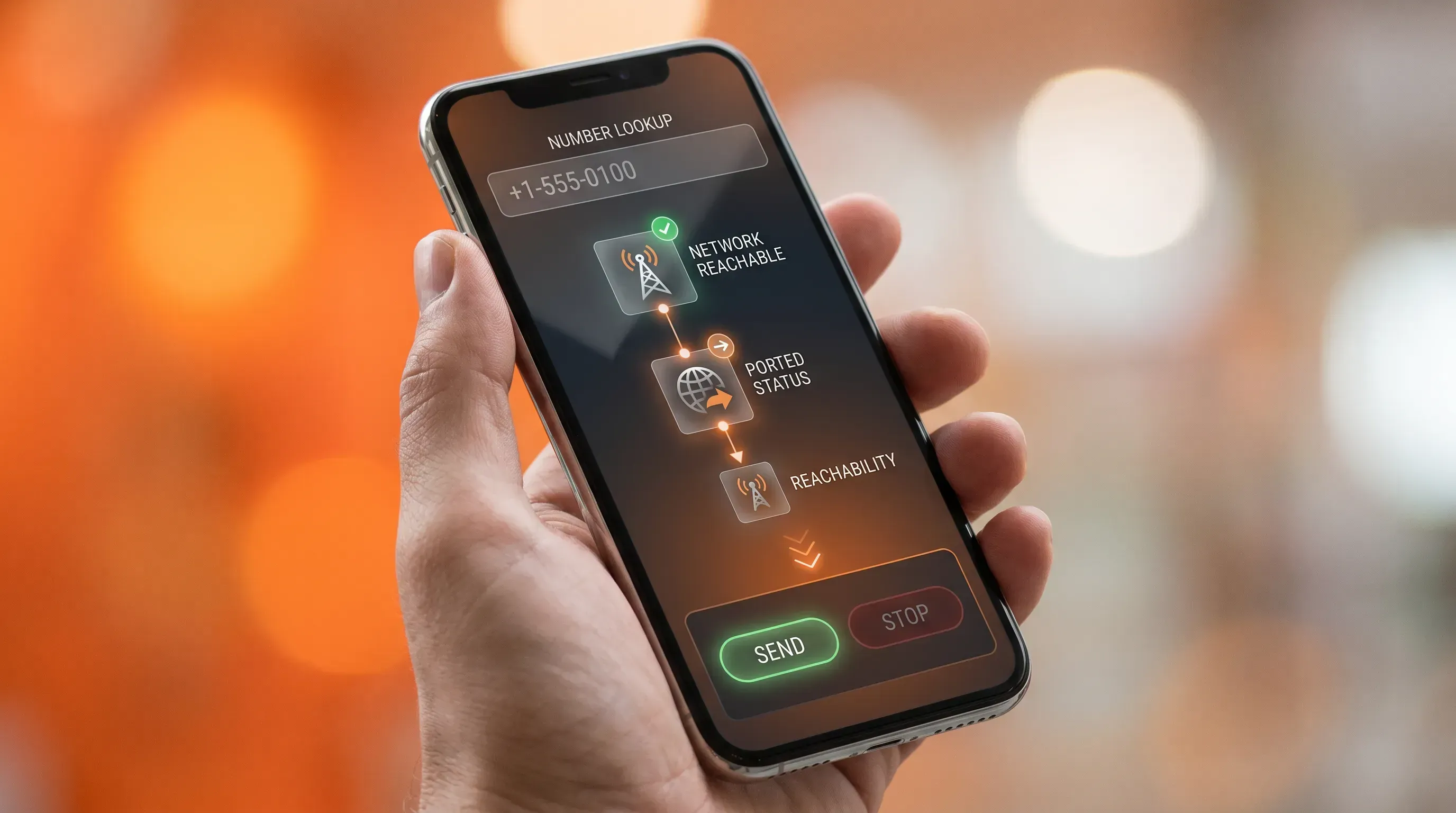
Inline, right before a send, as a synchronous check on the number you're about to message.
Checking once at capture is the cheapest option, because you run a single lookup per contact and store the result. It catches mistyped and invalid numbers at the door, before they ever pollute your database. The weakness is freshness. A number that was active at signup can disconnect or port a year later, and your stored result won't know. Capture-time checks keep bad data out, but they go stale.
Checking pre-send is the freshest option, because you read the number's status at the moment it matters. It costs more, since you run a lookup on every send, and it adds latency to the send path. The tradeoff is accuracy. For a one-time passcode or a fraud alert, that freshness is worth the cost, because a failed delivery defeats the entire purpose of the message.
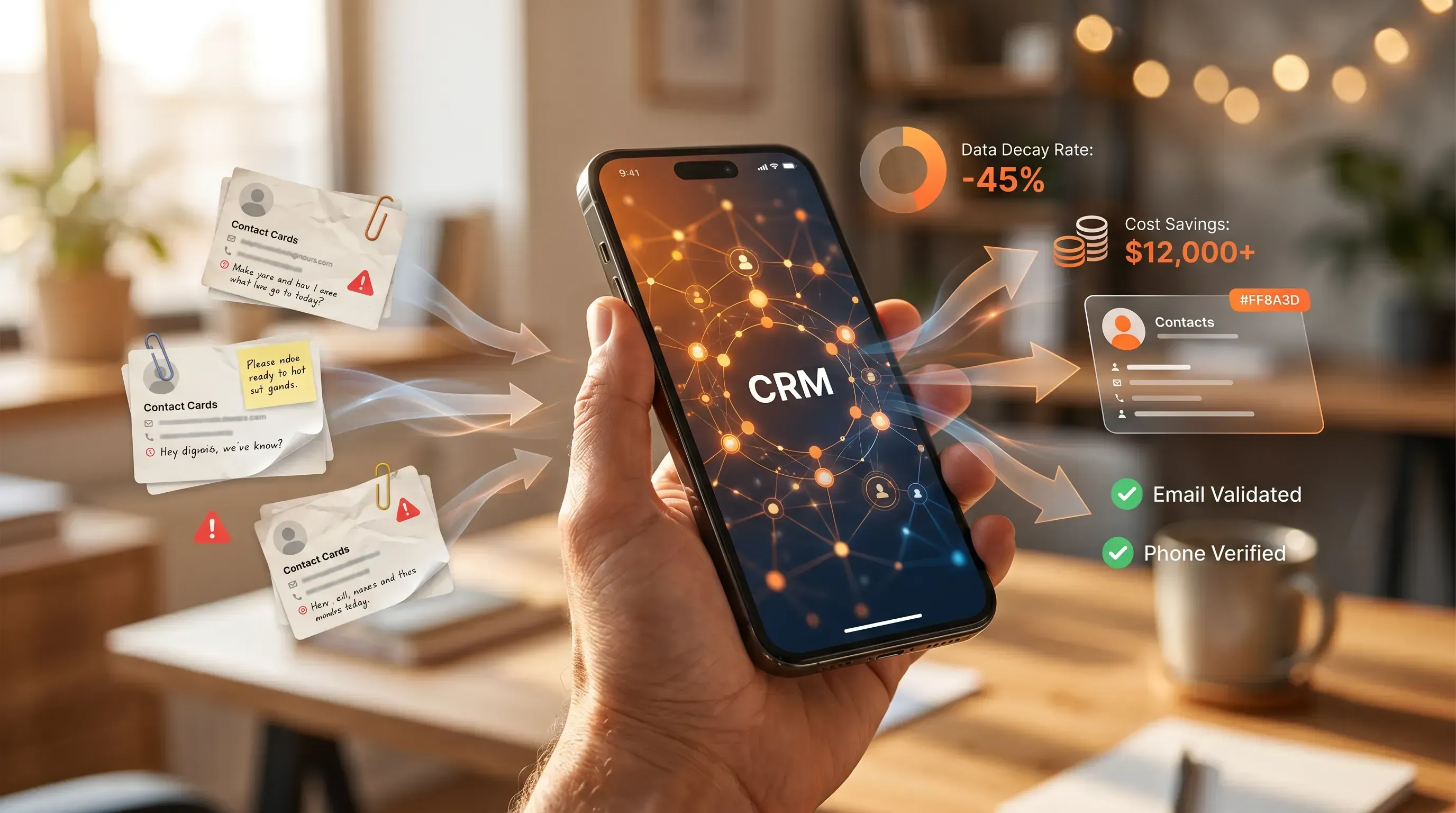
Match the trigger to the use case. For transactional alerts where delivery is critical, lean toward a pre-send check on the live status. For marketing campaigns sent to large lists, a scheduled refresh before the campaign builds keeps your spend down while catching the numbers that died since the last sweep. For CRM hygiene, a periodic refresh keeps stored records trustworthy without a per-send cost. The same customer number intelligence feeds all three, but where you trigger the lookup decides how fresh and how expensive that intelligence is.
The validate-before-you-send model with a number lookup API
Pull the pieces together and a single operating model emerges. Start with format validation and use the live lookup to decide what happens to the send. That sequence is the whole argument of this article, and it's worth running in that order for a reason.
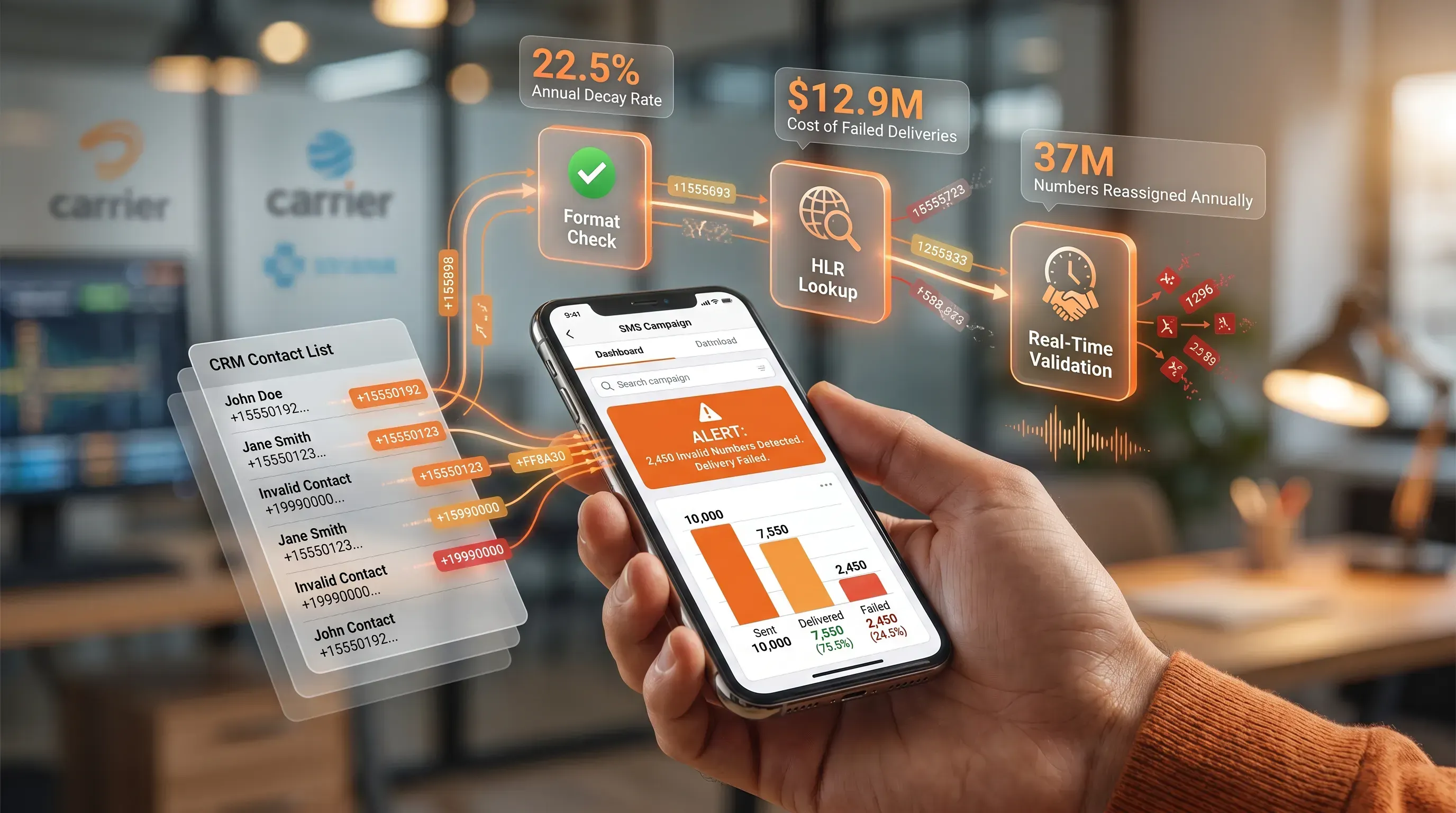
Format validation comes first because it's cheap and it filters the obvious failures before you spend a lookup on them. A malformed number doesn't need a carrier query to tell you it's broken. Once a number clears format, the number lookup API turns line type and reachability into the customer number intelligence that drives the decision. Then you act: send to the reachable mobile numbers and suppress the disconnected ones before they cost you. That final step is pre-send decisioning, and it's the point of the whole sequence.
This layered approach pays off in three ways that compound over time:
-
Deliverability holds up, because you stop feeding carriers the failed sends that drag down your sender reputation.
-
Cost stays controlled, because every suppressed dead number is spend you keep. On an A2P SMS market valued at USD 74.8 billion in 2025, the per-message economics reward anyone who stops paying to message numbers that can't receive.
-
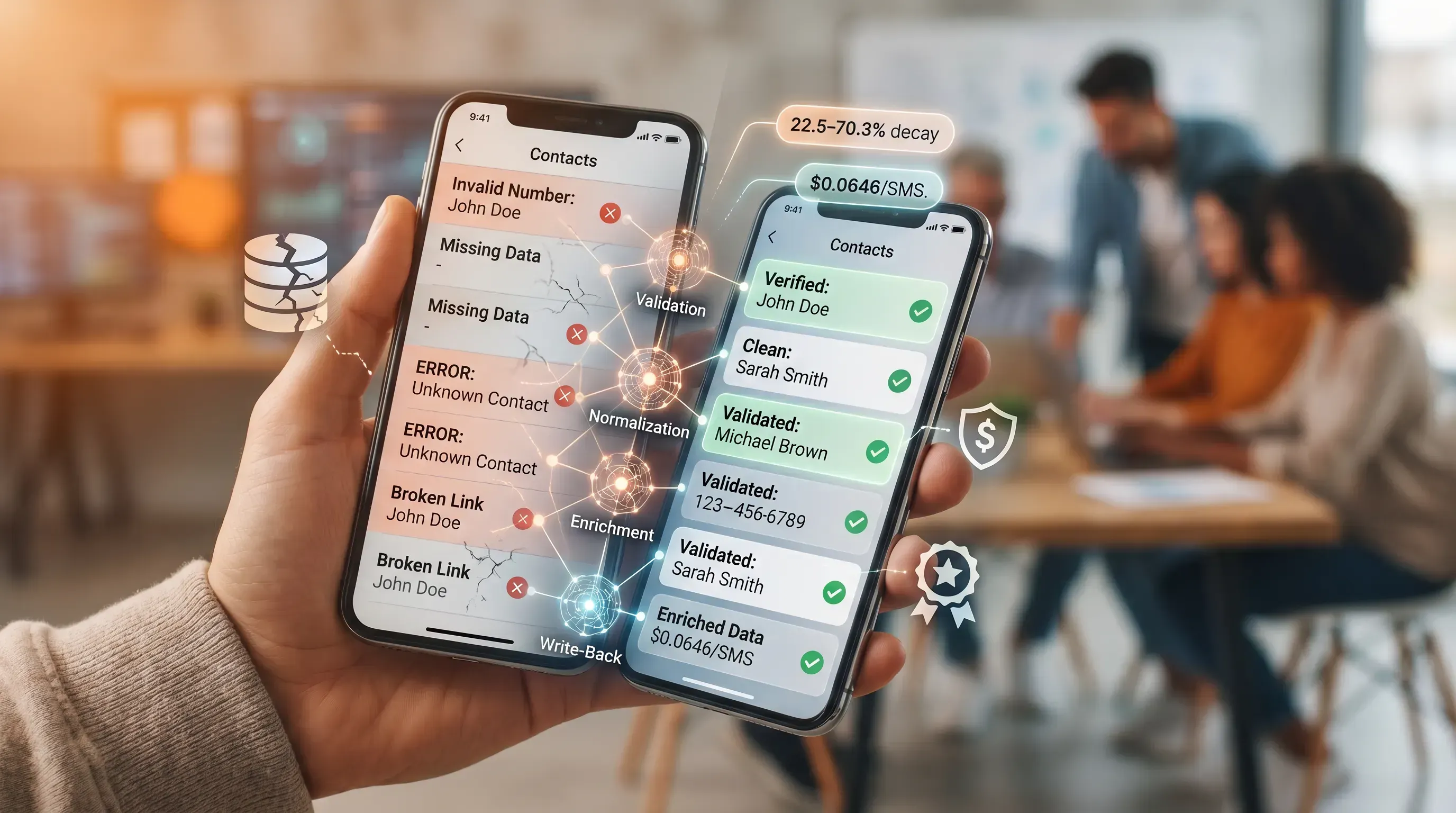
Contact data gets cleaner as a byproduct. Every pre-send lookup updates what you know about a number, so your database improves on its own with each send.
The mindset shift is the part that matters most. A number lookup API is a repeatable pre-send decision pattern that runs on every message, so the question becomes "is this number worth this send right now?" Answer that question every time, and the cleanup takes care of itself. Pre-send decisioning is the operating model, and customer number intelligence is the data that powers it.
Where to go from here
You now have what you need to decide whether a lookup step belongs in your messaging flow. The question is simple: are your failed sends and support tickets costing you more than a lookup would? If they are, the payoff is concrete. Fewer failed sends and reachability you can trust before a message ever leaves your system.
Acudo has provided phone number intelligence since 2005 and checks whether numbers are real and reachable before your budget gets spent on them. If your team is ready to act, speak to Acudo about adding a number lookup API to your customer communication workflows.