Why every text needs its own check
Most UK sales and marketing teams treat TPS and CTPS screening as a list problem: run the numbers once, load the campaign, move on. But MCP Online Ltd was fined £55,000 in September 2023 for 20,939 calls to TPS or CTPS registered numbers, on top of 92,265 texts sent without consent. This is what happens when registry checks are treated as an afterthought rather than an owned process.
Registry screening is one control among several, and it carries particular weight because an objection on TPS or CTPS is set directly by the individual or business, not inferred from anywhere else. Responsibility for clearing that check sits with the sales and marketing team running the campaign, not with a vendor further up the supply chain. What follows is a review sequence that puts TPS and CTPS screening first, with SMS consent and message controls run alongside it.
Run it before each campaign.
Set the legal baseline
The Privacy and Electronic Communications Regulations 2003 (PECR) treat a text message as electronic mail, which puts it under Regulation 22 alongside email. You need prior consent, or you need to satisfy the soft opt-in conditions under which the number was collected during a sale or negotiations for one, and the marketing covers similar products, with a simple refusal route offered at collection and repeated in every message.
There's no fallback basis written into PECR itself. Bratby Law's data protection practice puts it plainly: "If you cannot satisfy regulation 22, you cannot send the marketing", full stop. Argentum Data Solutions tried arguing an alternative basis applied, and the ICO rejected it.
For teams running both phone and text programmes, the Telephone Preference Service (TPS) and its corporate counterpart (CTPS) govern live marketing calls under Regulation 21. They don't govern texts. A number's absence from either register tells you nothing about whether you have permission to send an SMS, and the ICO's own business-to-business marketing guidance keeps the two rule sets in separate rows of the same table.
Screen TPS and CTPS
Registry screening against TPS and CTPS is a standing corporate responsibility for sales and marketing teams. It clears a different question from SMS consent: consent asks whether this person agreed to hear from you by text; screening asks whether the number sits on a statutory objection register, which matters directly wherever that number is used for calls, and indirectly wherever the same CRM record feeds both calling and texting programmes.
The registers behind TPS compliance data are large, and they move. The TPS held 17,251,346 numbers in August 2026, with additions running between roughly 500 and 2,400 on a typical working day and almost no removals, since consumer registrations don't expire. CTPS entries do expire because corporate subscribers have to re-register annually. A file screened six weeks ago is not a file screened today.
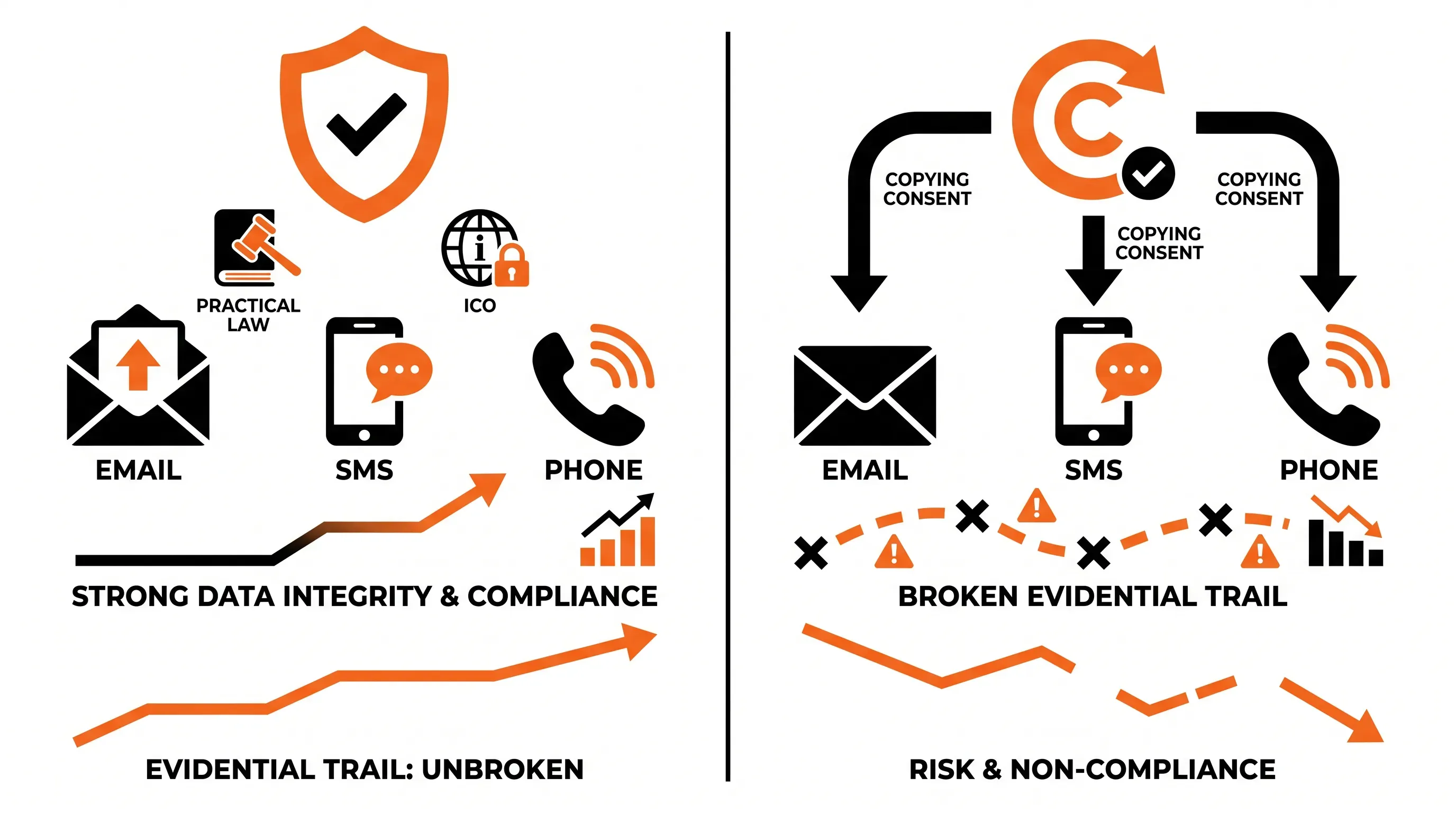
Both gates have to clear, and TPS compliance data feeds only one of them. Your consent check runs against your own records, and your screening policy runs against the registers. Passing one does not excuse failing the other, and the ICO has investigated both together: MCP Online Ltd was fined £55,000 in September 2023 for 20,939 calls to TPS or CTPS registered numbers alongside 92,265 texts sent without consent.
Check TPS compliance data
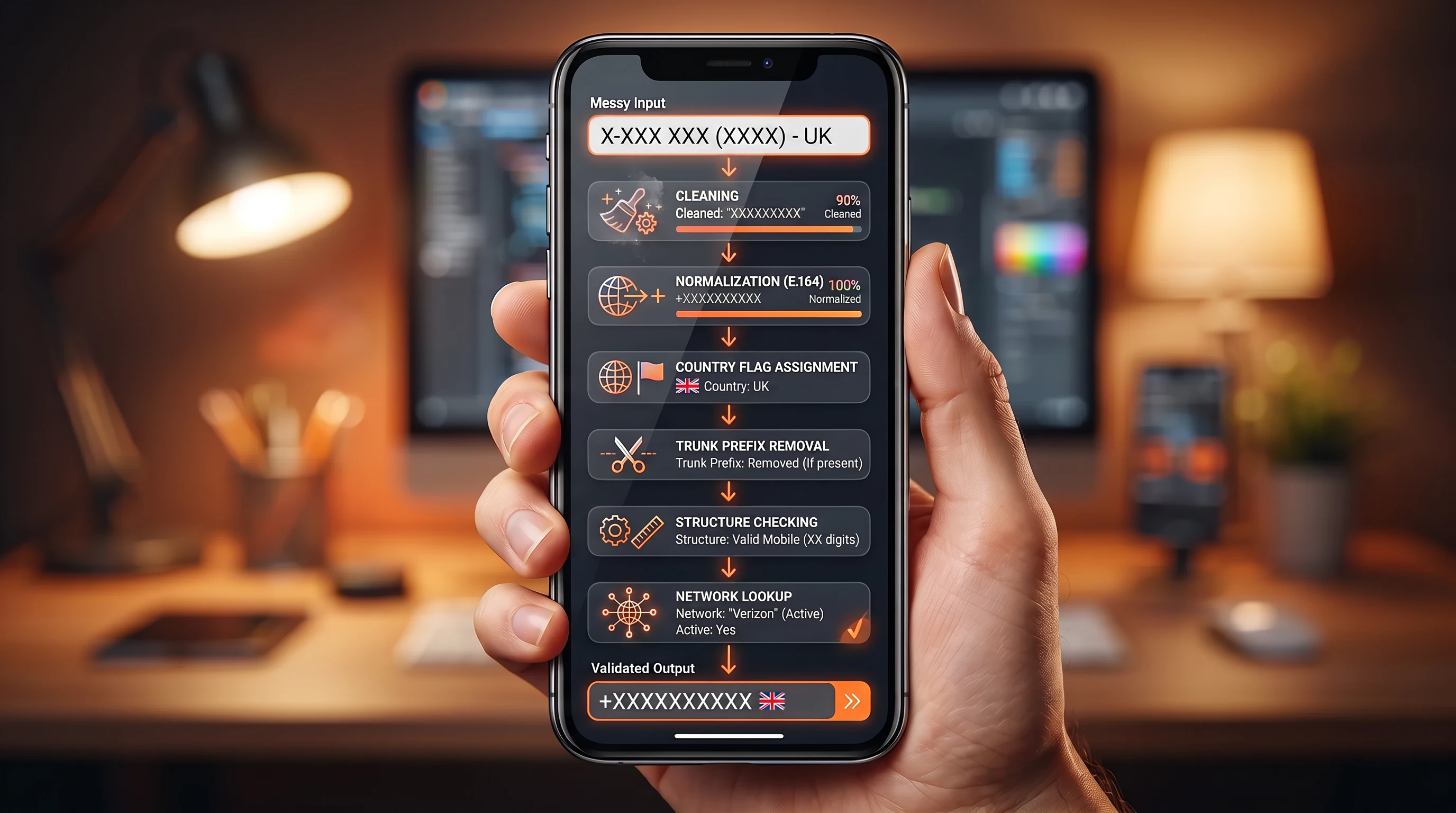
A checking service returns a flag against each number before the list is loaded into your sending or dialling platform. Acudo, which brought together HLR Lookup and TPS Unlimited under one platform, runs TPS and CTPS checks through an application programming interface (API) or bulk upload, at an illustrative £0.029 per number for a combined lookup. This turns registry compliance from a periodic project into a standing part of how a sales or marketing team builds every list.
Two operational habits make TPS compliance data useful. Screen the file that's actually going out, because the extract and the send are days apart. And store the screening result with a timestamp next to the number, so a later query about a specific send can be answered from the record instead of reconstructed.
The 28-day rule matters here too. A registration takes effect 28 days after it's made, which means numbers added last week will start clearing as objections next month. Refreshing TPS compliance data on a fixed cycle, weekly for active outreach files, keeps that lag from turning into a complaint.
Screening is what a checking service does. It is not what your SMS compliance programme is.
Acudo's role stops at telling you whether a number appears on TPS or CTPS and whether it's valid. Everything else stays with you:
-
Consent records and the channel-level fields described earlier
-
The retention and lawful-basis decisions that stay your organisation's responsibility under PECR
-
Your suppression list and the workflow that feeds it
-
Send timing and frequency caps
-
Message copy and opt-out routing
If your TPS compliance data is clean and your consent evidence is thin, you still have a Regulation 22 problem. The registry check answers one narrow question well, and treating it as a general permission signal is the mistake the ICO keeps writing into penalty notices.