What VoIP line-type intelligence can tell you

Content authorBy Claire ConnorPublished onReading time10 min read
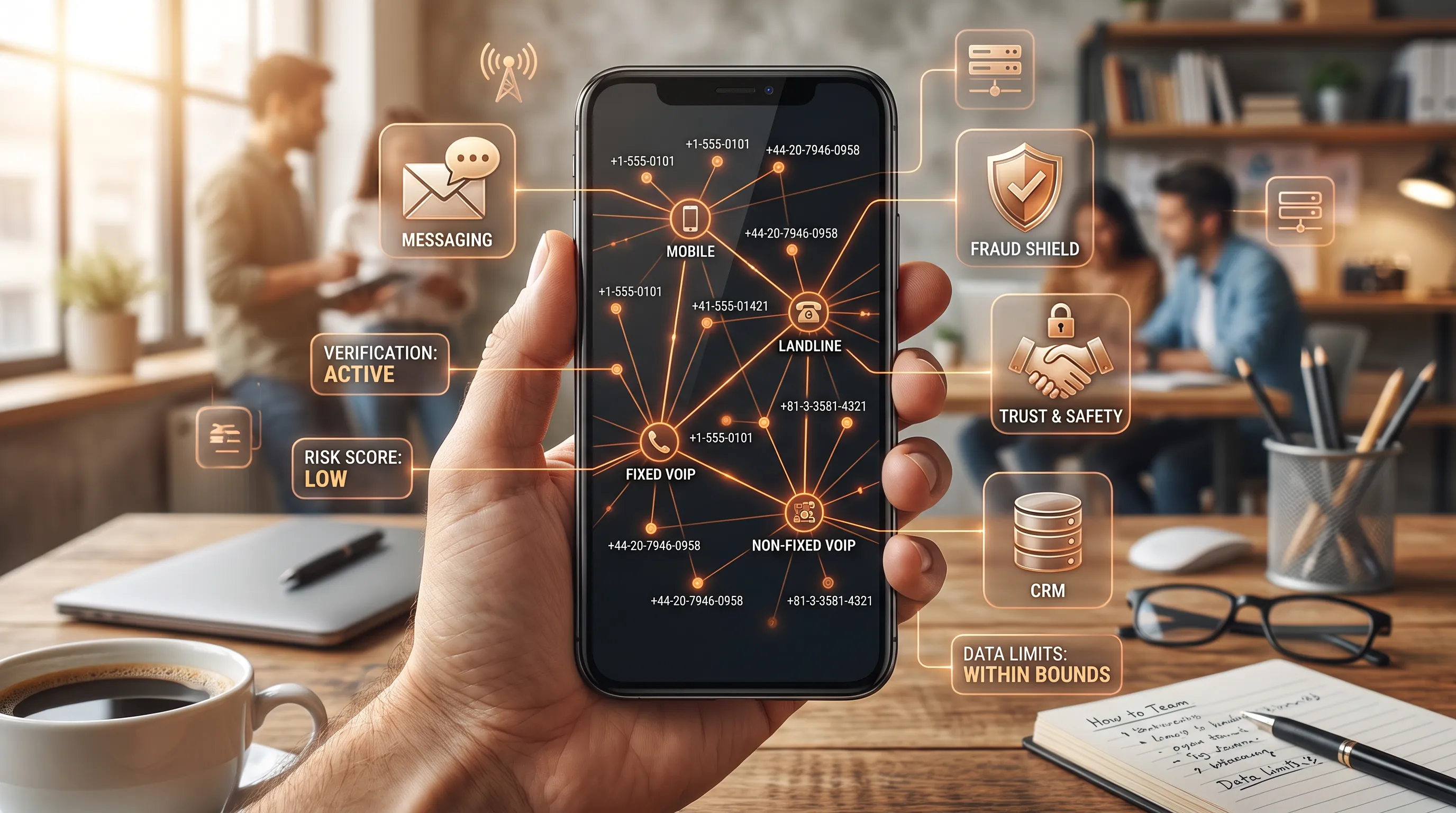
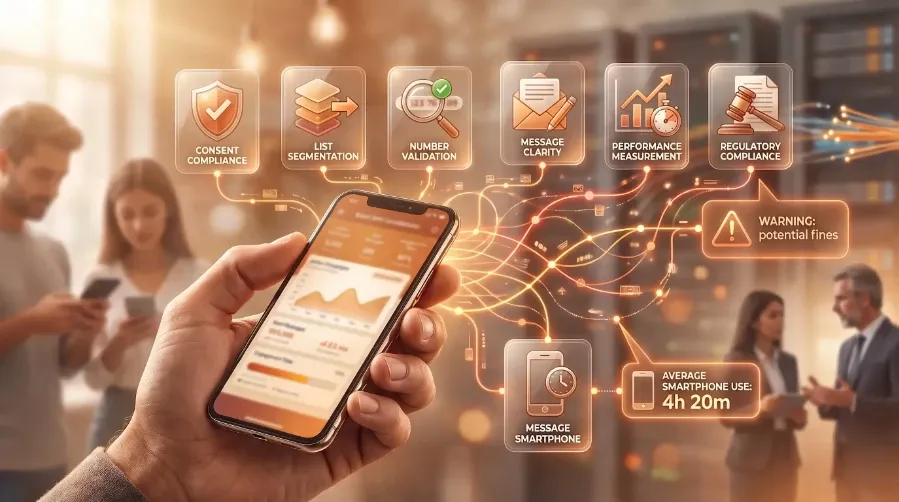
A lifelike hand holds a glossy smartphone displaying a glowing network map, surrounded by semi-transparent workflow icons in a warm workspace.

A VoIP number lookup tells you what kind of phone line you're dealing with: mobile, landline, fixed VoIP, or non-fixed VoIP. That distinction matters when your team needs to decide whether to message, verify, onboard, or route a customer.

Line-type intelligence doesn't identify the person behind the number or prove that the number is genuine. What it does provide is a practical signal for fraud prevention, trust and safety, CRM hygiene, customer operations, and messaging workflows. Here's what a line-type result can tell you, how to use it, and where its limitations begin.

Why line-type classification matters for customer operations

A phone number is more than a contact field in your CRM. Its line type can affect whether you can reach a customer, which verification method you should use, and how much risk you should associate with a new account.

A VoIP number lookup answers a specific operational question: is this number a mobile, landline, fixed VoIP, or non-fixed VoIP line?

That information matters across several teams. Messaging teams need to know whether a number can receive SMS. Fraud and Trust & Safety teams can use line type as one signal in an account-risk assessment. CRM and customer operations teams can identify records that may cause failed communications or require different routing.

For example, a landline number may be valid but unsuitable for an SMS one-time passcode. A non-fixed VoIP number may be legitimate, but it can still be worth considering alongside other risk signals when a new account is being onboarded.

The practical goal is to make better decisions with the information available: send through the right channel, choose an appropriate verification method, flag an account for review, or keep inaccurate numbers from polluting your customer records.

Understand what line-type intelligence tells you

Validation classifies a phone number by line type. Depending on the data available, that can mean mobile, landline, fixed VoIP, or non-fixed VoIP.

That's different from identification. Identification attempts to determine who owns or uses a number. A line-type lookup doesn't reliably provide a person's name, address, or identity.

This distinction is important when you're using phone intelligence in customer workflows. A non-fixed VoIP result shouldn't automatically mean "fraud," just as a mobile result shouldn't automatically mean "trusted." The result is a signal that should be interpreted alongside the context of the customer and the action you're about to take.

Here's what a line-type result can actually support:

  • Messaging decisions: A landline may not be able to receive SMS, while a mobile number is generally suitable for SMS-based communication

  • Verification workflows: Line type can help determine whether SMS verification is an appropriate channel or whether another verification method should be considered.

  • Fraud and Trust & Safety checks: A non-fixed VoIP number can be incorporated into risk scoring alongside account history, velocity, device, and behavioral signals.

  • CRM hygiene: Identifying landline, VoIP, and mobile numbers helps customer teams maintain cleaner contact data and avoid sending messages through unsuitable channels.

  • Customer routing: Line type can help determine how a customer record or communication should be handled before a message, verification request, or service interaction is initiated.

A mobile line indicates that the number is associated with a mobile network, but it doesn't establish that the customer is genuine or that the person using it is the legitimate account holder. Keep that distinction clear throughout the workflow.

Use line-type intelligence before you act

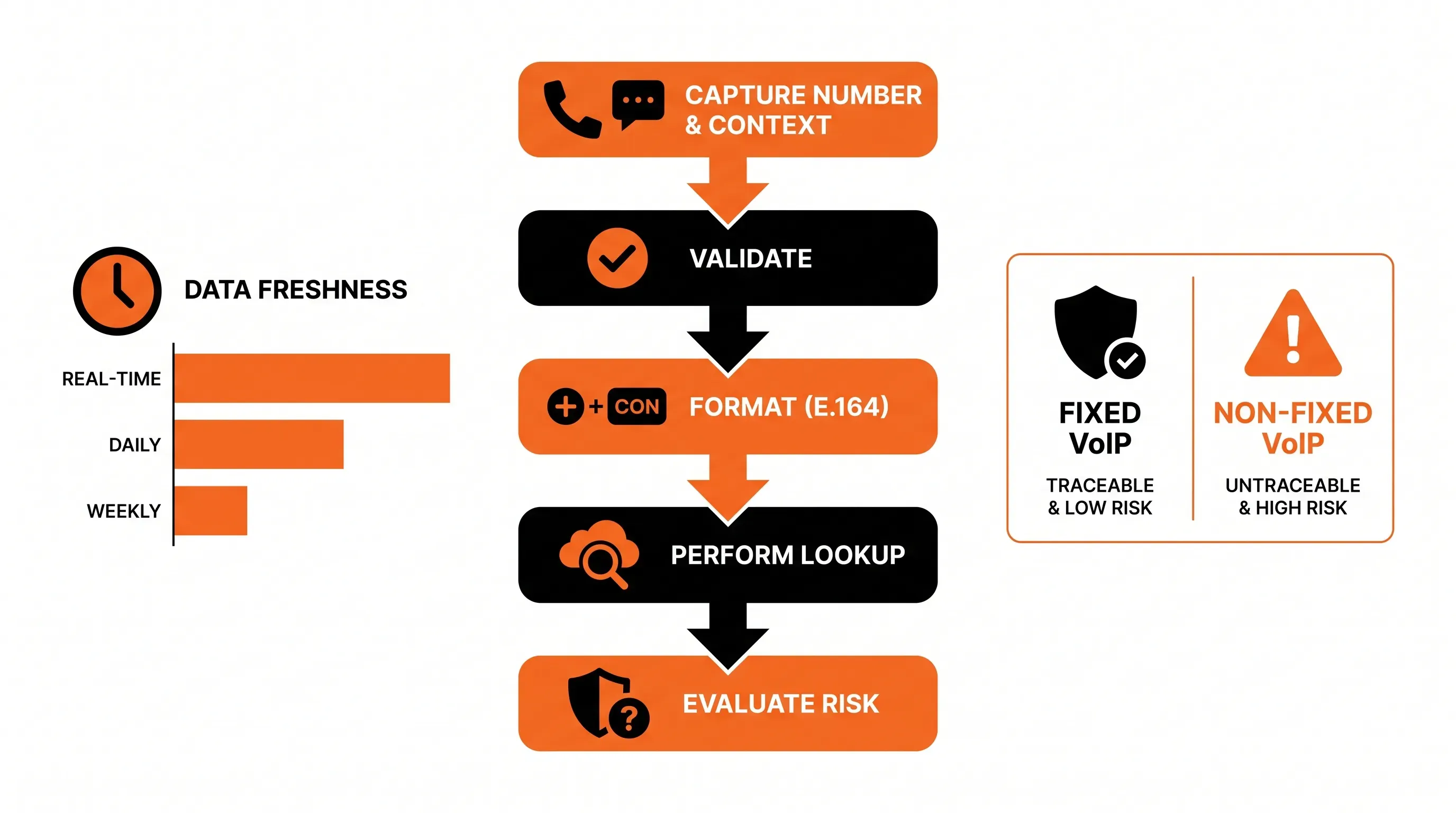
Bold infographic on a white background illustrating the VoIP number lookup process with flowchart, icons, and risk comparison.

The first three steps are sequential, and skipping the first one costs you the ability to do anything with steps two and three. Work through them in order.

Validate every number. Deliver every message.

Talk to our team about real-time phone number validation, fraud prevention, and high-deliverability SMS for your business.

Capture the number when it enters your workflow

The most useful time to check a phone number is before it becomes part of a customer action. That might be when someone creates an account, enters a phone number for verification, updates their CRM profile, places an order, or requests customer support.

Keep the number together with the context that matters: the customer or account ID, timestamp, country, verification attempt, transaction, or other relevant workflow data.

That context helps your teams interpret the line-type result correctly. For example, a non-fixed VoIP result on a new account may be worth combining with velocity and device signals as part of a fraud review. A landline in a CRM record may simply mean that SMS isn't the right communication channel.

Check the carrier and line type

Run the number through a carrier lookup before using it for a customer-facing action. Acudo's carrier lookup tool returns the operator and line type from network data, helping your team determine whether the number is mobile, landline, fixed VoIP, or non-fixed VoIP.

Formatting decides whether the result is usable. The E.164 standard from the International Telecommunication Union caps numbers at 15 digits and splits them into a country code of one to three digits followed by the subscriber number, with no spaces or parentheses. Submit a national-format number without its country code, and the tool has to guess which country to interpret it against, which returns either an error or, worse, a confident answer about a different number entirely.

One more thing about the data behind a VoIP lookup. Carrier records change when a number is ported between operators, so a query run today beats a cached result from last quarter. That's the same reason a stale Customer Relationship Management (CRM) export produces failed sends: the numbers were accurate when captured and aren't anymore.

Interpret the line type in context

The VoIP number lookup result comes back with a line type, and the VoIP category splits into fixed VoIP and non-fixed VoIP. The distinction inside the VoIP category is the one worth understanding, because tools that lump both into a single "VoIP" label throw away the useful part.

A fixed VoIP number is associated with a fixed service, while a non-fixed VoIP number is not tied to a traditional fixed location in the same way. Non-fixed VoIP is widely used by legitimate businesses, remote teams, and international operations, but it can also be relevant to fraud and Trust & Safety teams as one signal among several.

The important point is not that one line type is "good" and another is "bad." Line type tells you how a number is provisioned and can help determine what you should do next.

Know where the classification stops

Three assumptions can lead teams to misuse line-type data. Understanding these limitations is especially important when the result feeds a verification, onboarding, messaging, CRM, or fraud-prevention workflow.

Validate every number. Deliver every message.

Talk to our team about real-time phone number validation, fraud prevention, and high-deliverability SMS for your business.

Presentation numbers can be spoofed

The number on your screen is a presentation number, and presentation is under the caller's control. Under Ofcom's General Condition C6 and its CLI guidance, a presentation number must be one the caller has authority to use: either it's assigned to them directly, or someone holding the assignment has given them permission to use it. A clinic displaying its main switchboard number when a doctor calls from a mobile is presenting a number the organisation is entitled to use, even though the call itself originates elsewhere.

So every VoIP number lookup result describes the number that was presented, not necessarily the line that placed the call. If the presented number is spoofed, a lookup will faithfully classify a number belonging to someone with no involvement in the transaction. The classification is correct, and the conclusion drawn from it is wrong.

For fraud and Trust & Safety teams, this means a clean line-type result should never be treated as proof that an account or transaction is trustworthy. A spoofed or otherwise manipulated number can still produce a valid classification for the number being presented.

Use line type as one signal within a broader decision framework. Combine it with velocity, device, account history, behavioral signals, and other verification data before allowing it to trigger an automated approval or rejection.

Don't expect line type to identify the customer

Non-fixed VoIP numbers have no verified address and no public owner record, because the provisioning process never required one. Regulations differ by country, and some regions restrict how non-fixed numbers can be used, or demand documentation, but the general case is a number issued against an email address.

That's not evidence of fraud. Businesses with distributed teams, international operations, and remote customer-service staff can use these numbers legitimately. For CRM, onboarding, and Trust & Safety teams, the right interpretation is simple: an absent ownership record is a limitation of the data, not a verdict about the customer.

If you need to establish whether a customer is genuine, combine phone intelligence with the other signals available in your verification and risk workflow.

Handle empty and conflicting results

Empty results are common enough that you should plan for them. A blank field can mean the query never ran. And a generic city-or-state label is what a low-cost terminating carrier displays when it's running no database or outdated data in which the number isn't found.

Conflicting results between two services come from two databases with different coverage and different refresh cycles. If the second query disagrees with the first, the number's record is unreliable, and that itself is worth noting in your ticket.

Don't turn an unknown result into an automatic approval or rejection. Instead, define what it means for the workflow. For example:

  1. Log the result against the customer record. Keep the line type and lookup time with the account or CRM record, so teams know which data informed the decision

  2. Define a fallback for unknown numbers. A fraud team might send the account for additional review, while a messaging team might use another communication channel or request a different number

  3. Recheck when the decision is important. Carrier data can change, especially with ported numbers

  4. Treat conflicting results as a data-quality signal. If two sources disagree, avoid making a high-impact decision based solely on line type

The goal is to make unknown data visible rather than allowing it to become a silent pass, silent reject, or failed customer communication.

The operational lesson underneath all of this

Line-type intelligence is most useful when it is connected to the customer action that comes next.

For messaging teams, knowing that a number is a landline can prevent an SMS from being sent through a channel the customer can't use. For verification teams, line type can help determine whether SMS is an appropriate verification method. For CRM and customer operations teams, it can improve phone-data quality and routing. For Fraud and Trust & Safety teams, it can add another signal to an account-risk assessment.

The key is to avoid treating line type as an identity check. A mobile number isn't proof that a customer is genuine, and a non-fixed VoIP number isn't proof that they're fraudulent. The classification simply gives your team more information before it takes action.

That makes line-type intelligence a useful part of a broader phone-validation workflow. Format validation confirms that a number follows the expected numbering structure. Carrier and line-type data tell you what kind of number you're dealing with. Live reachability checks can then help determine whether the number can actually receive a communication.

If your teams need to make better decisions about customer phone numbers before messaging, verifying, onboarding, or routing them, Acudo can provide the phone intelligence to support those workflows. Speak to Acudo about building mobile validation and phone intelligence into your customer operations.

Validate every number. Deliver every message.

Talk to our team about real-time phone number validation, fraud prevention, and high-deliverability SMS for your business.

No. A voip number lookup classifies the number presented on your screen, but it can't confirm who placed the call or their intent. Treat the result as evidence for routing or escalation. Don't accuse the listed number’s owner, since caller ID spoofing can make an unrelated number appear on the call.

Use E.164 format: a plus sign, country code, and full national number, with no spaces or punctuation. For example, a US number appears as +14155550123. Confirm the country code before you submit the query, because an incorrect code can classify a different subscriber number.

Treat the displayed name as a lead, not proof of ownership. CNAM records can be outdated, truncated to 15 characters, or copied differently between carrier databases. Keep the name with the call timestamp in your records, then ask your provider to assess the call’s network path and attestation data.

The services can query carrier data or CNAM databases with different coverage and update schedules. A number may also have changed carriers since one source last refreshed its record. Record both results and their query dates. If they conflict, tell your provider that the public data is inconsistent.

Contact Acudo when your business needs to check whether stored contact numbers are mobile and currently reachable before sending SMS or other critical communications. Speak to Acudo about mobile validation workflows if delivery failures suggest that CRM records contain landlines, inactive numbers, or incorrectly formatted entries.

Get in touch

Talk to our team about phone number validation, fraud prevention, and reliable SMS communications.

You Might Also Like

Discover more insights and articles

Title:
How to create phone number validator rules that catch common errors

Meta description:
Learn how a phone number validator lets you clean input and check whether numbers can receive messages.

A

How to create phone number validator rules that catch common errors

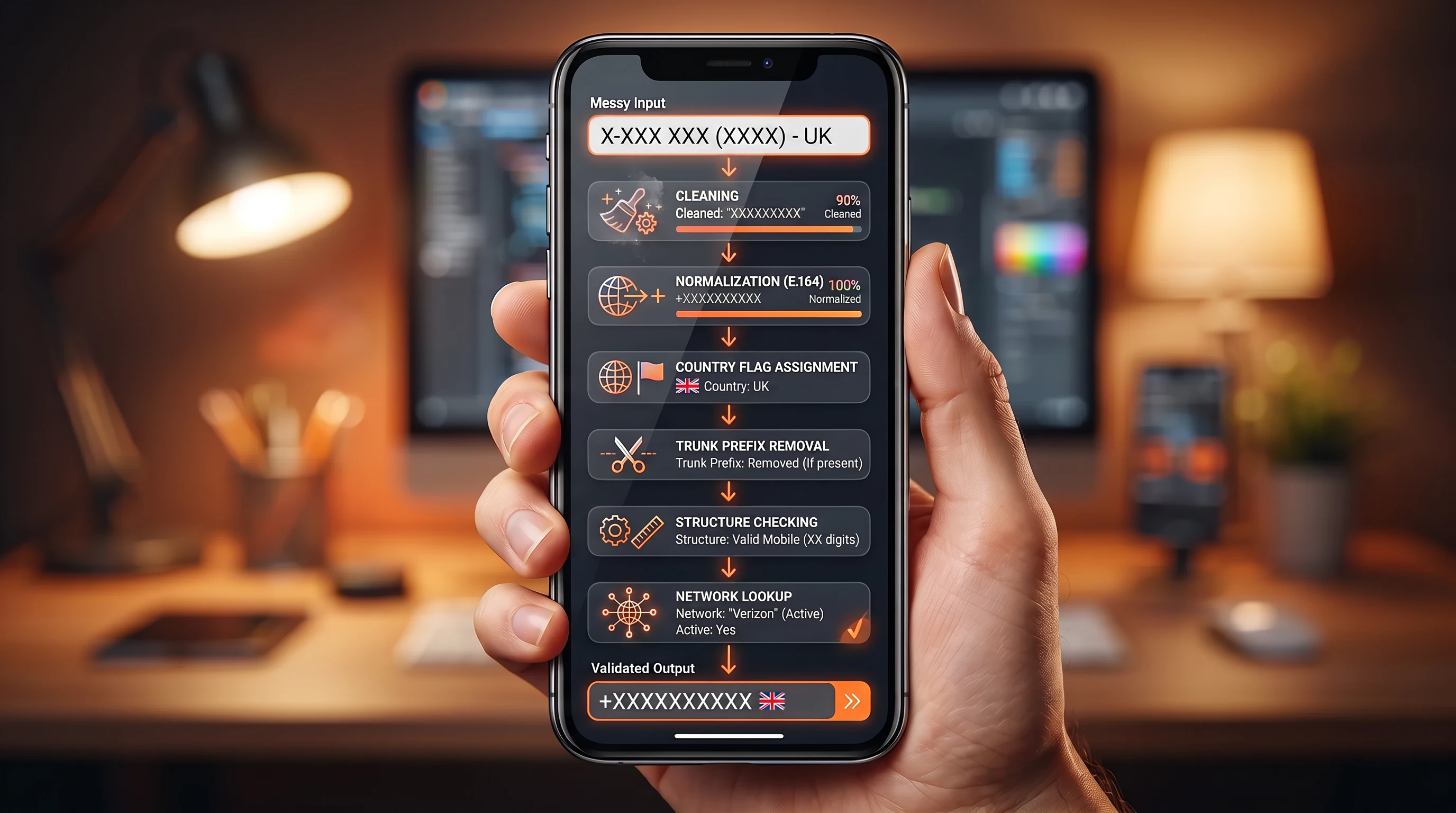
Turning messy phone input into stored numbers you can actually message means building a validation pipeline, not a single regex. From cleaning through to a live network lookup, then what to return to the caller and how to test the whole thing end to end.

A realistic smartphone in a hand displays a phone number entry UI, glowing network overlay, and a secure checkmark, with warm bokeh background.

Phone verification for trust & safety teams

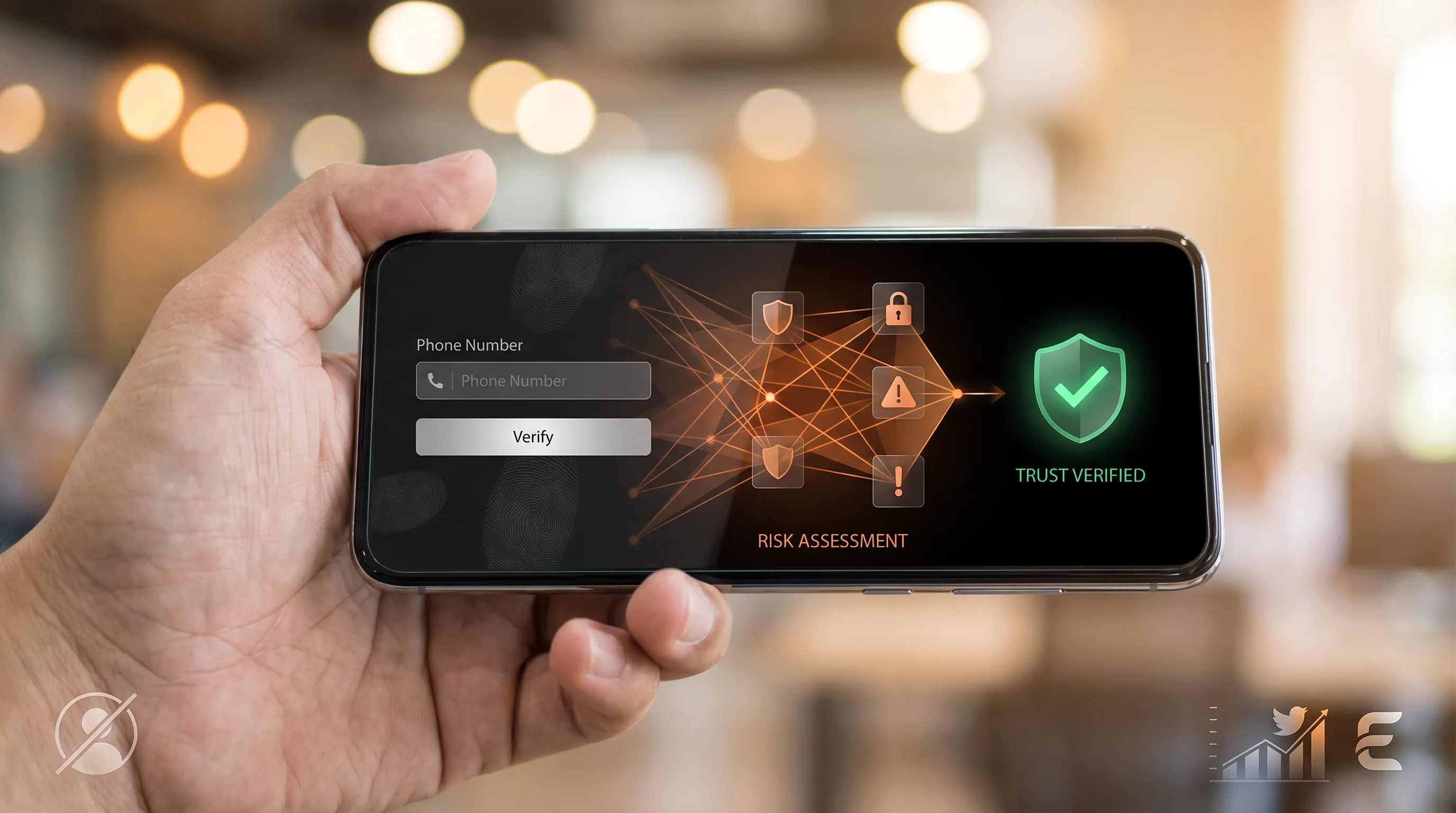
Fake accounts are rarely stopped by adding another verification step. The better approach is to use phone intelligence to decide which signups need more friction and which can pass with minimal interruption.

For trust & safety teams, the goal is not to verify every phone number in the same way. It is to identify numbers that look risky, validate legitimate ones quickly, and reserve stronger verification for accounts that show other signs of abuse.

A close-up of a realistic hand holding a smartphone displaying a UK phone number signup interface with a glowing network overlay.

How to set up UK phone number verification

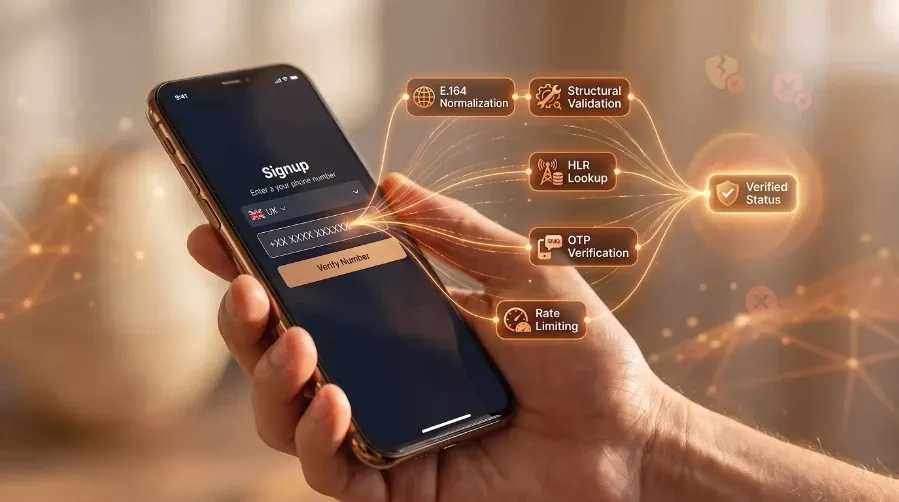
A UK mobile number can look perfectly valid and still be unsuitable for an OTP, onboarding check, or critical customer message. The problem is what happens between accepting the number and sending the message: format validation can confirm that the number follows UK numbering rules, but it cannot tell you everything about the line itself. A stronger verification flow puts number validation and intelligence before the OTP send, so product, engineering, and trust & safety teams can make a better decision about whether to proceed.

A realistic hand holds a glossy smartphone displaying an SMS campaign dashboard, with glowing network icons and warm bokeh background.

How to build a bulk SMS messaging campaign that drives results

A first bulk SMS messaging campaign either sets the pattern for every one that follows, or teaches an expensive lesson in consent and list hygiene before a single message goes out. Getting it right comes down to sequence: one measurable goal, defensible consent, a validated list, and a message worth reading, built on the UK rules that decide whether a text lands or gets filtered.